

For projects in Vancouver
Recording studio acoustics and soundproofing in Vancouver
Two jobs that must not be confused: keeping the building out, and making the room honest inside. The first is mass and decoupling and has to be built first. The second is absorption and diffusion and can be tuned later. Basement and garage studios are common, and a finished basement ceiling with no decoupling passes everything to the floor above.
- Isolation
- A measured background level, agreed before anything is bought.
- Low frequency
- Corner and boundary absorption with real depth, not surface foam.
- Early reflections
- Controlled at the mix position, and only there.
- Quote
- From a plan and a section, within 48 hours
01 / Start here
What this material is and where it earns its place in Vancouver
Two jobs that must not be confused: keeping the building out, and making the room honest inside. The first is mass and decoupling and has to be built first. The second is absorption and diffusion and can be tuned later.
Basement and garage studios are common, and a finished basement ceiling with no decoupling passes everything to the floor above.
Work reaching us from Vancouver is mostly mass timber and light frame housing, condominium towers, offices, schools, studios, clinics.
- Timber is light Mass timber looks solid and performs nothing like concrete at low frequency. Added mass and a decoupled layer do the work, not more absorption.
- The port is right here Direct sea into Vancouver means no rail leg across the country, so the landed cost and the date are both easier to hold.
- Rain on the roof Metal and membrane roofs over open volumes turn heavy rain into a noise source worth designing for rather than discovering.
- Isolation A measured background level, agreed before anything is bought.
Full specification
Thickness, density, NRC by frequency, fire class, standard sizes and build-up detail for studio soundproofing are on the main product page. This page covers what that means for a project in Vancouver.
02 / The build-up
The build-up, layer by layer
-

Layer 1
Acoustic foam and BassBloc
Open cell foam shapes for high frequency control, and BassBloc, a high density absorber built for the low mid range where ordinary foam does nothing. In Vancouver, forced air heating runs most of the year, so duct-borne noise and return air paths carry sound between rooms as reliably as the walls do.
First reflection points. Mirror trick placement on side walls and ceiling, which is a handful of panels rather than a lined room.
-

Layer 2
Soundproofing materials
The blocking side of the range taken together: mass loaded vinyl, resilient layers, cavity absorption and the build-ups they belong in. In Vancouver, community centres, school gymnasiums and church halls carry speech, music and sport in the same hard volume.
Floating floor. Resilient layer and deck, to break impact energy before it reaches the structure.
-

Layer 3
Acoustic panels
The full absorber range rather than one product: plain PET felt, printed felt, grooved panels and fabric finishes, chosen by how the room is used and how it has to look. In Vancouver, school buildings run hard floors and lay-in tile with long heating seasons and sealed envelopes, so rooms stay live and mechanical noise is always present.
Wall array. Panels placed at first reflection points rather than spread evenly. Fewer panels, better result.
For a Vancouver practice, the useful thing is a detail you can put in a drawing set, not a brochure. See how we support architects.
03 / In this market
What we see driving Vancouver briefs
- Timber is light
Mass timber looks solid and performs nothing like concrete at low frequency. Added mass and a decoupled layer do the work, not more absorption.
- The port is right here
Direct sea into Vancouver means no rail leg across the country, so the landed cost and the date are both easier to hold.
- Rain on the roof
Metal and membrane roofs over open volumes turn heavy rain into a noise source worth designing for rather than discovering.
- Damp, mild climate
PET felt does not absorb moisture, shed fibre or feed mould, which suits cold external walls and sealed rooms.
- The housing stock
Timber frame with gypsum board in low rise, concrete in towers. Condominium party walls and floors generate most complaints, and impact noise through a concrete slab needs a resilient layer, not a panel.
- The studio and content scene
Basement and garage studios are common, and a finished basement ceiling with no decoupling passes everything to the floor above.
04 / Room by room
Room by room, on a typical Vancouver job
-
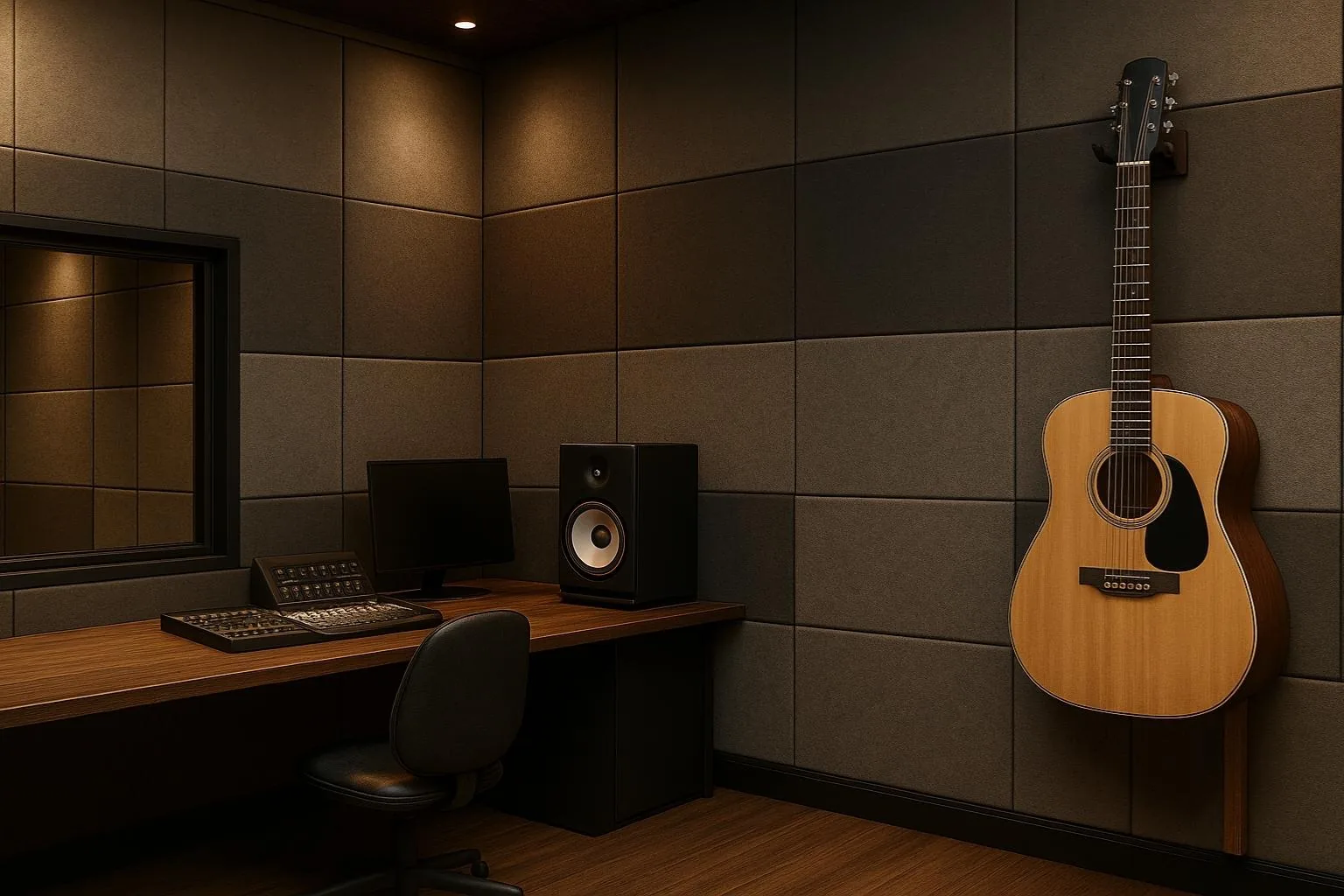
Isolation
A measured background level, agreed before anything is bought. Mass timber looks solid and performs nothing like concrete at low frequency. Added mass and a decoupled layer do the work, not more absorption.
- SoundBlanket mass loaded vinyl, 2100 kg per cubic metre
- Soundproofing materials, 1800 x 900 x 20 mm, 100 kg per cubic metre, NRC 0.85
- Soundproof curtains, 5.5 kg per sq m
-
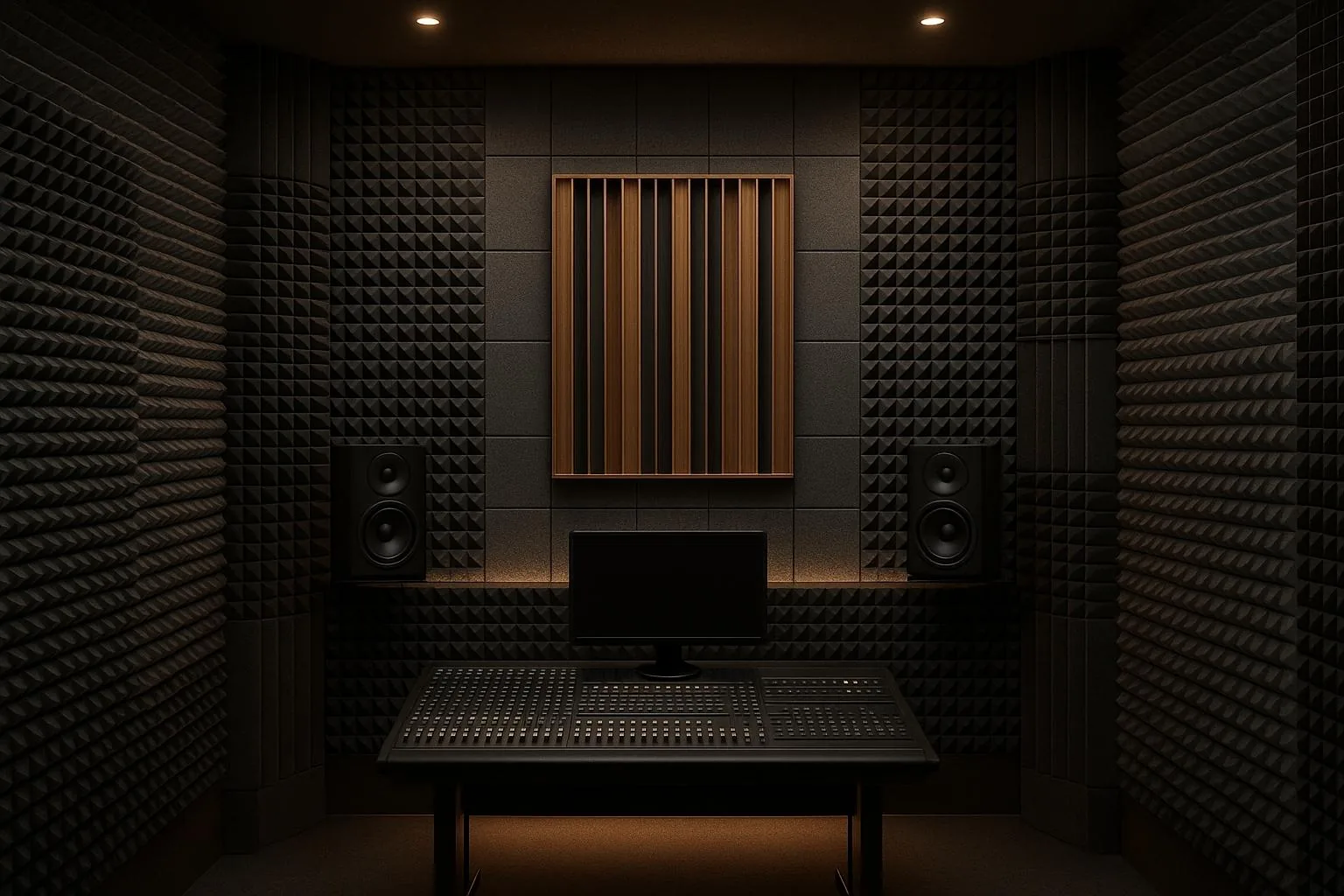
Low frequency
Corner and boundary absorption with real depth, not surface foam. Direct sea into Vancouver means no rail leg across the country, so the landed cost and the date are both easier to hold.
- SoundBlanket mass loaded vinyl, STC 30, 5.25 kg per sq m
- Soundproofing materials, Mass, then decoupling, then cavity absorption, then sealing
- Soundproof curtains, Up to 30 dB
-
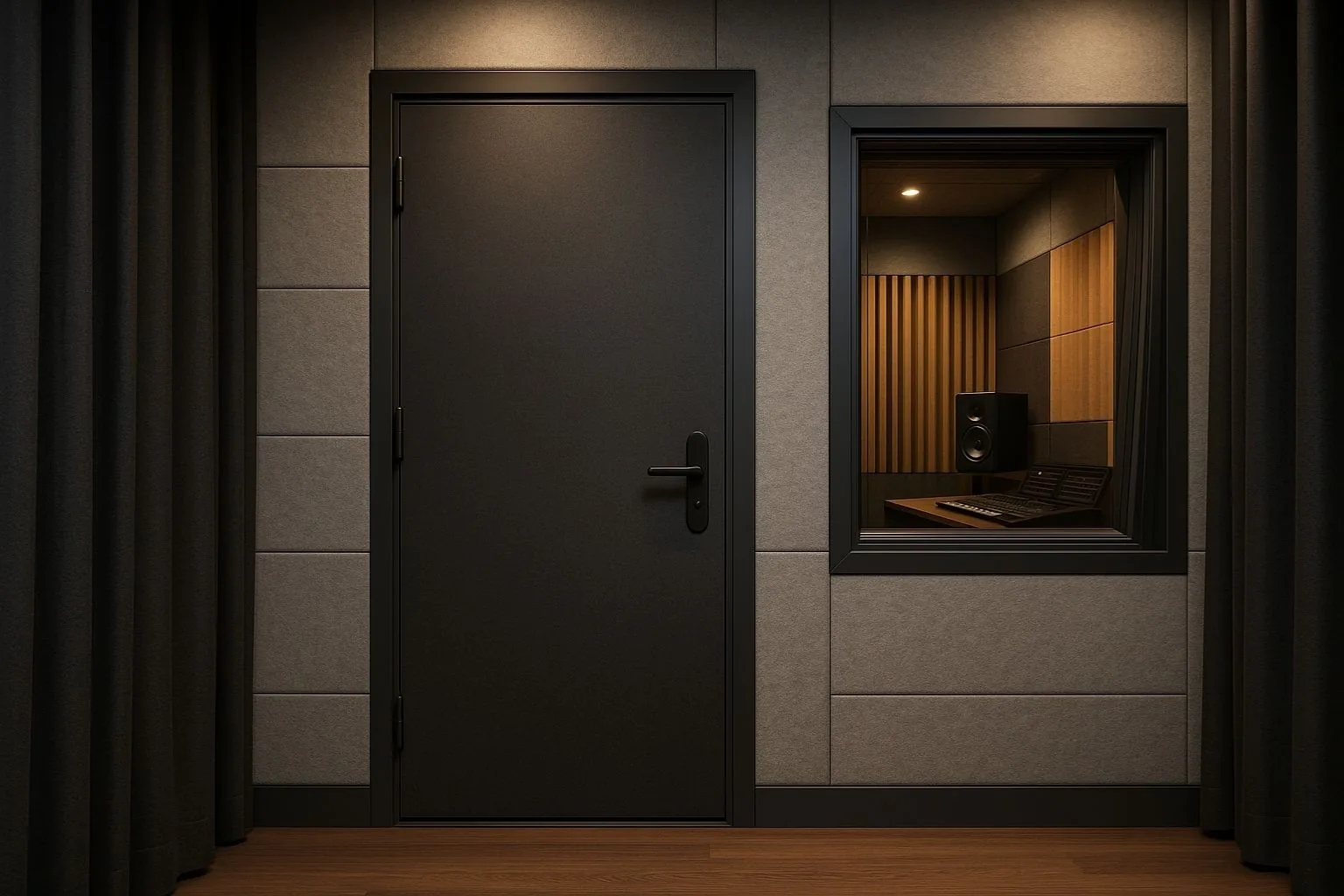
Early reflections
Controlled at the mix position, and only there. Metal and membrane roofs over open volumes turn heavy rain into a noise source worth designing for rather than discovering.
- SoundBlanket mass loaded vinyl, STC 34, 8.4 kg per sq m
- Soundproofing materials, ASTM E90 for the barrier, ASTM C423 for the absorber
- Soundproof curtains, 30
If the visual is fixed and the room still has to perform, that is a solvable problem and a conversation worth having early. See how we work with interior designers.
04 / Climate
What the Vancouver climate rules in and rules out
Vancouver is cool and damp, with long heating seasons and cold external walls, and that narrows the material list before acoustics is discussed.
Cold wall build-ups and long heating seasons mean interstitial condensation is a real risk behind any lining. PET felt is unaffected by damp air and will not feed mould where a fabric-faced mineral product would.
The failure we design against here is condensation behind linings in older, poorly insulated stock.
On a Vancouver job with a consultant involved, our part is material that matches the submitted data. See working with acoustic consultants.
06 / Straight talk
Six mistakes that turn into a second fit-out
-
Buying foam to solve an isolation problem
Small on the drawing, expensive on site, and almost always found after handover.
-
Treating the room before the shell is isolated
Small on the drawing, expensive on site, and almost always found after handover.
-
Killing the room completely and calling it controlled
More absorption is not better absorption. Past the target the room goes flat and people raise their voices to compensate.
-
Treating it as a generic Vancouver job
Mass timber looks solid and performs nothing like concrete at low frequency. Added mass and a decoupled layer do the work, not more absorption.
05 / Logistics
Supply into Vancouver, start to site
| Ships from | Palwal, Haryana, India |
|---|---|
| Arrives at | Vancouver, then a short road run to site |
| Dispatch | 4 to 7 working days |
| Freight | Sea into Vancouver |
| Support | Drawings, build-ups, BOQ and material that arrives complete |
Standard items dispatch in 4 to 7 working days. The sea leg from India is long, so plan the full door to door window into the programme. We give real dates, not optimistic ones.
Sea freight direct into Vancouver, then a short road run to site. Air freight for samples and urgent quantities.
Questions from Vancouver projects
What makes recording studio acoustics and soundproofing different in Vancouver?
Basement and garage studios are common, and a finished basement ceiling with no decoupling passes everything to the floor above. Mass timber looks solid and performs nothing like concrete at low frequency. Added mass and a decoupled layer do the work, not more absorption.
Where should the budget go first on a Vancouver project?
Isolation. A measured background level, agreed before anything is bought. Low frequency. Corner and boundary absorption with real depth, not surface foam.
Do you have an office or installation team in Vancouver?
No. We manufacture in India and supply into Vancouver. We give you drawings, build-ups, a BOQ and material that arrives complete, and we will tell you plainly when a job needs a local contractor we cannot be.
How does material get to a Vancouver site?
ships from: Palwal, Haryana, India, arrives at: Vancouver, then a short road run to site, dispatch: 4 to 7 working days. Standard items dispatch in 4 to 7 working days. The sea leg from India is long, so plan the full door to door window into the programme. We give real dates, not optimistic ones.
What goes wrong most often on this kind of project?
Buying foam to solve an isolation problem. Treating the room before the shell is isolated.
What do you need from us to quote?
A plan, a section through the critical partition or ceiling, and what the room is for. From that we can give a build-up and a BOQ rather than a price per square foot.
Next step
Tell us the room, we will tell you the build-up
Send what you have. We will give you a layer by layer build-up, a bill of quantities and a date material lands, and we will flag anything in the brief that will not achieve what you want.