
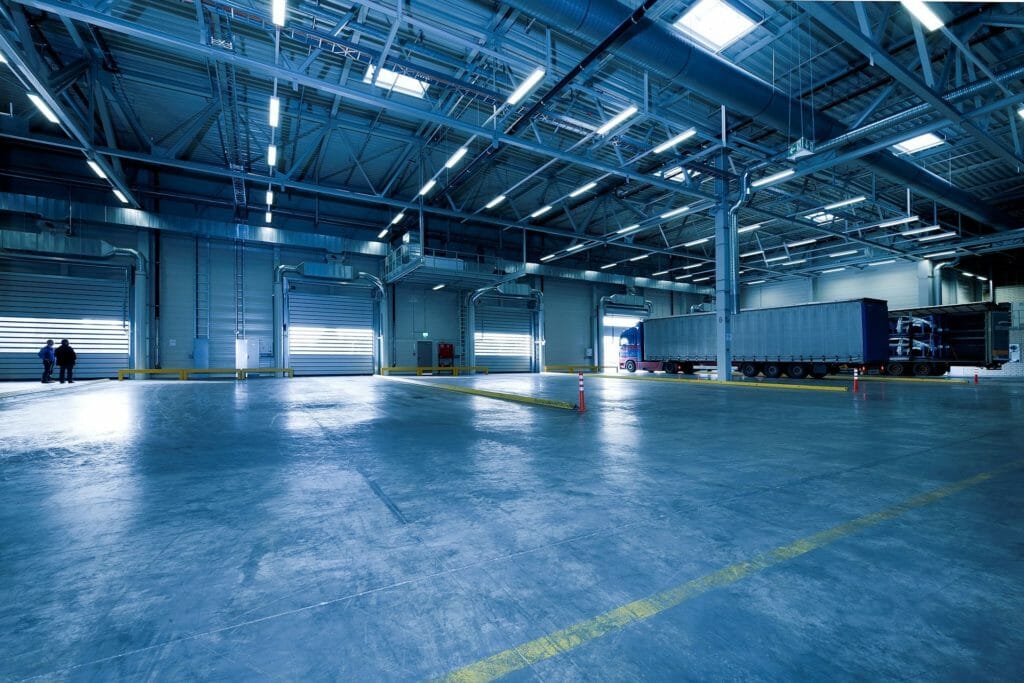
For machines and equipment
Acoustic enclosures and noise control for single machines
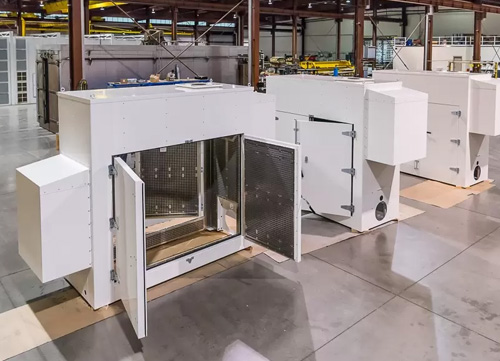
Treating a machine is a component job, not a room job. You put a dense shell around it, line the inside of that shell, break its feet from the slab, and then treat the ventilation and access openings you had to cut in the shell. Miss any one of the four and the enclosure measures far worse than the material suggests.
- Enclosure shell
- SoundBlanket® MLV, STC 34 at 4 mm, 2100 kg/m³
- Inner lining
- BassBloc® NRC 0.85 at 20 mm, foam NRC 0.95 at 50 mm
- Structure borne path
- Insulation pads and anti-vibration mounts at the feet
- Quote
- Within 48 hours, from machine dimensions and a photograph
Send the machine dimensions, a photograph, the service access you need to keep, and the cooling air the machine has to draw. We manufacture and specify the enclosure materials; we do not carry out on site measurement, consultancy or installation ourselves.
01 / What actually goes wrong
A machine radiates by two paths, and an enclosure only closes one
-
The casing radiates into the air
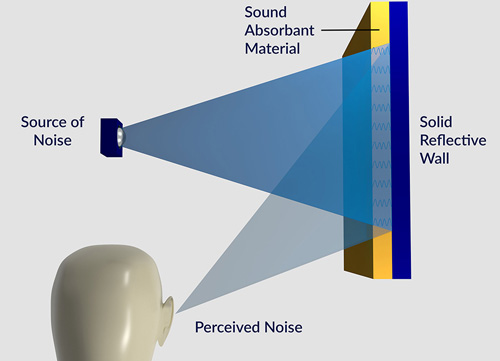
Panels, guards and covers vibrate and behave as loudspeakers, which is why a machine is loud even where nothing is obviously open. Nothing applied to the walls of the building changes this. The only thing that reduces what leaves the machine is mass placed between the machine and the room, which means a shell around it or a barrier screen beside it.
-
The feet feed the slab
Bolted hard to the floor, the machine puts energy straight into the slab, and the slab carries it to rooms that have no line of sight to it at all. This is the hum that survives a perfectly built enclosure, and the complaint that follows one. It is fixed at the feet with pads or mounts, and it is ruined again if rigid conduit, pipework or a drain bridges across the isolator.
-
The enclosure is built as a box, not as an assembly
A hard sided box with no lining raises the level inside itself, so more energy arrives at every joint and every opening. Then the machine overheats, so vents get cut and a door gets added, and both are left as plain holes. A vented, unlined, unsealed enclosure can give away most of what the shell was bought for.
02 / The build-up
The enclosure assembly, in the order it goes together
This is the assembly for one machine. The same four layers scale from a small pump housing to a walk in enclosure around a press.
-

Layer 1
The shell: SoundBlanket® mass loaded vinyl on a rigid substrate
The barrier, and the only layer that reduces what the machine radiates. A steel or board panel carries the membrane; the membrane supplies the mass. Because it works by mass, a gap at a panel joint or a cable entry passes more than the panel does, so every lap and every penetration is sealed.
STC 30 at 2.5 mm, STC 34 at 4 mm, to ASTM E90. 2100 kg/m³. Class A surface burning to ASTM E84. Custom 1 to 10 mm. Sheets 8 x 4, 16 x 4 and 32 x 4 ft. Panel substrate: Century® HDHMR, 8 to 24 mm, FR grade on request.
-
Layer 2
The inner lining: BassBloc® and foam behind a perforated face
The lining stops the inside of the shell becoming louder than the machine on its own, which is what makes the shell work as well as its mass allows. BassBloc® handles the low frequency content of a motor or a compressor; foam handles the higher frequency clatter of cutting, gears and air. BassBloc® is never left exposed inside an enclosure, so it sits behind a perforated metal or board face.
BassBloc® NRC 0.85 at 20 mm, 0.95 at 40 mm, to ASTM C423, effective 100 to 500 Hz, 100 kg/m³, 1800 x 900 mm rolls · Galaxy foam NRC 0.95 at 50 mm, 25/50/100 mm, 32 to 50 kg/m³ · Pyramid foam NRC 0.90 at 50 mm
-
Layer 3
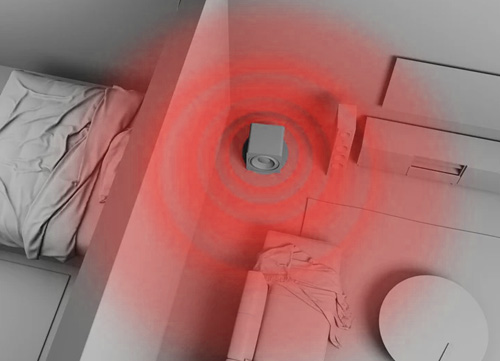
The break at the feet
A resilient layer between the machine and the slab, chosen for the load at each foot. This is the layer that decides whether the hum still turns up two rooms away. It only works if nothing rigid crosses it, so conduit, pipe connections and drains need a flexible section where they leave the machine.
Anti-vibration mounts and pads, and the sound insulation pad for under-machine and under-equipment isolation. Send the machine weight and the number of feet with the enquiry.
-

Layer 4
The openings: ventilation, access and cable entries
An enclosure has to breathe and it has to be opened, so plan the openings with the shell rather than cutting them afterwards. Inlet and outlet air paths are lined and turned so that air gets through and a straight sound path does not. The access door gets a solid leaf, a perimeter seal and a bottom seal, and cable and pipe entries are sealed back to the panel.
EPDM perimeter seal, 6 x 6 mm D-type · Silicone bottom seal, 920 x 15 mm, doors up to 3 ft wide · Perimeter, bottom and drop-down seals, 18 ft per roll · Soundproof curtain, STC 30, where an opening has to stay usable
Layer order by part of the enclosure
| Part | From the outside inwards | What it is for |
|---|---|---|
| Enclosure panel | Steel or HDHMR frame, SoundBlanket® 4 mm, BassBloc® 20 mm, perforated inner face | Mass to block, lining so the box does not amplify |
| High frequency machines | Shell as above, foam 50 mm in place of or over the BassBloc® face | Cutting, gear and air noise |
| Machine feet and base frame | Anti-vibration mounts or insulation pads, no rigid bridge across them | Keeps the slab out of the transmission path |
| Access door or hatch | Solid leaf, EPDM 6 x 6 mm perimeter seal, silicone bottom seal | The gap around a door passes more than the door |
| Ventilation inlet and outlet | Lined and turned air path, absorptive faces on both sides of the airway | Air gets through, a straight sound path does not |
| Cable, pipe and drain entries | Sealed back to the panel, flexible section outside the seal | Removes the two easiest leaks on any enclosure |
| Where a full enclosure blocks access | Acoustic screens, PET, 1800 x 900 mm, or a soundproof curtain on one face | Partial shielding where a shell cannot be closed |
An enclosure changes the airflow and the heat path of the machine. Confirm the cooling requirement with the machine supplier before the openings are sized; we specify the acoustic materials, not the thermal design. More on structure borne noise in machine rooms.
03 / Where it goes on the floor
The same assembly, applied to the machines that actually cause complaints
-
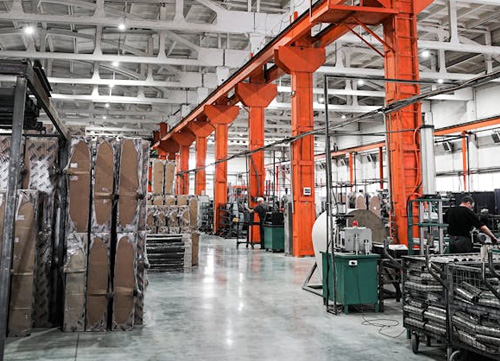
Workshops and open machine bays
Several machines running at once in a hard room, where each one is raising the level for everyone else. Enclose or screen the two or three worst offenders first, then add absorption high on the walls and under the deck so the room stops returning the rest of it.
- SoundBlanket® 4 mm on the enclosure and the screen panels
- Acoustic screens, NRC 0.30 at 9 mm, 1800 x 900 mm, between bays
- Galaxy foam 50 mm or PET felt panels high on the walls
- Whole floor and boundary detail on the industrial plants page
-
Generator sets and gearboxes
Continuous low frequency from a skid that is usually bolted down and usually close to a boundary. The lining has to work low, the shell has to be heavy, and the break under the skid matters more here than on any other machine because low frequency travels well through concrete.
- BassBloc® 20 or 40 mm, NRC 0.85 to 0.95, effective 100 to 500 Hz
- SoundBlanket® 4 mm, STC 34, on the enclosure panel
- Anti-vibration mounts and insulation pads under the skid
- Bass Trap Mega, NRC 1.0, in the corners of a small hard plant room
-

Compressors, pumps and fan sets
These are rarely a pure airborne problem. A compressor on a slab and a pump on a pipe run send energy into the structure and into the pipework, so the enclosure is only part of the answer. Break the base, keep a flexible section in the pipe, and lag the run where it passes an occupied room.
- Sound insulation pads under the frame
- SoundBlanket® as a lagging wrap over the run
- BassBloc® 20 mm against the pipe or duct, under the barrier wrap
- Duct and plant room work on the HVAC page
-
The operator position
Where an operator has to stand at the machine, a full shell is often impossible, so the work is partial: a screen on the side facing the operator, a lined guard on the loudest panel, and absorption on the surface directly behind him so his own machine does not come back at him. Worker exposure over a shift is usually the reason this gets funded, and the assessment of that exposure belongs to a consultant.
- Acoustic screens between the operator and the source
- Foam 50 mm, NRC 0.95, lining the guard on the loudest face
- PET felt panels on the wall behind the work position
- Isolation pads under bench mounted equipment
-

The control cabin beside the machine
A cabin on the floor is a small room built out of light panels, with a door, a window and a cable tray going through it. Treat it as a partition job: mass in the panel, the cavity filled, the door sealed, and only then absorption inside for speech.
- SoundBlanket® 4 mm in the cabin panel
- BassBloc® 20 mm in the cavity
- Perimeter and bottom door seals on the cabin door
- PET felt panels, NRC up to 0.60, on the inside faces
-

Where instructions and alarms have to be heard
A bay that is both loud and reverberant makes speech and audible warnings hard to make out, because the room keeps returning energy that overlaps whatever is being said next. Reducing the reverberant part with absorption is what makes talking and alarms readable again, and it is a separate purchase from the enclosure.
- Felt baffles, NRC 0.30 at 9 mm, under an exposed deck
- Felt clouds over a muster or briefing area
- PET felt panels, 1200 to 3600 GSM, on the upper walls
- Wood wool panels, NRC 0.30, 400 kg/m³, where a robust face is needed
04 / What we see go wrong
Six ways an enclosure ends up measuring worse than the material
-
Vents and access cut in afterwards
The machine runs hot, so somebody cuts two openings and fits a plain door. Both then pass sound freely, and the shell that was paid for is doing a fraction of its job.
-
A shell with no lining
Hard inner faces raise the level inside the box, so more energy arrives at every joint and opening. The lining is what lets the mass perform.
-
Mounts fitted, then bridged
A rigid conduit, a bolted pipe or a grouted foot across the isolator puts the structure borne path straight back. The break has to be complete to be a break.
-
The enclosure treated as the whole job
The machine gets quieter and the hum in the office upstairs does not change, because that path was always through the slab and never through the air.
-
Absorber left exposed in a working machine space
Exposed low density absorber fills with oil, swarf and dust and then shreds. BassBloc® is a behind-the-face product and must always be covered.
-
Panel joints left unsealed
A continuous 3 mm gap along a panel line undoes the mass either side of it. Sealing joints and entries costs almost nothing and changes the result.
05 / Specifications
Tested performance, with the standard it was measured to
| Product | Tested performance | Test standard |
|---|---|---|
| SoundBlanket mass loaded vinyl | STC 30 at 2.5 mm, STC 34 at 4 mm; 2100 kg/m³ | ASTM E90 |
| BassBloc low-frequency absorber | NRC 0.85 at 20 mm, 0.95 at 40 mm; 100 kg/m³ | ASTM C423 |
| MMT Acoustix acoustic foam | NRC 0.90 at 50 mm (Pyramid); 0.95 at 50 mm (Galaxy) | ASTM C423 |
Test reports are issued with project supply. NRC and STC are the figures we publish and stand behind. The insertion loss of a finished enclosure depends on its openings, its sealing and the structure borne path, so it is measured on site by an acoustic consultant and is not a figure we publish. The full set of reports is listed on the certifications page.
06 / How we can help
What we do, and what we do not
-
We do
- Manufacture the barrier, lining, sealing and isolation materials at the Palwal plant, Haryana
- Specify the enclosure build-up and price a BOQ from machine dimensions, weight and access needs, usually within 48 hours
- Cut panels, liners and perforated faces to size for repeat units, including OEM supply
- Supply test reports, technical data sheets and specification text
-
We do not
- Carry out on site measurement, noise surveys or acoustic consultancy
- Design the thermal or airflow requirement of the machine
- Install, fabricate steelwork on site or supervise execution
-
We refer
We work with associated acoustic consultants and installers across India. If the enclosure has to be verified by measurement, or exposure at the operator position has to be assessed, ask us when you send the machine details and we will put you in touch.
GET EXPERT ADVICE
Planning Acoustics for Machines?
Tell us the space, the noise problem and the area involved. Our specialists will recommend the right system and share a budget estimate.
Machine Soundproofing: FAQ
Why is soundproofing important for machines?
Machine soundproofing reduces harmful noise exposure, controls vibration transmission, improves communication, supports compliance and prevents disruption to nearby operations.
What are common mistakes in machine soundproofing?
Common mistakes include ignoring structural vibrations, using insufficient barriers, choosing non-durable materials, partial treatment without addressing surrounding structures, and improper installation that leaves gaps.
What MMTPL products are used for machine acoustics?
MMTPL solutions include SoundBlanket® (MLV barrier) for airborne noise, BassBloc® absorbers for low-frequency and vibration control, acoustic foam panels for high-frequency absorption, and acoustic fabrics for durable finishes.