

For automobiles
Soundproofing and acoustic treatment for vehicles
A car cabin is a thin steel box with trim clipped over it. Noise gets in as vibration through the shell and as airborne sound through the floor and the firewall, so treating it takes three different materials, not one. This is a retrofit: we supply the sheet material and it is fitted by an auto trim shop or a car audio installer with the panels off.
- Damping layer
- BassBloc®, NRC 0.85 at 20 mm
- Barrier layer
- SoundBlanket® MLV, STC 34 at 4 mm
- Absorption
- Galaxy foam, NRC 0.95 at 50 mm
- Quote
- Within 48 hours, by panel area
Send the vehicle, the panels you intend to strip, and what the complaint is: road roar, engine drone, door rattle or weak audio. We manufacture and supply the material cut to size; we do not fit vehicles and we do not carry out on site consultancy or measurement.
01 / What actually goes wrong
Three separate noise paths into the cabin
They arrive together and sound like one problem. They are not, and a single product aimed at all three is why so many cars come back from a soundproofing job sounding much the same.
-
The panels themselves are ringing
Tyre impacts and engine vibration travel through the suspension and the shell into large, thin, unsupported panels, and those panels then radiate into the cabin as drone and boom. Nothing entered through the air; the car is generating the noise inside itself. Mass on top of a ringing panel helps less than damping it does, because the fault is the panel moving, not sound passing through it.
-
Airborne noise passing through the floor and the firewall
Road roar from the tyre contact patch and mechanical noise from the engine bay pass straight through a bare steel floor pan and a firewall that is mostly stamped sheet with holes in it. This is the one real transmission problem in a car, and it is a mass problem. It is also why the floor and the firewall are where the money goes first.
-
Cavities behind the trim are empty and hard
Door cards, pillars, the headliner and the boot all have air gaps behind them with bare metal on one side and a plastic shell on the other. Sound that gets in rattles around in there, which smears anything the speakers do and turns a door into a resonant box. Absorption in the cavity is cheap, light, and the layer that makes in-car audio sound tighter.
02 / The build-up
Damp the panel, block the path, absorb the cavity
Three layers, applied in that order onto bare metal with the trim off. Each one is doing a job the other two cannot, and the order matters because you cannot get back to layer one once layer two is over it.
-
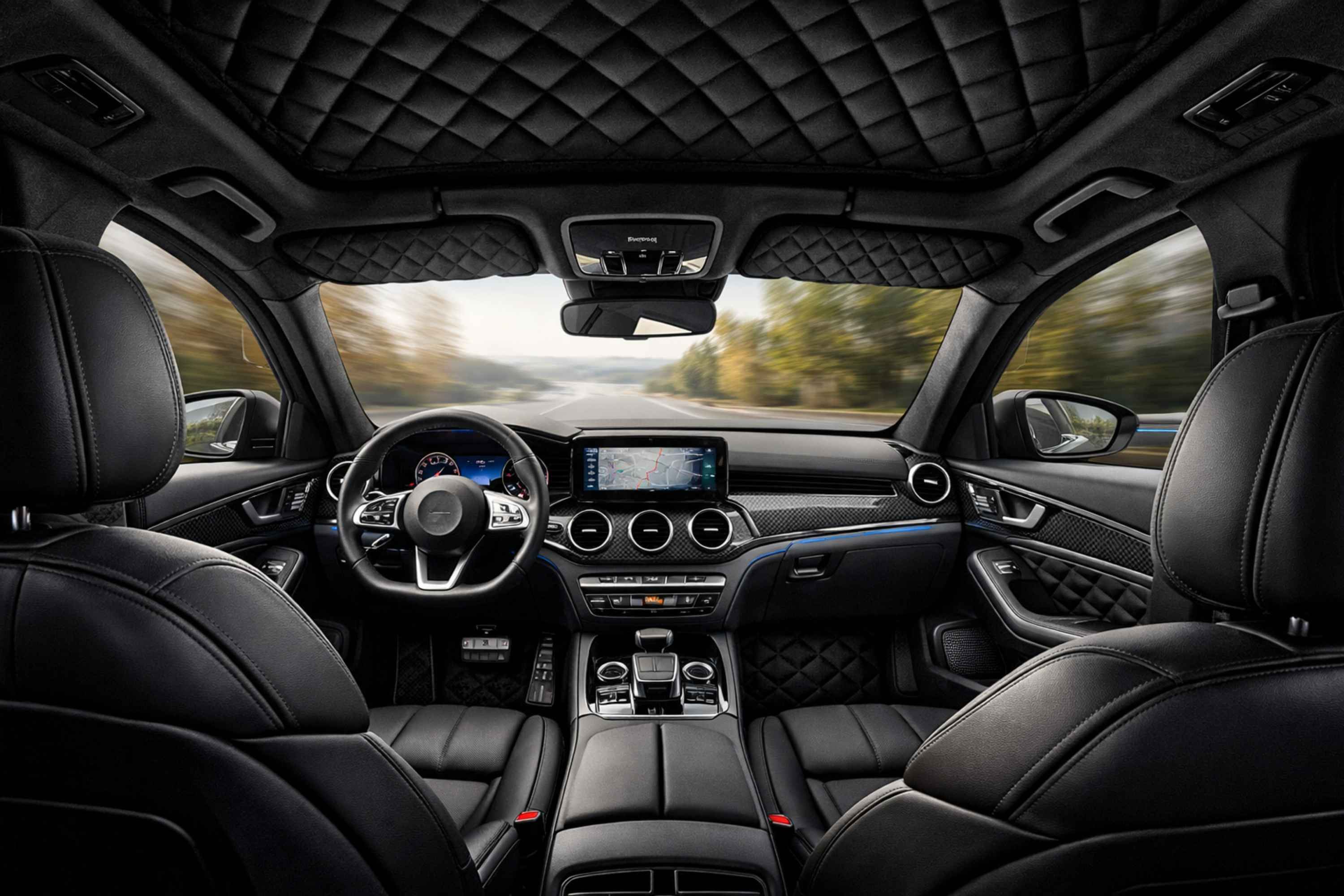
Layer 1
BassBloc®, damping the panel
Applied against the inner face of the large flat panels, it takes the energy out of the panel so it stops acting as a loudspeaker. This is the layer that deals with drone and boom, the frequencies a car is actually judged on and the ones no amount of foam will touch. It goes on the areas that flex, not across every square inch of metal.
NRC 0.85 at 20 mm, 0.95 at 40 mm, to ASTM C423. Effective 100 to 500 Hz. 100 kg/m³. Rolls 1800 x 900 mm. Always covered, never left as the visible surface.
-
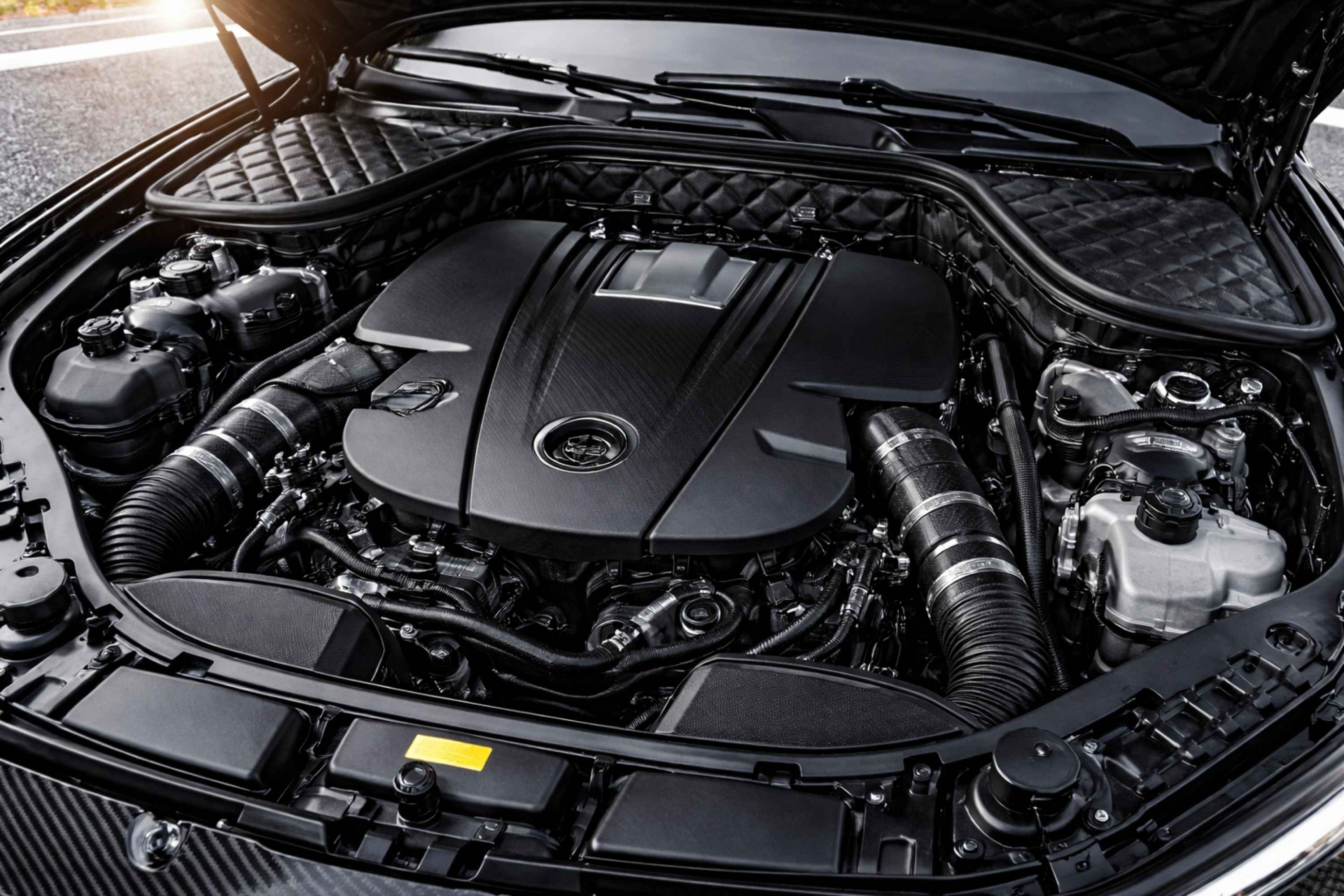
Layer 2
SoundBlanket® MLV, the barrier
A limp, dense membrane laid over the damped panel on the floor pan, the firewall and the door skin. It is the only layer that reduces what comes through from the road and the engine bay. Because it works by mass it also works by coverage: a grommet left open or a seam left short passes more than the sheet around it, so cut it to the panel and dress it into the corners. Supplied down to 1 mm where weight or clearance is tight, and in thicker grades where the floor can carry it.
STC 30 at 2.5 mm, STC 34 at 4 mm, to ASTM E90. 2100 kg/m³. Class A surface burning to ASTM E84. Custom 1 to 10 mm. Sheets 8 x 4, 16 x 4 and 32 x 4 ft.
-
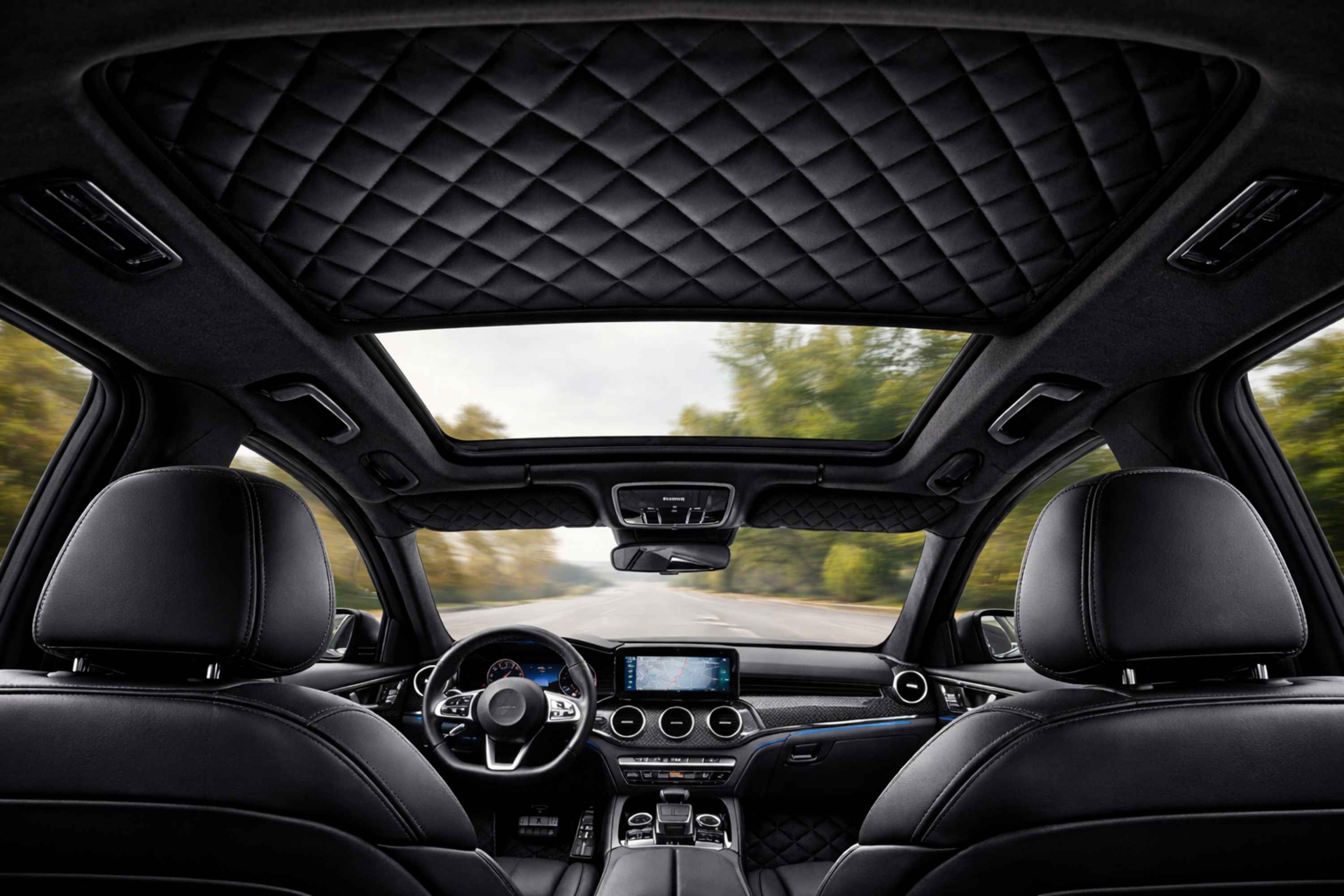
Layer 3
Acoustic foam, filling the cavity
The light layer, into the gap between the barrier and the trim panel. It soaks up what is already loose inside the door card, the pillar or the headliner, and it stops the cavity behaving like a box. Use 25 mm where the trim cavity is shallow, which is most of a car, and the thicker grades only where there is real depth such as a boot floor or a van bulkhead.
Galaxy NRC 0.95 at 50 mm, to ASTM C423. Pyramid NRC 0.90 at 50 mm. Both 25, 50 and 100 mm, 32 to 50 kg/m³.
Layer order by panel
| Panel | From the metal inwards | What it is for |
|---|---|---|
| Floor pan | BassBloc® on the flat areas, SoundBlanket® over the whole pan, foam under the carpet | The largest single path for road roar and tyre hum |
| Firewall and bulkhead | BassBloc®, then SoundBlanket® cut around every grommet and dressed back | Engine and transmission noise, and the panel with the most holes in it |
| Wheel arch liners | BassBloc® on the inner arch, SoundBlanket® where the liner allows the thickness | Stone impact and the tyre contact patch, directly above it |
| Door cards | BassBloc® on the outer skin, SoundBlanket® on the inner skin, foam in the cavity | Rattle, speaker back-wave and door boom |
| Roof | BassBloc® between the ribs, foam against the headliner | Rain impact and wind roar, and it keeps weight off the highest panel |
| Boot and wheel well | BassBloc®, SoundBlanket® over the well, foam in the void | Exhaust and axle noise, and the cavity right behind the rear seat |
These are product figures measured on the material. A vehicle is not a test chamber, and cabin noise levels are not something we measure or certify. If you need an interior noise figure, that is the scope of an acoustic consultant or a test house.
03 / Where it goes, and in what order
Start under the carpet, finish at the doors
If the budget only covers part of the car, do the floor and the arches. They are the biggest paths and they are also the panels a fitter has to strip the most trim to reach, so they are the ones nobody goes back for.
-
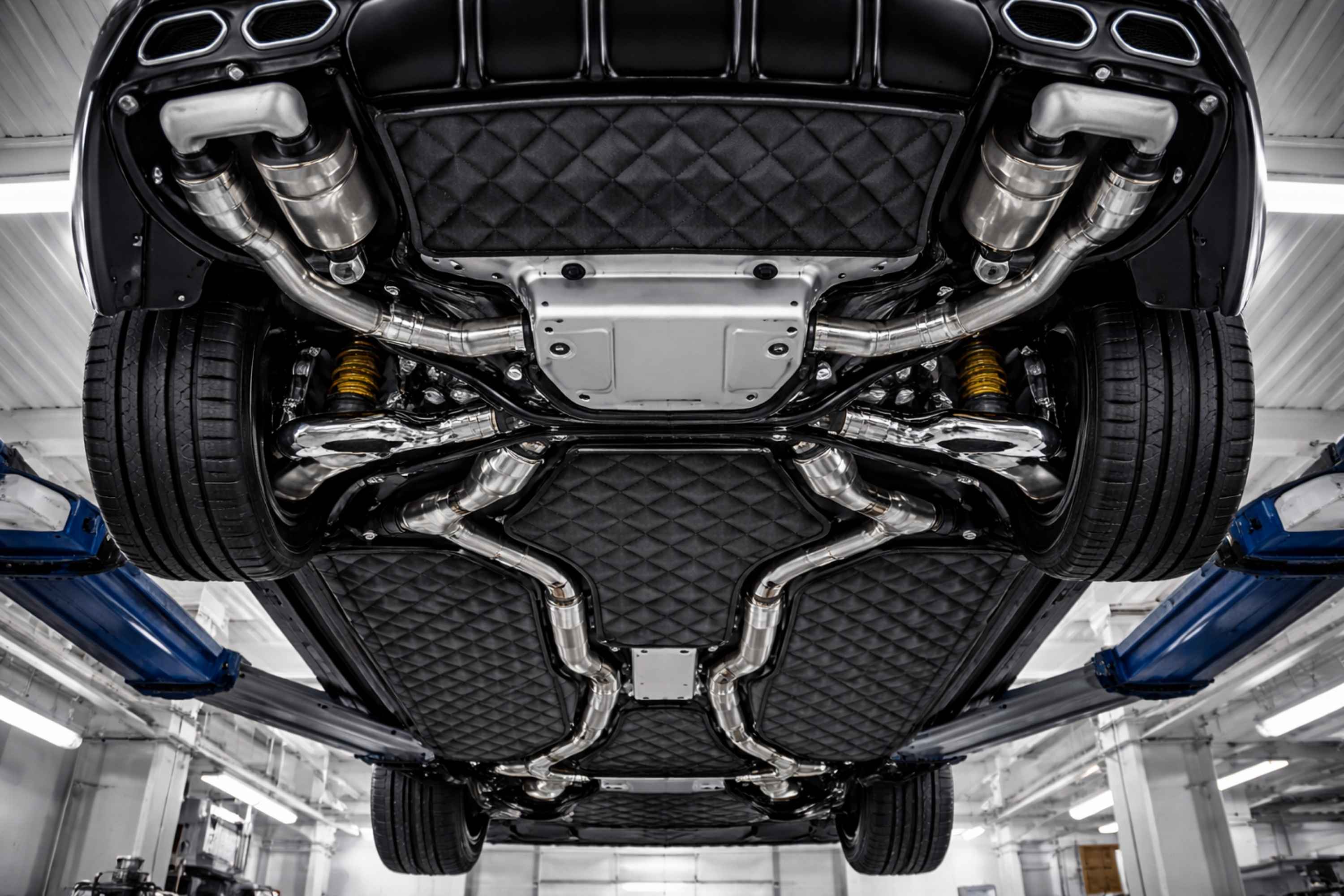
Floor, wheel arches and underbody
The tyre contact patch is the loudest thing on the car at motorway speed, and it is a few hundred millimetres from the floor pan with only stamped steel and a carpet in between. Damping first, because the pan is a large flexible panel, then the barrier over it, then a soft layer under the carpet. Keep the material clear of drain plugs, seat rails, harness runs and anything the airbag system uses.
- BassBloc® 20 mm, NRC 0.85, on the flat areas of the pan and the inner arches
- SoundBlanket® 2.5 to 4 mm, STC 30 to 34, cut to the pan in sections
- Galaxy foam 25 mm under the carpet where the height allows
- Acoustic carpet tiles, 4 mm with a felt backing, for van and commercial load floors
-

Door cards and speaker mountings
A door is a wet cavity with a speaker firing into it, which is why doors rattle and why factory audio sounds thin. Damp the outer skin through the access holes, put the barrier on the inner skin so the speaker has something solid behind it, and fill what is left with foam. Keep drain paths clear and keep material off the window channel and the regulator.
- BassBloc® on the outer skin to stop the panel ringing with the speaker
- SoundBlanket® sealing the inner skin around the speaker aperture
- Pyramid or Galaxy foam in the cavity behind the card
- EPDM 6 x 6 mm D-type seal where a worn door or tailgate seal is letting wind noise in
- WEIGHT
SoundBlanket® is 2100 kg/m³. Put it where a panel is actually passing noise, and use the thinner grades on the roof and the doors. Covering a whole shell in 4 mm costs payload and fuel for very little extra.
- BONDING
Spray adhesive for foam into cavities, SR adhesive at about 20 ml per sq ft for sheet onto clean, dry, degreased metal.
- DISPATCH
SoundBlanket® in 2 to 5 days within India and 7 to 10 days for export. Cut to your panel sizes on request.
04 / What we see go wrong
Five ways a car job goes wrong
-
One panel treated, the rest left bare
Doing the doors alone is the common version. The floor and the arches keep radiating, so the owner hears almost no change and concludes the material does not work.
-
Barrier laid straight onto a ringing panel
Mass over an undamped floor pan still leaves the pan free to move. Damping and blocking are separate layers and skipping the first wastes most of the second.
-
Foam used as the whole treatment
Foam is light, cheap and easy to fit, so it is what gets sold. It absorbs what is already inside the cabin and blocks nothing coming in from the road.
-
Covering everything at maximum thickness
Weight costs fuel and payload and stops adding anything past a point. Material goes on the panels that are radiating, chosen panel by panel.
-
Trim refitted over blocked drains and clips
Material over a door drain, a seat rail or a harness route causes water, rattles and warning lights months later. Every clip and drain path has to be left clear before the card goes back on.
05 / Specifications
Tested performance, with the standard it was measured to
| Product | Tested performance | Test standard |
|---|---|---|
| SoundBlanket mass loaded vinyl | STC 30 at 2.5 mm, STC 34 at 4 mm; 2100 kg/m³ | ASTM E90 |
| BassBloc low-frequency absorber | NRC 0.85 at 20 mm, 0.95 at 40 mm; 100 kg/m³ | ASTM C423 |
| MMT Acoustix acoustic foam | NRC 0.90 at 50 mm (Pyramid); 0.95 at 50 mm (Galaxy) | ASTM C423 |
Test reports are issued with project supply. NRC and STC are the figures we publish and stand behind; anything beyond those two is the scope of an acoustic consultant. The full set of reports is listed on the certifications page.
06 / How we can help
What we do, and what we do not
-
We do
- Manufacture SoundBlanket®, BassBloc® and the foam range at the Palwal plant, Haryana
- Supply material by the sheet or roll, and cut to your panel sizes
- Quote a material list and quantities from the vehicle and the panels being done, usually within 48 hours
- Supply test reports and technical data sheets, including for fleet and OEM supply
-
We do not
- Fit vehicles. The work is a retrofit done by an auto trim shop or a car audio installer with the panels off
- Carry out on site acoustic consultancy or cabin noise measurement
- Certify a vehicle, an interior noise level or a homologation requirement
-
We refer
We work with associated acoustic consultants and installers across India and can put you in touch with them. Ask when you tell us the vehicle.