

For projects in Japan
Office acoustics and soundproofing in Japan
Three separate problems get called one problem: speech carrying across an open floor, meeting rooms that leak, and hard rooms that ring. Each has a different answer and mixing them up is how budgets get wasted. Split units and VRF with outdoor units in very tight gaps between buildings.
- Open plan
- Distraction distance, not reverberation time. Ceiling absorption plus screens at the desk.
- Meeting rooms
- Privacy between rooms. That is partition and door work, not panels.
- Cabins and calls
- Short RT so a call sounds clean. A small amount of well placed absorber.
- Quote
- From a plan and a section, within 48 hours
01 / What it is
The material, and what it actually does on a Japan job
Three separate problems get called one problem: speech carrying across an open floor, meeting rooms that leak, and hard rooms that ring. Each has a different answer and mixing them up is how budgets get wasted.
Split units and VRF with outdoor units in very tight gaps between buildings.
Work reaching us from Japan is mostly apartments and houses, offices, studios, hotels, schools, clinics.
- Small rooms, close neighbours Depth is genuinely scarce, so a thin build-up that performs is worth more than a thicker one that performs marginally better.
- Designed to move Seismic detailing means junctions that must stay flexible. An acoustic layer cannot bridge a movement joint rigidly.
- Precise expectations Specifications here are written carefully and checked properly. Send us the target and we will say plainly what our material reaches.
- Open plan Distraction distance, not reverberation time. Ceiling absorption plus screens at the desk.
Full specification
Thickness, density, NRC by frequency, fire class, standard sizes and build-up detail for office acoustics are on the main product page. This page covers what that means for a project in Japan.
Office and conference room acoustics Acoustic office screens
02 / The build-up
The build-up, layer by layer
-

Layer 1
PET felt acoustic panels
A rigid non-woven panel pressed from 100% polyester fibre, a large part of it recycled. In Japan, split units and VRF with outdoor units in very tight gaps between buildings.
On a 25 to 50 mm air gap. The same panel on battens. The air gap moves absorption down in frequency at no extra material cost, and is the cheapest improvement available.
-

Layer 2
Acoustic carpet and rugs
A tile carpet with a dense polyester face on a felt backing. In Japan, halls, temples and civic auditoria range from very controlled to very reverberant, and both need measured targets.
Over a resilient underlay. Where impact noise to the floor below is the actual complaint, the underlay does that work, not the carpet.
-

Layer 3
SoundBlanket mass loaded vinyl
A limp, high density sheet that adds mass to a partition, floor or duct without adding depth. In Japan, school buildings are hard surfaced with long corridors, and gymnasiums double as assembly halls.
Duct and plant wrap. Membrane wrapped over the duct with a decoupling layer beneath, sealed at every lap.
We would rather argue about the build-up at design stage than on site. See how we support architects.
03 / In this market
What decides the build-up in Japan
- Small rooms, close neighbours
Depth is genuinely scarce, so a thin build-up that performs is worth more than a thicker one that performs marginally better.
- Designed to move
Seismic detailing means junctions that must stay flexible. An acoustic layer cannot bridge a movement joint rigidly.
- Precise expectations
Specifications here are written carefully and checked properly. Send us the target and we will say plainly what our material reaches.
- Humid summers
PET felt does not hold moisture or feed mould, which matters through a humid season in a sealed room.
- Plant and HVAC
Split units and VRF with outdoor units in very tight gaps between buildings.
04 / Room by room
Space by space, for Japan briefs
-
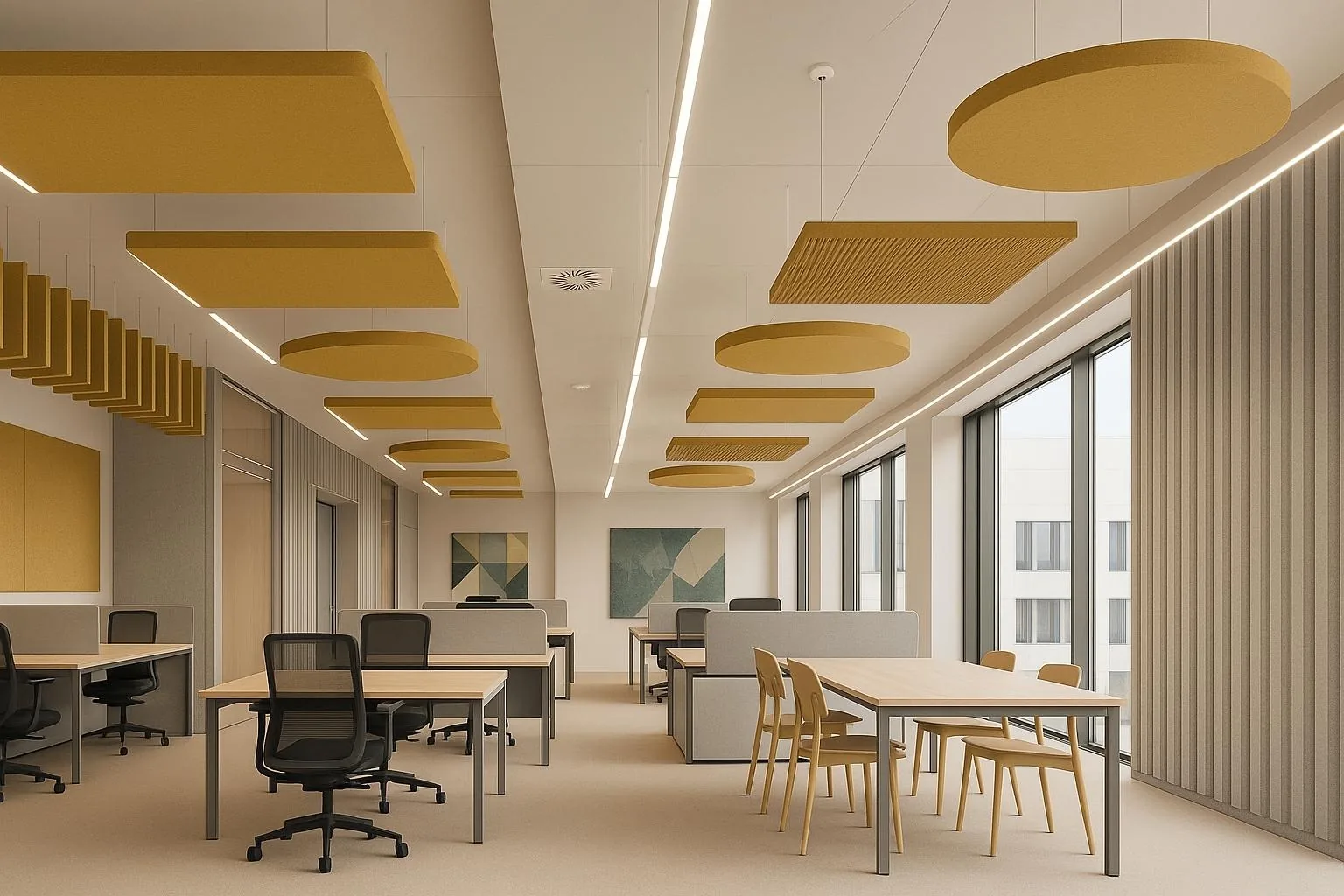
Open plan
Distraction distance, not reverberation time. Ceiling absorption plus screens at the desk. Depth is genuinely scarce, so a thin build-up that performs is worth more than a thicker one that performs marginally better.
- PET felt acoustic panels, 100% PET non-woven, no added binder
- Acoustic panels, 1800 x 900 mm, image printed into the felt rather than onto a facing
- SoundBlanket mass loaded vinyl, STC 34, 8.4 kg per sq m
-
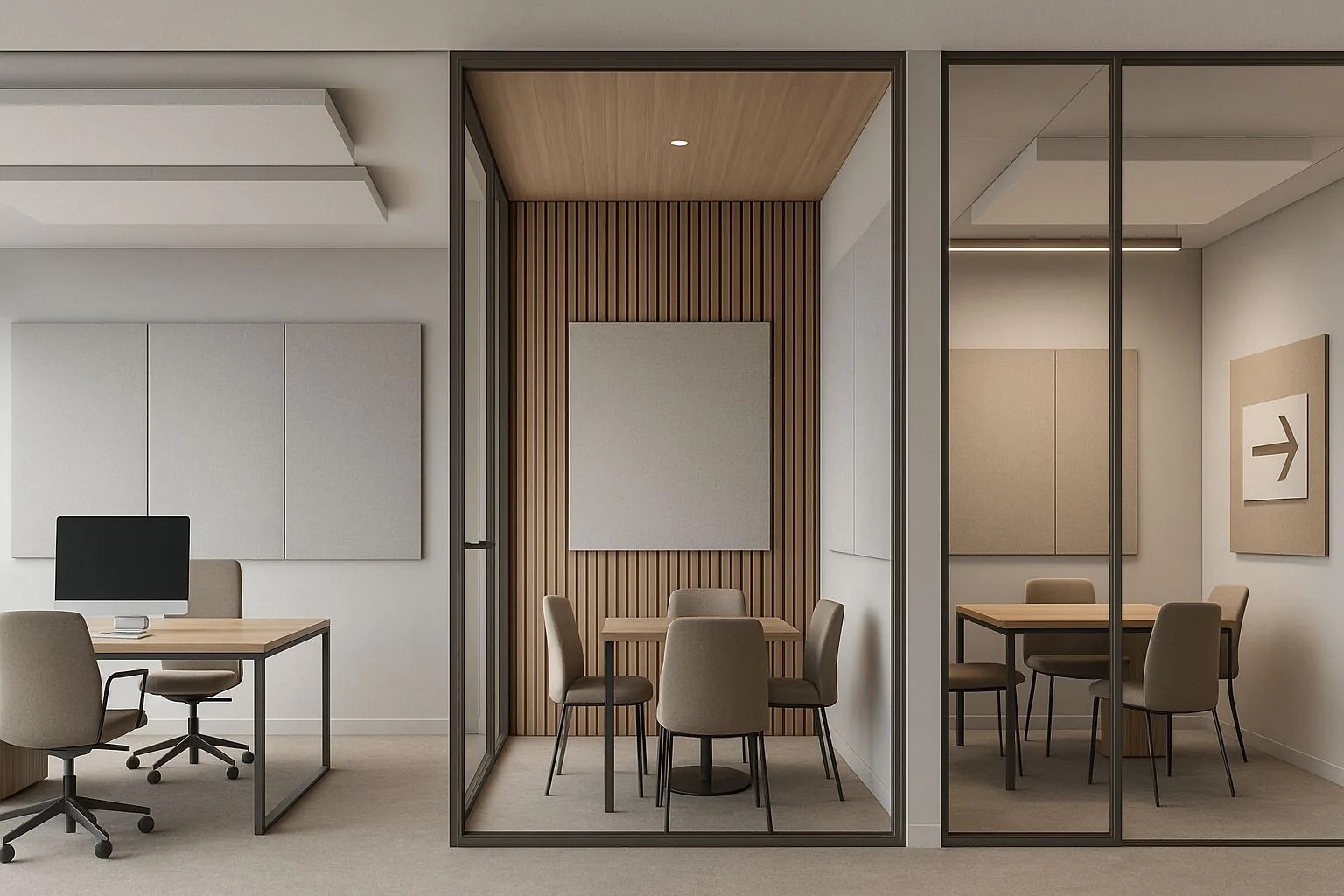
Meeting rooms
Privacy between rooms. That is partition and door work, not panels. Seismic detailing means junctions that must stay flexible. An acoustic layer cannot bridge a movement joint rigidly.
- PET felt acoustic panels, 9, 12, 18 and 24 mm standard, tolerance plus or minus 5 percent
- Acoustic panels, Cut pattern in PET felt, adds visual rhythm without changing the absorber
- SoundBlanket mass loaded vinyl, 12.6 kg per sq m, STC on request
-
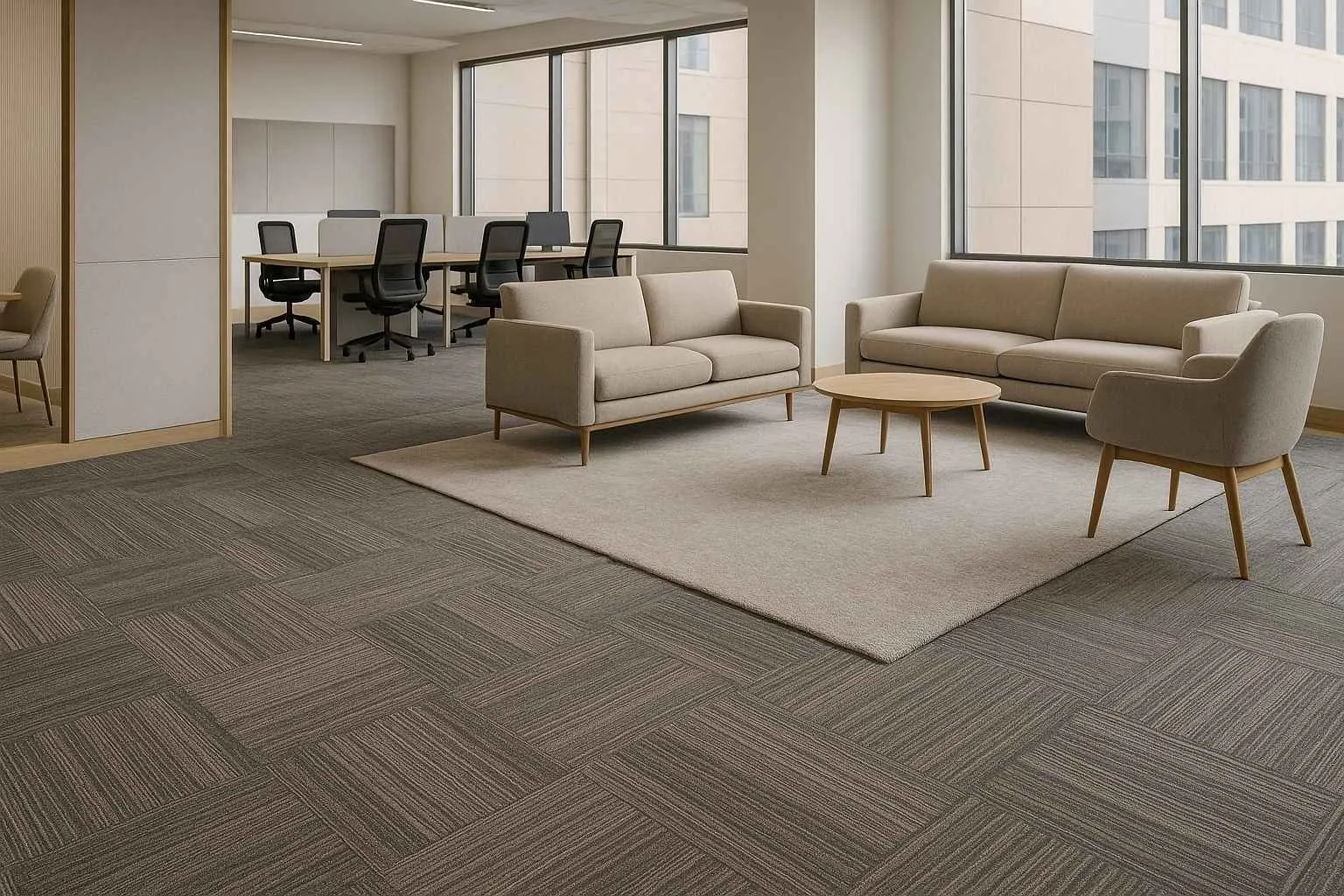
Cabins and calls
Short RT so a call sounds clean. A small amount of well placed absorber. Specifications here are written carefully and checked properly. Send us the target and we will say plainly what our material reaches.
- PET felt acoustic panels, 4 to 24 mm
- Acoustic panels, ASTM C423
- SoundBlanket mass loaded vinyl, 5 x 1.2 m, 6 sq m per roll
Interior designers tend to arrive with the look already decided. We will tell you which finish gets there without losing the acoustics. See how we work with interior designers.
04 / Climate
What the Japan climate rules in and rules out
Japan is hot summers, mild winters and a distinct wet season, and that narrows the material list before acoustics is discussed.
PET felt handles the wet months without absorbing moisture or feeding mould. Timber and wood wool want a ventilated cavity and a stable indoor RH.
The failure we design against here is wet-season humidity behind linings.
Where a consultant is already engaged on a Japan project, we supply to their specification and send the test reports rather than describing them. More on working with acoustic consultants.
06 / Worth knowing
Where this kind of project usually fails
-
Lining every wall while leaving the ceiling bare
The ceiling is almost always the largest untreated surface, so leaving it out means paying for panels that cannot reach the target.
-
Treating a privacy problem with absorption
If the complaint is being overheard, no amount of absorption inside the room will fix it. That is a partition job and we will say so.
-
Glass cabins specified without a door and head detail
A 6 mm undercut under a door leaves a hole the size of a brick. The wall around it is then decorative.
-
Treating it as a generic Japan job
Depth is genuinely scarce, so a thin build-up that performs is worth more than a thicker one that performs marginally better.
05 / Logistics
What the route into Japan actually looks like
| Ships from | Palwal, Haryana, India |
|---|---|
| Arrives at | Yokohama or Kobe, then road to site |
| Dispatch | 4 to 7 working days |
| Freight | Sea via Yokohama |
| Support | Drawings, build-ups, BOQ and material that arrives complete |
Standard items dispatch in 4 to 7 working days. The sea leg from India is long, so plan the full door to door window into the programme. We give real dates, not optimistic ones.
Sea freight into Yokohama or Kobe, then road to site. Air freight for samples and urgent quantities.
Questions from Japan projects
What makes office acoustics and soundproofing different in Japan?
Split units and VRF with outdoor units in very tight gaps between buildings. Depth is genuinely scarce, so a thin build-up that performs is worth more than a thicker one that performs marginally better.
Where should the budget go first on a Japan project?
Open plan. Distraction distance, not reverberation time. Ceiling absorption plus screens at the desk. Meeting rooms. Privacy between rooms. That is partition and door work, not panels.
Do you have an office or installation team in Japan?
No. We manufacture in India and supply into Japan. We give you drawings, build-ups, a BOQ and material that arrives complete, and we will tell you plainly when a job needs a local contractor we cannot be.
How does material get to a Japan site?
ships from: Palwal, Haryana, India, arrives at: Yokohama or Kobe, then road to site, dispatch: 4 to 7 working days. Standard items dispatch in 4 to 7 working days. The sea leg from India is long, so plan the full door to door window into the programme. We give real dates, not optimistic ones.
What goes wrong most often on this kind of project?
Lining every wall while leaving the ceiling bare. Treating a privacy problem with absorption.
What do you need from us to quote?
A plan, a section through the critical partition or ceiling, and what the room is for. From that we can give a build-up and a BOQ rather than a price per square foot.
Next step
Send the drawings, get a straight answer
Send what you have. We will give you a layer by layer build-up, a bill of quantities and a date material lands, and we will flag anything in the brief that will not achieve what you want.