

For projects in Japan
Cinema and multiplex soundproofing in Japan
Screens stacked beside and above each other, each running full range at high level. Bleed between auditoria is the failure everyone hears, and it is decided by the shell, not the finishes. Halls, temples and civic auditoria range from very controlled to very reverberant, and both need measured targets.
- Screen to screen
- Independent construction between auditoria, with services broken at the line.
- In room response
- Heavy absorption on side and rear walls so the mix is heard as intended.
- Plant and projection
- Equipment noise into the auditorium, treated at source.
- Quote
- From a plan and a section, within 48 hours
01 / Start here
What this material is and where it earns its place in Japan
Screens stacked beside and above each other, each running full range at high level. Bleed between auditoria is the failure everyone hears, and it is decided by the shell, not the finishes.
Halls, temples and civic auditoria range from very controlled to very reverberant, and both need measured targets.
Work reaching us from Japan is mostly apartments and houses, offices, studios, hotels, schools, clinics.
- Small rooms, close neighbours Depth is genuinely scarce, so a thin build-up that performs is worth more than a thicker one that performs marginally better.
- Designed to move Seismic detailing means junctions that must stay flexible. An acoustic layer cannot bridge a movement joint rigidly.
- Precise expectations Specifications here are written carefully and checked properly. Send us the target and we will say plainly what our material reaches.
- Screen to screen Independent construction between auditoria, with services broken at the line.
Full specification
Thickness, density, NRC by frequency, fire class, standard sizes and build-up detail for cinema soundproofing are on the main product page. This page covers what that means for a project in Japan.
02 / The build-up
How the layers stack, from the structure inwards
-

Layer 1
Soundproofing materials
The blocking side of the range taken together: mass loaded vinyl, resilient layers, cavity absorption and the build-ups they belong in. In Japan, split units and VRF with outdoor units in very tight gaps between buildings.
Independent leaf. A second wall that does not touch the first. Nothing else comes close for the money.
-

Layer 2
Acoustic panels
The full absorber range rather than one product: plain PET felt, printed felt, grooved panels and fabric finishes, chosen by how the room is used and how it has to look. In Japan, halls, temples and civic auditoria range from very controlled to very reverberant, and both need measured targets.
Wall array. Panels placed at first reflection points rather than spread evenly. Fewer panels, better result.
-

Layer 3
Acoustic carpet and rugs
A tile carpet with a dense polyester face on a felt backing. In Japan, school buildings are hard surfaced with long corridors, and gymnasiums double as assembly halls.
Loose lay on tackifier. Tiles lifted individually for access under a raised floor, which is why tile beats broadloom in an office.
Architects working in Japan usually need the build-up before the product. We will draw the section and mark what does the work. See how we support architects.
03 / In this market
What the buildings in Japan do to the specification
- Small rooms, close neighbours
Depth is genuinely scarce, so a thin build-up that performs is worth more than a thicker one that performs marginally better.
- Designed to move
Seismic detailing means junctions that must stay flexible. An acoustic layer cannot bridge a movement joint rigidly.
- Precise expectations
Specifications here are written carefully and checked properly. Send us the target and we will say plainly what our material reaches.
- Humid summers
PET felt does not hold moisture or feed mould, which matters through a humid season in a sealed room.
- Assembly and performance rooms
Halls, temples and civic auditoria range from very controlled to very reverberant, and both need measured targets.
04 / Room by room
What each space in a Japan project needs
-
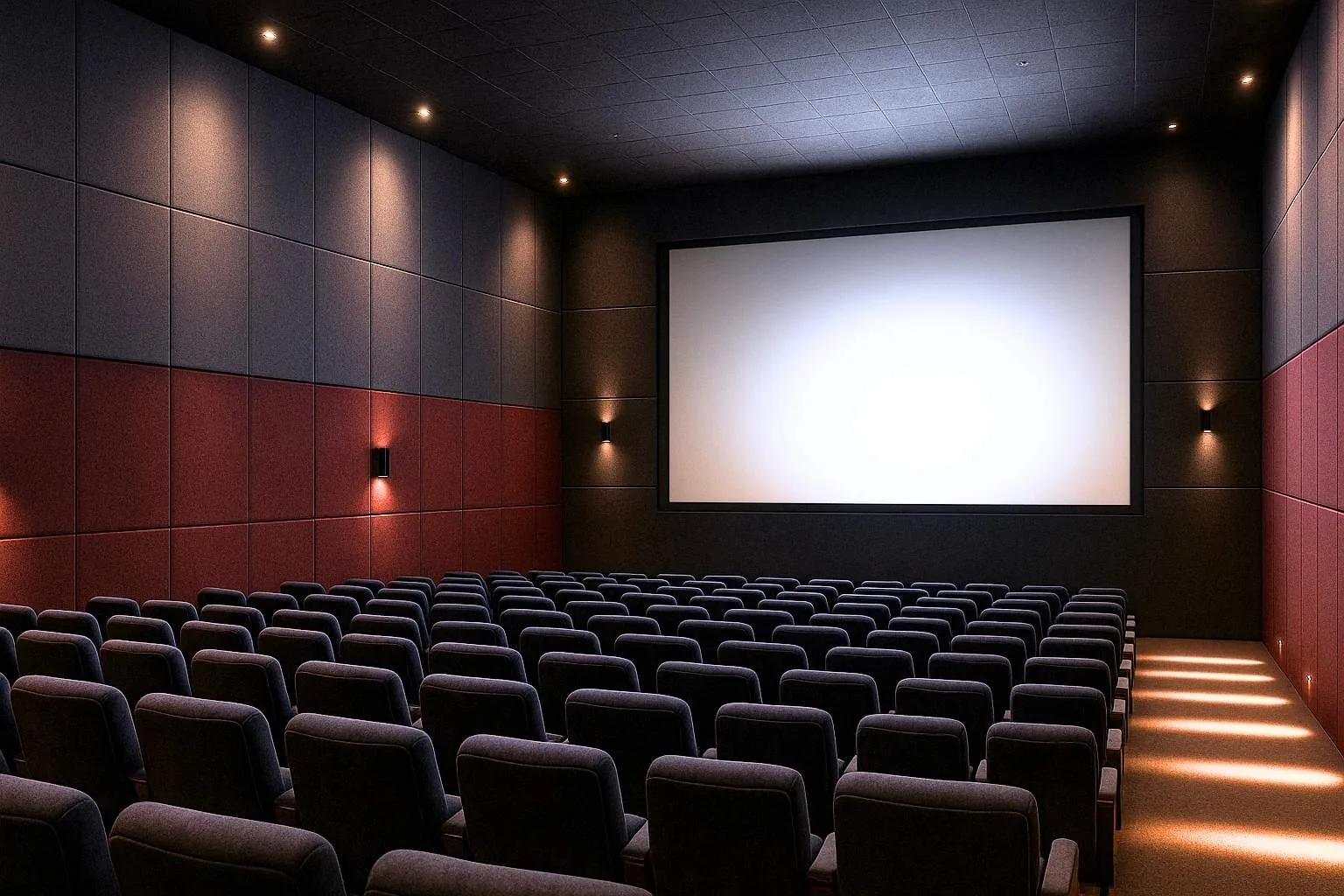
Screen to screen
Independent construction between auditoria, with services broken at the line. Depth is genuinely scarce, so a thin build-up that performs is worth more than a thicker one that performs marginally better.
- Acoustic panels, 9 to 24 mm, 1220 x 2440 mm standard, up to 2440 x 4270 mm, 1200 to 3600 GSM
- Acoustic carpet and rugs, 4 mm
- PET felt acoustic panels, 4 to 24 mm
-
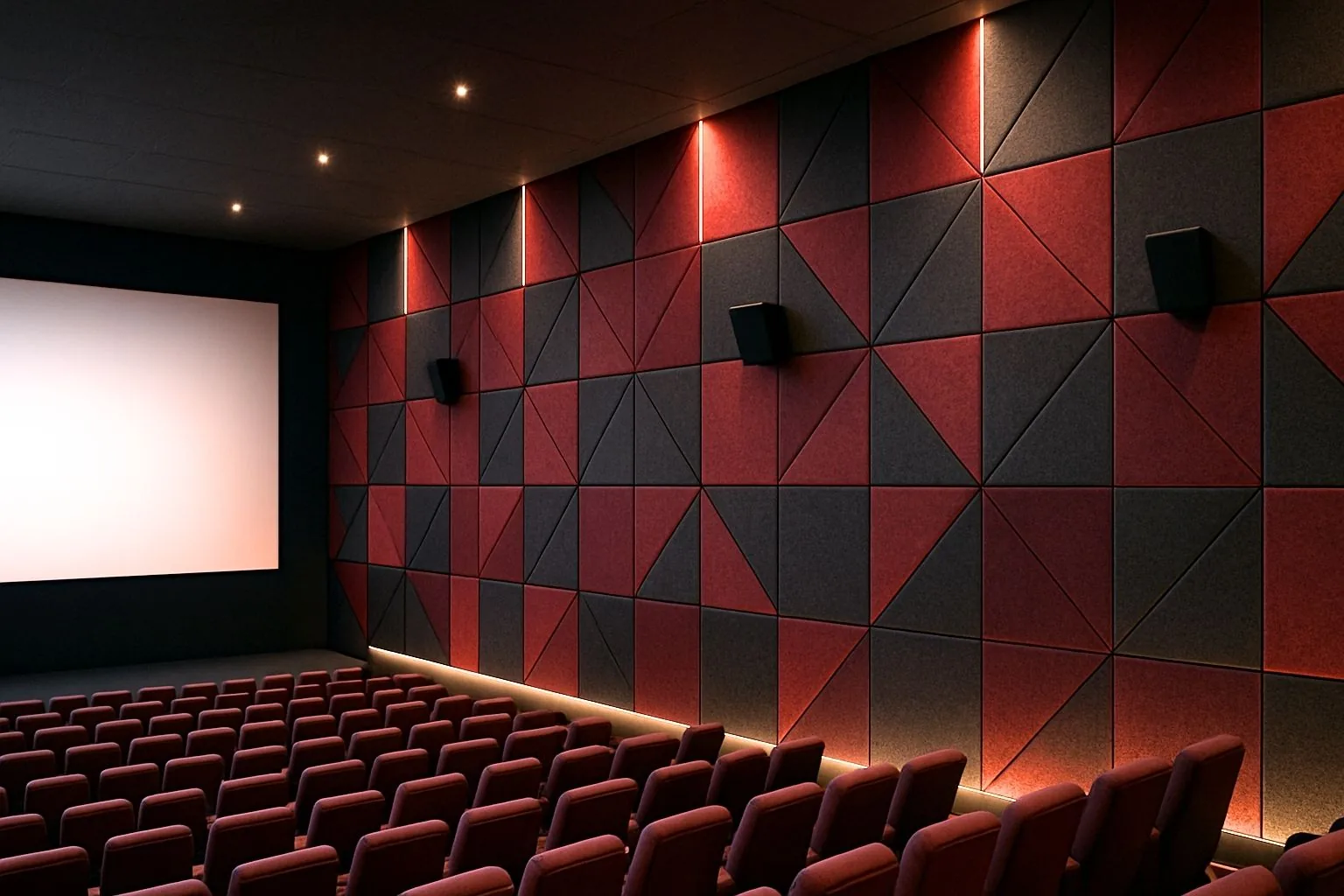
In room response
Heavy absorption on side and rear walls so the mix is heard as intended. Seismic detailing means junctions that must stay flexible. An acoustic layer cannot bridge a movement joint rigidly.
- Acoustic panels, 1800 x 900 mm, image printed into the felt rather than onto a facing
- Acoustic carpet and rugs, High density polyester
- PET felt acoustic panels, 1220 x 2440 mm standard, 4 x 8 ft
-
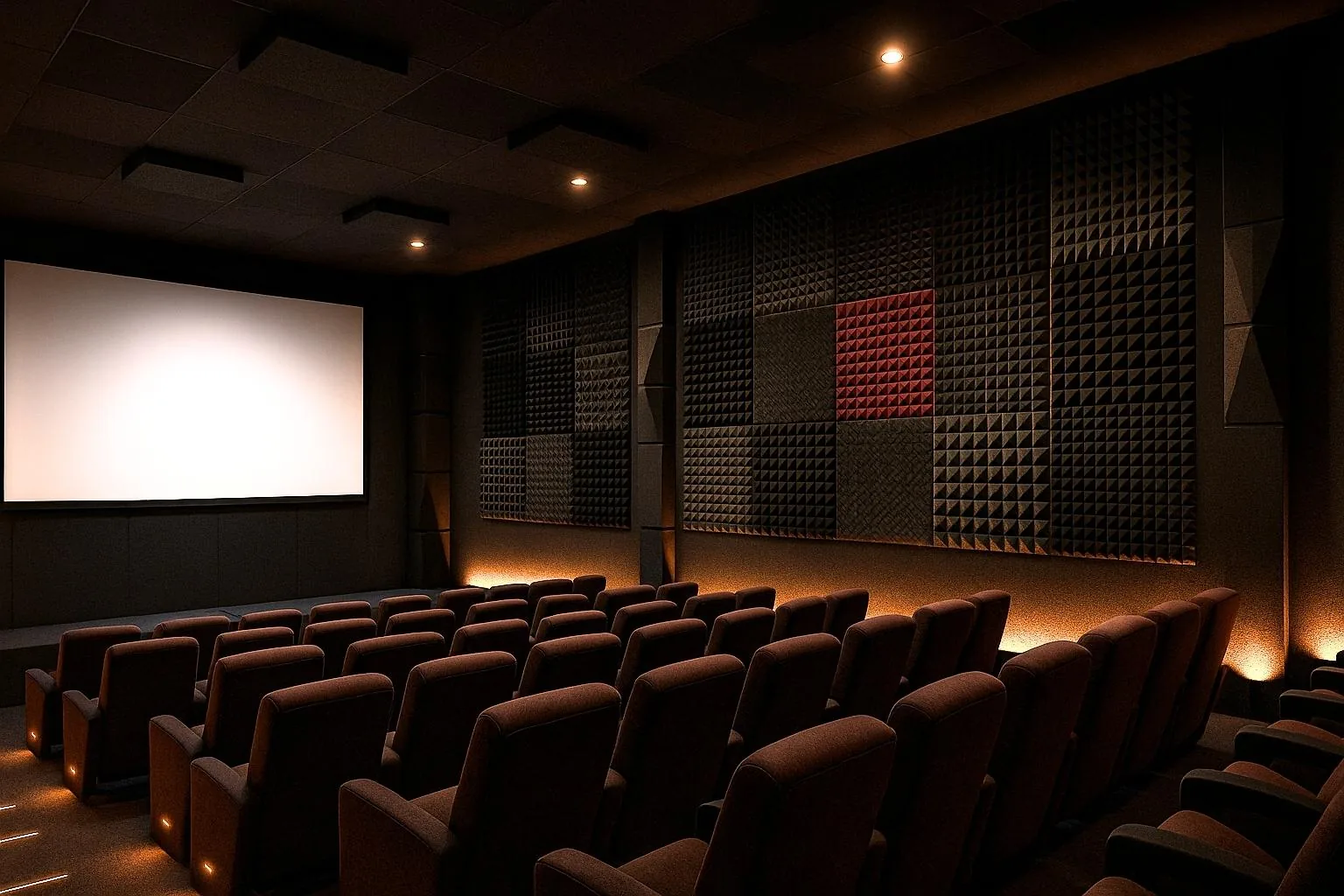
Plant and projection
Equipment noise into the auditorium, treated at source. Specifications here are written carefully and checked properly. Send us the target and we will say plainly what our material reaches.
- Acoustic panels, Cut pattern in PET felt, adds visual rhythm without changing the absorber
- Acoustic carpet and rugs, Felt
- PET felt acoustic panels, 2440 x 4270 mm, 2.44 x 4.27 m, 8 x 14 ft
Interior designers tend to arrive with the look already decided. We will tell you which finish gets there without losing the acoustics. See how we work with interior designers.
04 / Climate
Why the climate in Japan changes the material, not the target
Japan is hot summers, mild winters and a distinct wet season, and that narrows the material list before acoustics is discussed.
PET felt handles the wet months without absorbing moisture or feeding mould. Timber and wood wool want a ventilated cavity and a stable indoor RH.
The failure we design against here is wet-season humidity behind linings.
Where a consultant is already engaged on a Japan project, we supply to their specification and send the test reports rather than describing them. More on working with acoustic consultants.
06 / Straight talk
What we watch go wrong on jobs like this
-
A shared service void running across the wall line
Square metre for square metre the ceiling is the cheapest result in the room. Skipping it and buying wall panels instead is the most common way to overspend.
-
Treating the auditorium to fix bleed from the next screen
Small on the drawing, expensive on site, and almost always found after handover.
-
Doors and lobbies specified late and undersized
A 6 mm undercut under a door leaves a hole the size of a brick. The wall around it is then decorative.
-
Treating it as a generic Japan job
Depth is genuinely scarce, so a thin build-up that performs is worth more than a thicker one that performs marginally better.
05 / Getting it there
Supply into Japan, start to site
| Ships from | Palwal, Haryana, India |
|---|---|
| Arrives at | Yokohama or Kobe, then road to site |
| Dispatch | 4 to 7 working days |
| Freight | Sea via Yokohama |
| Support | Drawings, build-ups, BOQ and material that arrives complete |
Standard items dispatch in 4 to 7 working days. The sea leg from India is long, so plan the full door to door window into the programme. We give real dates, not optimistic ones.
Sea freight into Yokohama or Kobe, then road to site. Air freight for samples and urgent quantities.
Questions from Japan projects
What makes cinema and multiplex soundproofing different in Japan?
Halls, temples and civic auditoria range from very controlled to very reverberant, and both need measured targets. Depth is genuinely scarce, so a thin build-up that performs is worth more than a thicker one that performs marginally better.
Where should the budget go first on a Japan project?
Screen to screen. Independent construction between auditoria, with services broken at the line. In room response. Heavy absorption on side and rear walls so the mix is heard as intended.
Do you have an office or installation team in Japan?
No. We manufacture in India and supply into Japan. We give you drawings, build-ups, a BOQ and material that arrives complete, and we will tell you plainly when a job needs a local contractor we cannot be.
How does material get to a Japan site?
ships from: Palwal, Haryana, India, arrives at: Yokohama or Kobe, then road to site, dispatch: 4 to 7 working days. Standard items dispatch in 4 to 7 working days. The sea leg from India is long, so plan the full door to door window into the programme. We give real dates, not optimistic ones.
What goes wrong most often on this kind of project?
A shared service void running across the wall line. Treating the auditorium to fix bleed from the next screen.
What do you need from us to quote?
A plan, a section through the critical partition or ceiling, and what the room is for. From that we can give a build-up and a BOQ rather than a price per square foot.
Next step
Drawings in, BOQ and a delivered date out
One drawing gets you a proper answer. Build-up, quantities, a delivered date, and an honest note on anything we think is the wrong approach.