

Manufactured in India, supplied in Amsterdam
Soundproofing materials in Amsterdam
We manufacture soundproofing materials at our own plant at Palwal in Haryana, India, and supply them into Amsterdam. Made at our own plant in India and shipped into Rotterdam, roughly eighty kilometres from the city, so the inland leg stays short and the landed cost stays predictable.
- SoundBlanket MLV
- 2100 kg per cubic metre. 2.5 mm STC 30 at 5.25 kg per sq m, 4 mm STC 34 at 8.4, 6 mm at 12.6
- BassBloc
- 1800 x 900 x 20 mm, 100 kg per cubic metre, NRC 0.85
- Principle
- Mass, then decoupling, then cavity absorption, then sealing
- Test standards
- ASTM E90 for the barrier, ASTM C423 for the absorber
- Lead time
- 4 to 7 working days for stock items
- ASTM E90 for the barrier, ASTM C423 for the absorber
- Made at our own plant, Palwal, Haryana, India
- One batch across the order, no blending between runs
We make this ourselves and ship it to you. No local branch, no borrowed certifications, no dealer margin. One batch across the whole order, and an honest answer when the product is wrong for the problem.
01 / The product
What this material is and where it earns its place in Amsterdam
The blocking side of the range taken together: mass loaded vinyl, resilient layers, cavity absorption and the build-ups they belong in. This is the page for someone whose problem is noise getting through, not a room that sounds wrong.
Work reaching us from Amsterdam is mostly canal house apartments, hotels, offices in Zuid and Noord, studios, bars, clinics.
Narrow terraced houses and canal buildings share party walls, with timber floors upstairs and concrete below. Neighbours on both sides is the default condition.
- Independent leaf A second wall that does not touch the first. Nothing else comes close for the money.
- Resilient bar Where a full independent leaf will not fit. Effective, and very easy to short circuit with one wrong screw.
- Floating floor Resilient layer and deck, to break impact energy before it reaches the structure.
- What it will not do Soundproofing fails at the gaps, not the materials. A service penetration, a back to back socket, or a door undercut will undo a correctly built wall.
Full specification
Thickness, density, NRC by frequency, fire class, standard sizes and build-up detail for our soundproofing materials are on the main product page. This page covers what that means for a project in Amsterdam.
SoundBlanket mass loaded vinyl BassBloc sound absorber Wall soundproofing systems
02 / Specification
The numbers, and they do not move by city
Nothing below changes by location. The decisions that do change are grade, thickness and how the material is mounted, and those are covered further down.
- Light retrofit2.5 mm membrane. Where depth is not available
- Standard partition4 mm membrane on an independent leaf. The common specification
- Heavy6 mm membrane and full decoupling. Plant, machine enclosure, low frequency
| SoundBlanket MLV | 2100 kg per cubic metre. 2.5 mm STC 30 at 5.25 kg per sq m, 4 mm STC 34 at 8.4, 6 mm at 12.6 |
|---|---|
| BassBloc | 1800 x 900 x 20 mm, 100 kg per cubic metre, NRC 0.85 |
| Principle | Mass, then decoupling, then cavity absorption, then sealing |
| Test standards | ASTM E90 for the barrier, ASTM C423 for the absorber |
On a Amsterdam job with a consultant involved, our part is material that matches the submitted data. See working with acoustic consultants.
03 / On the ground
What the buildings in Amsterdam do to the specification
- Canal houses carry everything
Seventeenth century houses were built narrow and tall with timber floors on shared party walls. Footfall and speech travel down and sideways, which is why a resilient layer under the finish beats anything hung on a wall.
- Listed facades, internal fixes only
On a monument you cannot change the outside and often cannot change the structure. Everything has to be done from the inside, shallow, and ideally reversible.
- Venue noise limits are enforced
Amsterdam operators live with real decibel and low frequency conditions on their permits, and the low end is what gets them into trouble. Containment is not optional here, it is the licence.
- Recycled content gets asked first
Our PET felt is made from recycled bottle flake. In Dutch tenders that question comes before the acoustic one, and it is the easiest one for us to answer honestly.
- Plant and HVAC
Balanced mechanical ventilation is standard, so duct and terminal unit noise replace open window noise.
- The housing stock
Narrow terraced houses and canal buildings share party walls, with timber floors upstairs and concrete below. Neighbours on both sides is the default condition.
We would rather argue about the build-up at design stage than on site. See how we support architects.
04 / Climate
What the Amsterdam climate rules in and rules out
Amsterdam is cool and damp, with long heating seasons and cold external walls, and that narrows the sensible material list before acoustics is even discussed.
Cold wall build-ups and long heating seasons mean interstitial condensation is a real risk behind any lining. PET felt is unaffected by damp air and will not feed mould where a fabric-faced mineral product would.
The risk we design against here is condensation behind linings in older, poorly insulated stock.
For a Amsterdam interior where the finish leads, we will say plainly what each option costs you acoustically. See how we work with interior designers.
05 / Logistics
Getting it to Amsterdam, with real dates
| Ships from | Palwal, Haryana, India |
|---|---|
| Arrives at | Rotterdam, then a short road run into the city |
| Dispatch | 4 to 7 working days |
| Freight | Sea via Rotterdam |
| Packing | Rolls on core tubes, boards palletised, fixings and tapes listed on the same packing list. |
| Lead time | 4 to 7 working days for stock items. |
Standard items dispatch in 4 to 7 working days. Grooved panels and custom colours take longer, and we tell you that before you order, not after.
Sea freight into Rotterdam, then road into Amsterdam. Being close to the port keeps the inland cost low. Air freight for samples and urgent quantities.
06 / Straight talk
Four honest warnings before you buy
-
The wrong product for the problem
Soundproofing fails at the gaps, not the materials. A service penetration, a back to back socket, or a door undercut will undo a correctly built wall. We would rather spend the conversation on the detail than on the product.
-
Square footage quoted before the room is understood
Anyone can price a wall. Working out how much material the room actually needs usually reduces the order, which is why not everyone does it.
-
A claim of being local to Amsterdam
We manufacture in India and supply here. We do not run an office in this city and we will not pretend to, because you would find out on the first site visit.
07 / In projects
The product on finished jobs

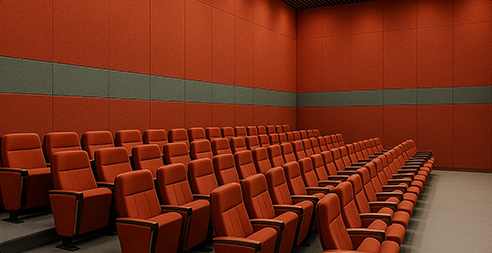
Amsterdam: questions we are actually asked
Do you manufacture soundproofing materials in Amsterdam?
No, and we will not say otherwise. We manufacture at our own plant at Palwal in Haryana, India, and supply into Amsterdam as the manufacturer rather than through a dealer. Made at our own plant in India and shipped into Rotterdam, roughly eighty kilometres from the city, so the inland leg stays short and the landed cost stays predictable. You buy at factory prices with one consistent batch across the order.
What changes the specification on a Amsterdam job?
Seventeenth century houses were built narrow and tall with timber floors on shared party walls. Footfall and speech travel down and sideways, which is why a resilient layer under the finish beats anything hung on a wall. On a monument you cannot change the outside and often cannot change the structure. Everything has to be done from the inside, shallow, and ideally reversible. Those two things move the build-up far more than the panel figure does.
Is this the right material for Amsterdam conditions?
Amsterdam is cool and damp, with long heating seasons and cold external walls. Cold wall build-ups and long heating seasons mean interstitial condensation is a real risk behind any lining. PET felt is unaffected by damp air and will not feed mould where a fabric-faced mineral product would. The failure we design against here is condensation behind linings in older, poorly insulated stock.
How quickly can material reach a site in Amsterdam?
ships from: Palwal, Haryana, India, arrives at: Rotterdam, then a short road run into the city, dispatch: 4 to 7 working days. Standard items dispatch in 4 to 7 working days. Grooved panels and custom colours take longer, and we tell you that before you order, not after.
What should you not buy soundproofing materials for?
Soundproofing fails at the gaps, not the materials. A service penetration, a back to back socket, or a door undercut will undo a correctly built wall. We would rather spend the conversation on the detail than on the product.
What quantity do we have to order, and in what packaging?
Minimum order is confirmed with the quote. Rolls on core tubes, boards palletised, fixings and tapes listed on the same packing list.
Next step
Send a plan and a section, get a real build-up
A plan and a section is enough. We will come back with a build-up, a BOQ and a delivered date, and we will say so if what you are asking for will not work.