

For projects in Thailand
School and classroom acoustics in Thailand
Hard floors, bare walls and long corridors that amplify everything. Children with developing language, and anyone with a hearing difficulty, lose more from a live classroom than adults do, which is why intelligibility is the target rather than quiet. Classrooms are hard and naturally ventilated, open to traffic and corridor noise, with large class sizes pushing levels up.
- Classroom RT
- A number, set against room volume, achieved mostly at the ceiling.
- Corridor spill
- Long hard circulation feeds every room off it. Treating the corridor helps every classroom at once.
- Halls and gyms
- Dual use rooms carrying speech, music and sport, where durability decides the product.
- Quote
- From a plan and a section, within 48 hours
01 / Start here
What this material is and where it earns its place in Thailand
Hard floors, bare walls and long corridors that amplify everything. Children with developing language, and anyone with a hearing difficulty, lose more from a live classroom than adults do, which is why intelligibility is the target rather than quiet.
Classrooms are hard and naturally ventilated, open to traffic and corridor noise, with large class sizes pushing levels up.
Work reaching us from Thailand is mostly industrial estates and plant, resorts and hotels, offices, hospitals, schools, studios.
- Two different markets Industrial estate work is enclosure and mass. Resort work is guest room isolation and function room acoustics. We quote them differently because they are different problems.
- Heat and humidity all year PET felt does not absorb moisture, shed fibre or feed mould, which matters where mineral products sag in a tropical climate.
- Cooling plant never stops Large continuous cooling loads next to occupied space generate more complaints than anything happening inside the room.
- Classroom RT A number, set against room volume, achieved mostly at the ceiling.
Full specification
Thickness, density, NRC by frequency, fire class, standard sizes and build-up detail for school acoustics are on the main product page. This page covers what that means for a project in Thailand.
02 / The build-up
The stack, in the order it is installed
-

Layer 1
PET felt acoustic panels
A rigid non-woven panel pressed from 100% polyester fibre, a large part of it recycled. In Thailand, split units and VRF with condensers on balconies and in light wells, running at full load most of the year.
Direct to wall. Panel bonded or mechanically fixed flat to the substrate. Simplest, and the weakest at low frequency.
-

Layer 2
Wood wool acoustic panels
Wood fibre bound into a rigid board with an open texture. In Thailand, temples, function halls and hotel ballrooms are tall hard volumes carrying amplified speech and music.
Direct fix. Mechanically fixed to the soffit or wall. Durable and simple.
-

Layer 3
Acoustic panels
The full absorber range rather than one product: plain PET felt, printed felt, grooved panels and fabric finishes, chosen by how the room is used and how it has to look. In Thailand, classrooms are hard and naturally ventilated, open to traffic and corridor noise, with large class sizes pushing levels up.
Ceiling first. In most rooms the ceiling is the largest untreated surface and the cheapest square metre of result.
Architects working in Thailand usually need the build-up before the product. We will draw the section and mark what does the work. See how we support architects.
03 / What drives the brief
The Thailand conditions that change the answer
- Two different markets
Industrial estate work is enclosure and mass. Resort work is guest room isolation and function room acoustics. We quote them differently because they are different problems.
- Heat and humidity all year
PET felt does not absorb moisture, shed fibre or feed mould, which matters where mineral products sag in a tropical climate.
- Cooling plant never stops
Large continuous cooling loads next to occupied space generate more complaints than anything happening inside the room.
- Resort programmes have fixed dates
Openings do not move. We give honest dispatch and transit windows rather than optimistic ones.
- Assembly and performance rooms
Temples, function halls and hotel ballrooms are tall hard volumes carrying amplified speech and music.
- School and campus buildings
Classrooms are hard and naturally ventilated, open to traffic and corridor noise, with large class sizes pushing levels up.
04 / Room by room
Where the money goes on a Thailand project
-
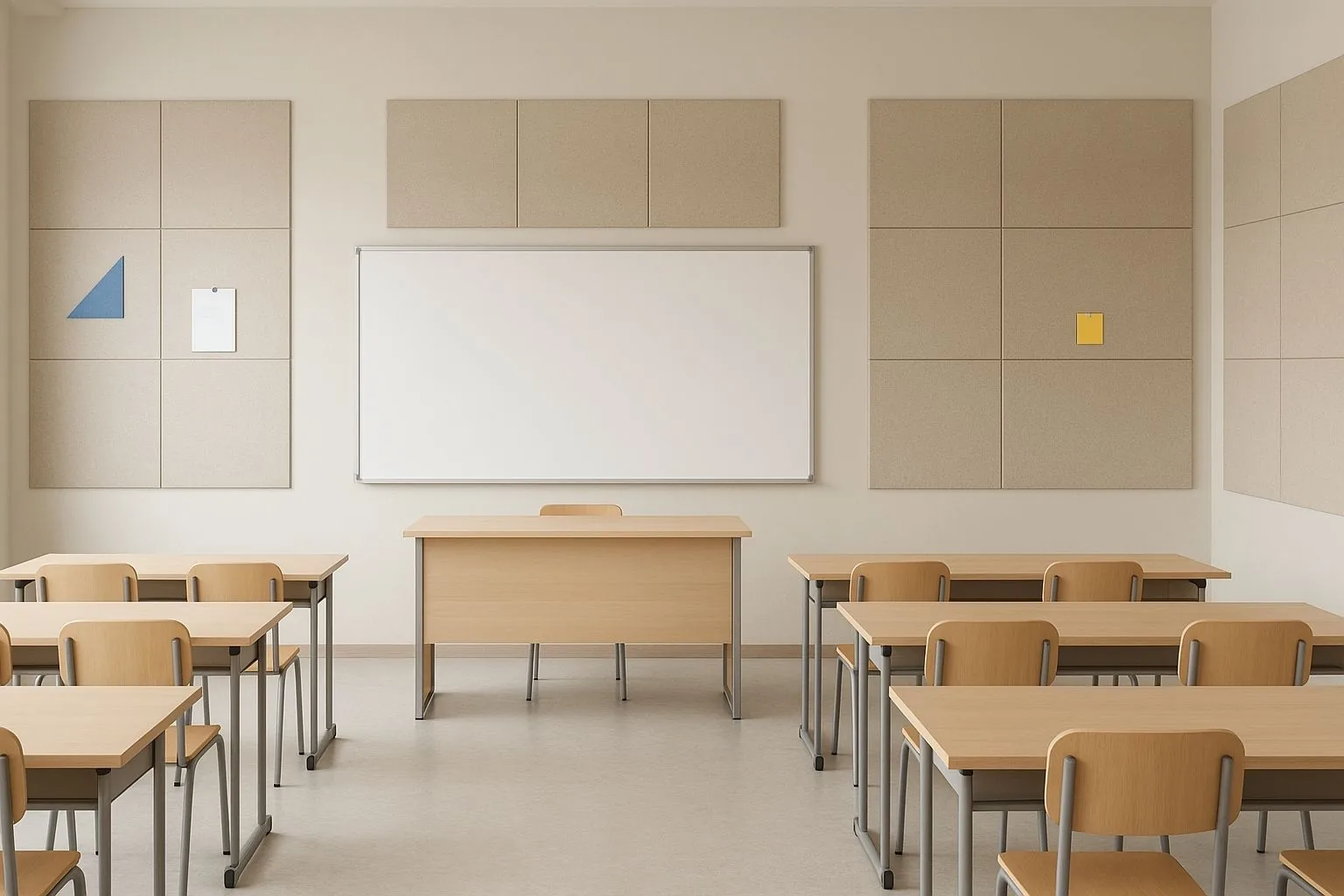
Classroom RT
A number, set against room volume, achieved mostly at the ceiling. Industrial estate work is enclosure and mass. Resort work is guest room isolation and function room acoustics. We quote them differently because they are different problems.
- PET felt acoustic panels, 100% PET non-woven, no added binder
- Wood wool acoustic panels, 20 mm
- Acoustic panels, Cut pattern in PET felt, adds visual rhythm without changing the absorber
-
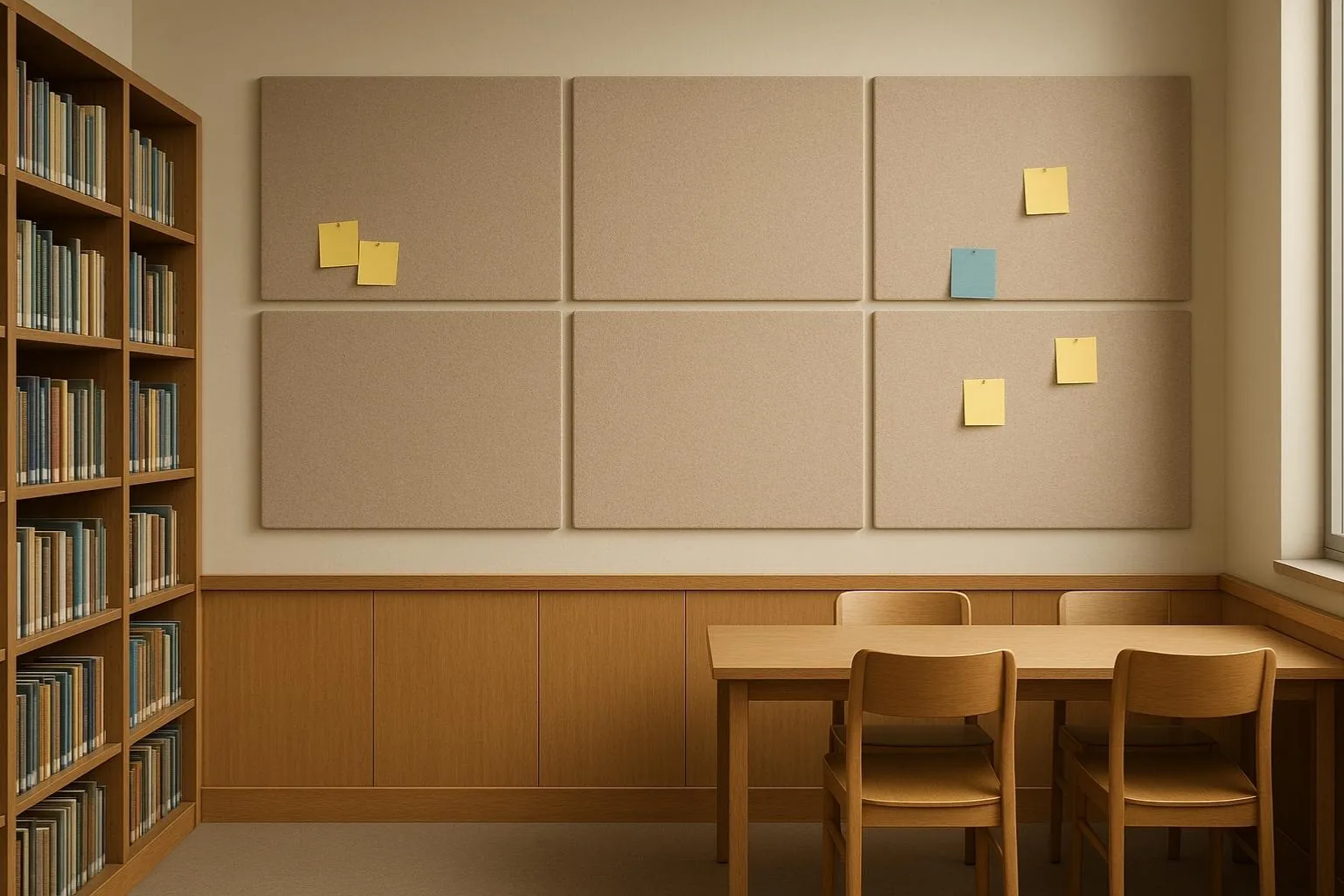
Corridor spill
Long hard circulation feeds every room off it. Treating the corridor helps every classroom at once. PET felt does not absorb moisture, shed fibre or feed mould, which matters where mineral products sag in a tropical climate.
- PET felt acoustic panels, 9, 12, 18 and 24 mm standard, tolerance plus or minus 5 percent
- Wood wool acoustic panels, 400 kg per cubic metre
- Acoustic panels, ASTM C423
-
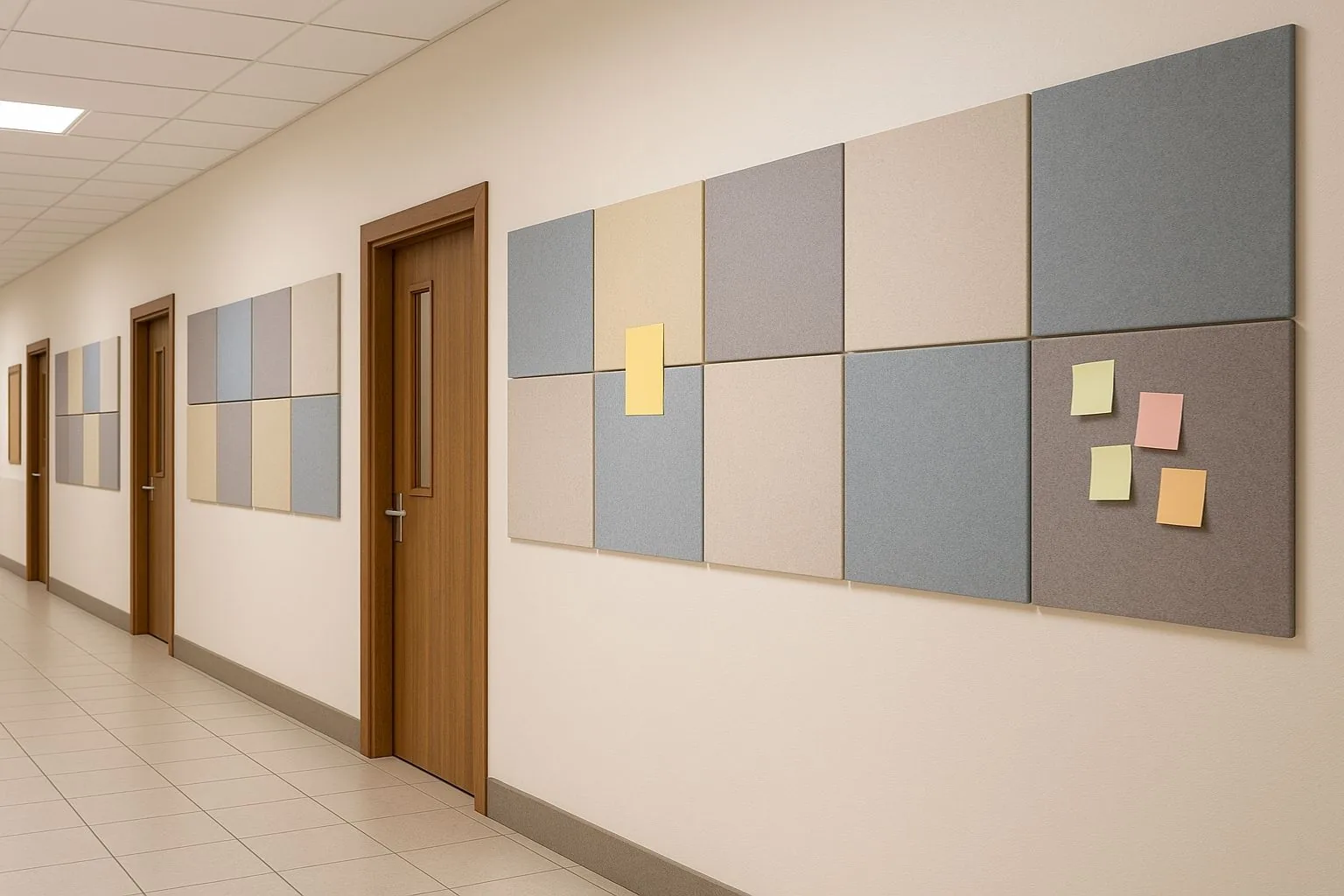
Halls and gyms
Dual use rooms carrying speech, music and sport, where durability decides the product. Large continuous cooling loads next to occupied space generate more complaints than anything happening inside the room.
- PET felt acoustic panels, 4 to 24 mm
- Wood wool acoustic panels, 0.30
- Acoustic panels, 9 to 24 mm, 1220 x 2440 mm standard, up to 2440 x 4270 mm, 1200 to 3600 GSM
Designers get colour, pattern and CNC options with the absorption figure attached to each. See how we work with interior designers.
04 / Climate
What the Thailand climate rules in and rules out
Thailand is warm and humid through most of the year, with a long wet season, and that narrows the material list before acoustics is discussed.
Humidity is the deciding factor. PET felt does not absorb moisture, shed fibre or feed mould, which is why it outlasts fabric-wrapped mineral wool in this climate. Wood wool and timber need a ventilated cavity behind them.
The failure we design against here is mould, sagging fabric finishes and swelling in timber.
Consultants get the raw data, not a sales sheet. That is the whole of our side of the job, and it is set out under working with acoustic consultants.
06 / Straight talk
The six errors that cost the most
-
Panels at child height where they get damaged
This is the one that comes back as a second fit-out rather than a snag.
-
Treating one classroom and leaving the corridor
It sounds like a small detail until the room is finished and the complaint arrives.
-
Choosing a product that cannot take a football
Plant noise treated as a room problem is the most reliable way to spend a budget and change nothing anyone can hear.
-
Treating it as a generic Thailand job
Industrial estate work is enclosure and mass. Resort work is guest room isolation and function room acoustics. We quote them differently because they are different problems.
05 / Getting it there
How material reaches a Thailand site
| Ships from | Palwal, Haryana, India |
|---|---|
| Arrives at | Laem Chabang, then road to site |
| Dispatch | 4 to 7 working days |
| Freight | Sea via Laem Chabang |
| Support | Drawings, build-ups, BOQ and material that arrives complete |
Standard items dispatch in 4 to 7 working days. Grooved panels and custom colours take longer, and we say so before you order, not after.
Sea freight into Laem Chabang, then road to site. Air freight for samples and urgent quantities.
Questions from Thailand projects
What makes school and classroom acoustics different in Thailand?
Classrooms are hard and naturally ventilated, open to traffic and corridor noise, with large class sizes pushing levels up. Industrial estate work is enclosure and mass. Resort work is guest room isolation and function room acoustics. We quote them differently because they are different problems.
Where should the budget go first on a Thailand project?
Classroom RT. A number, set against room volume, achieved mostly at the ceiling. Corridor spill. Long hard circulation feeds every room off it. Treating the corridor helps every classroom at once.
Do you have an office or installation team in Thailand?
No. We manufacture in India and supply into Thailand. We give you drawings, build-ups, a BOQ and material that arrives complete, and we will tell you plainly when a job needs a local contractor we cannot be.
How does material get to a Thailand site?
ships from: Palwal, Haryana, India, arrives at: Laem Chabang, then road to site, dispatch: 4 to 7 working days. Standard items dispatch in 4 to 7 working days. Grooved panels and custom colours take longer, and we say so before you order, not after.
What goes wrong most often on this kind of project?
Panels at child height where they get damaged. Treating one classroom and leaving the corridor.
What do you need from us to quote?
A plan, a section through the critical partition or ceiling, and what the room is for. From that we can give a build-up and a BOQ rather than a price per square foot.
Next step
Send a plan and a section, get a real build-up
We quote from drawings, not from a square foot rate. Send a plan and the section through the critical wall or ceiling and you will get something you can actually build from.