
Home > New Zealand > Home theatre soundproofing and acoustics

For projects in New Zealand
Home theatre soundproofing and acoustics in New Zealand
Serious equipment in a room with no isolation plan. The complaint is almost never the speakers. It is bass leaving the room and an untreated box making the system sound worse than it is. Timber frame with plasterboard linings, so walls have very little mass. Apartment and townhouse party walls need a second leaf rather than surface treatment.
- Containment
- Bass through the wall, floor and door. Mass and decoupling, with the door usually the weakest point.
- Low frequency inside
- Corner absorption with depth, before any surface treatment.
- Reflections
- Side wall and ceiling first reflection points at the seating position.
- Quote
- From a plan and a section, within 48 hours
01 / The material
What this material is and where it earns its place in New Zealand
Serious equipment in a room with no isolation plan. The complaint is almost never the speakers. It is bass leaving the room and an untreated box making the system sound worse than it is.
Timber frame with plasterboard linings, so walls have very little mass. Apartment and townhouse party walls need a second leaf rather than surface treatment.
Work reaching us from New Zealand is mostly timber frame housing, apartments, offices, schools, clinics, studios.
- Timber frame, very little mass Light construction passes low frequency easily. Added mass and a decoupled layer do the work, and absorption alone will not.
- Designed to move Seismic detailing means junctions and joints that have to stay flexible. An acoustic build-up has to respect that rather than bridge it rigidly.
- A long sea leg This is one of the longest routes we run. Ordering to a real schedule matters more here than anywhere else, so we quote the full window.
- Containment Bass through the wall, floor and door. Mass and decoupling, with the door usually the weakest point.
Full specification
Thickness, density, NRC by frequency, fire class, standard sizes and build-up detail for home theatre soundproofing are on the main product page. This page covers what that means for a project in New Zealand.
02 / The build-up
The stack, in the order it is installed
-

Layer 1
Acoustic foam and BassBloc
Open cell foam shapes for high frequency control, and BassBloc, a high density absorber built for the low mid range where ordinary foam does nothing. In New Zealand, heat pumps and ducted systems, with outdoor units close to boundaries in dense suburbs.
First reflection points. Mirror trick placement on side walls and ceiling, which is a handful of panels rather than a lined room.
-
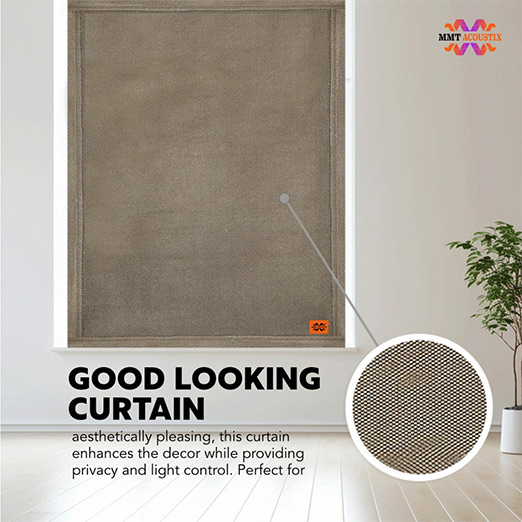
Layer 2
Soundproof curtains
A layered curtain with a mass loaded vinyl core, used where an opening has to stay an opening. In New Zealand, school halls, marae and community centres carry speech and performance in the same hard room.
Track with a seal. Ceiling track plus a floor seal or drape, so the perimeter is closed when it is drawn.
-

Layer 3
Acoustic carpet and rugs
A tile carpet with a dense polyester face on a felt backing. In New Zealand, classroom acoustics are taken seriously and open plan learning spaces are common, which makes speech intelligibility the design target.
Zoned. Carpet in the circulation and meeting zones, hard floor elsewhere, so the treatment sits where the noise is made.
For a New Zealand practice, the useful thing is a detail you can put in a drawing set, not a brochure. See how we support architects.
03 / On the ground
The New Zealand conditions that change the answer
- Timber frame, very little mass
Light construction passes low frequency easily. Added mass and a decoupled layer do the work, and absorption alone will not.
- Designed to move
Seismic detailing means junctions and joints that have to stay flexible. An acoustic build-up has to respect that rather than bridge it rigidly.
- A long sea leg
This is one of the longest routes we run. Ordering to a real schedule matters more here than anywhere else, so we quote the full window.
- Damp and variable climate
PET felt does not absorb moisture, shed fibre or feed mould, which suits cold external walls and sealed rooms.
- The housing stock
Timber frame with plasterboard linings, so walls have very little mass. Apartment and townhouse party walls need a second leaf rather than surface treatment.
04 / Room by room
What each space in a New Zealand project needs
-
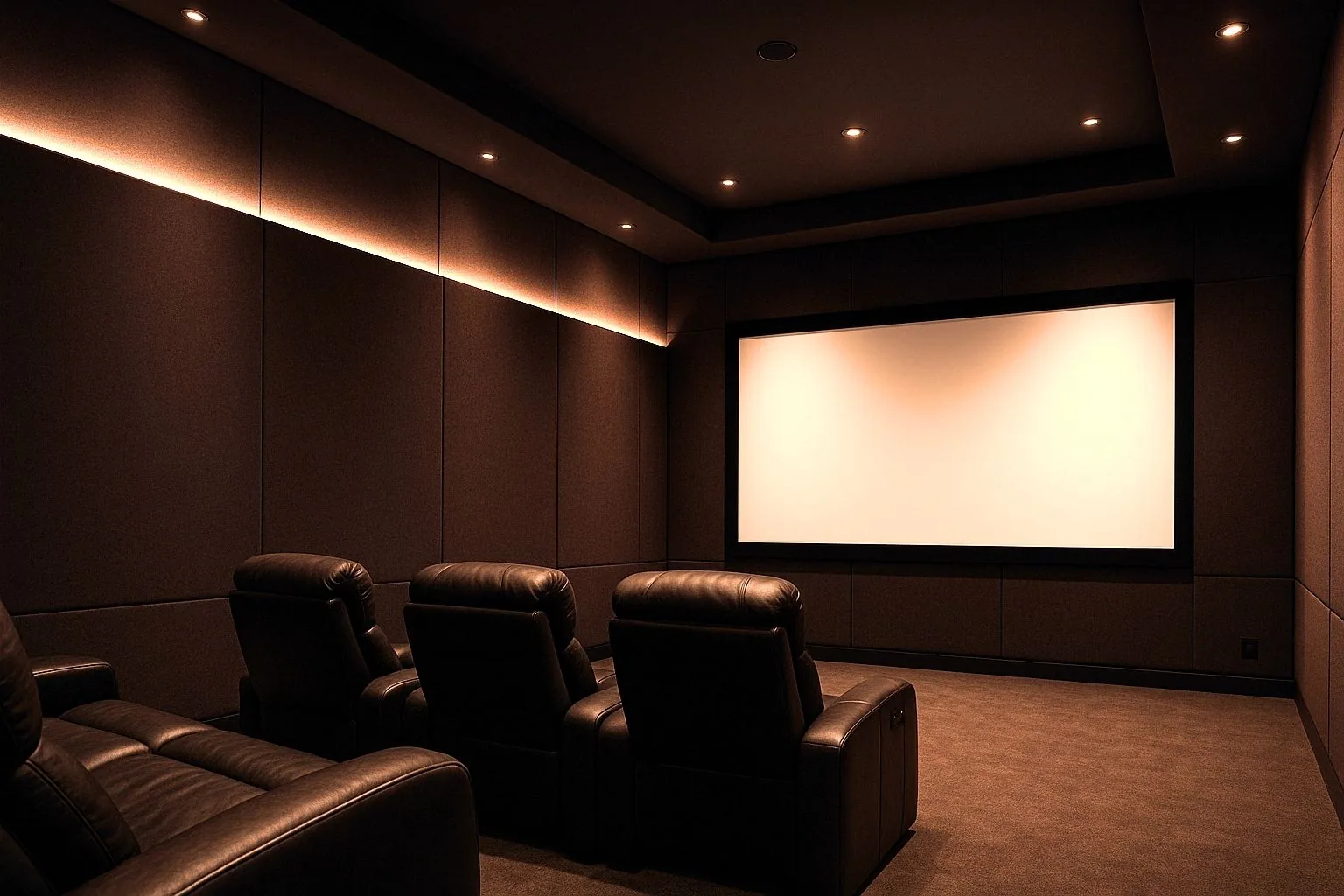
Containment
Bass through the wall, floor and door. Mass and decoupling, with the door usually the weakest point. Light construction passes low frequency easily. Added mass and a decoupled layer do the work, and absorption alone will not.
- Acoustic foam and BassBloc, 1800 x 900 mm
- Soundproofing materials, 1800 x 900 x 20 mm, 100 kg per cubic metre, NRC 0.85
- Acoustic carpet and rugs, High density polyester
-
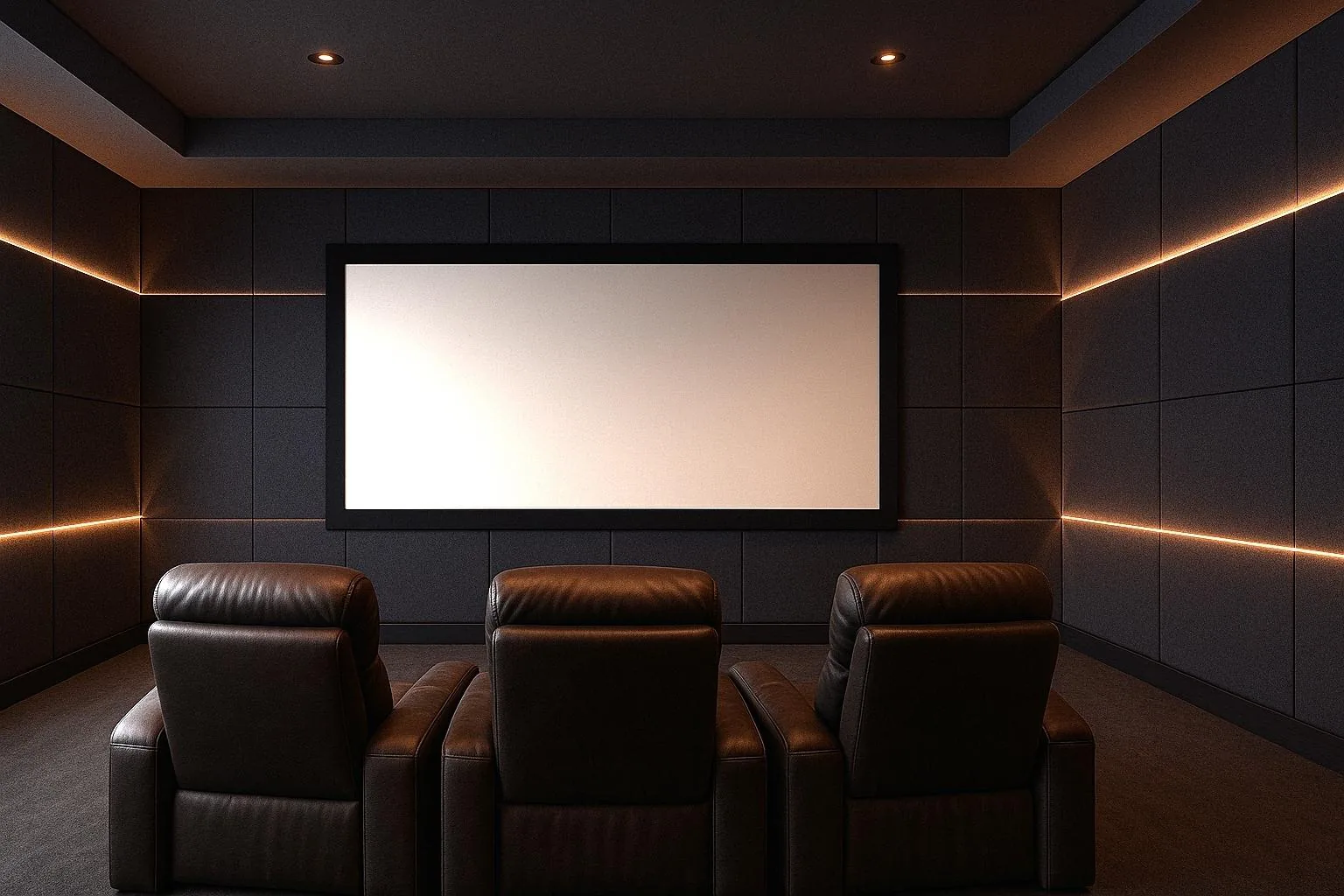
Low frequency inside
Corner absorption with depth, before any surface treatment. Seismic detailing means junctions and joints that have to stay flexible. An acoustic build-up has to respect that rather than bridge it rigidly.
- Acoustic foam and BassBloc, 20 mm
- Soundproofing materials, Mass, then decoupling, then cavity absorption, then sealing
- Acoustic carpet and rugs, Felt
-
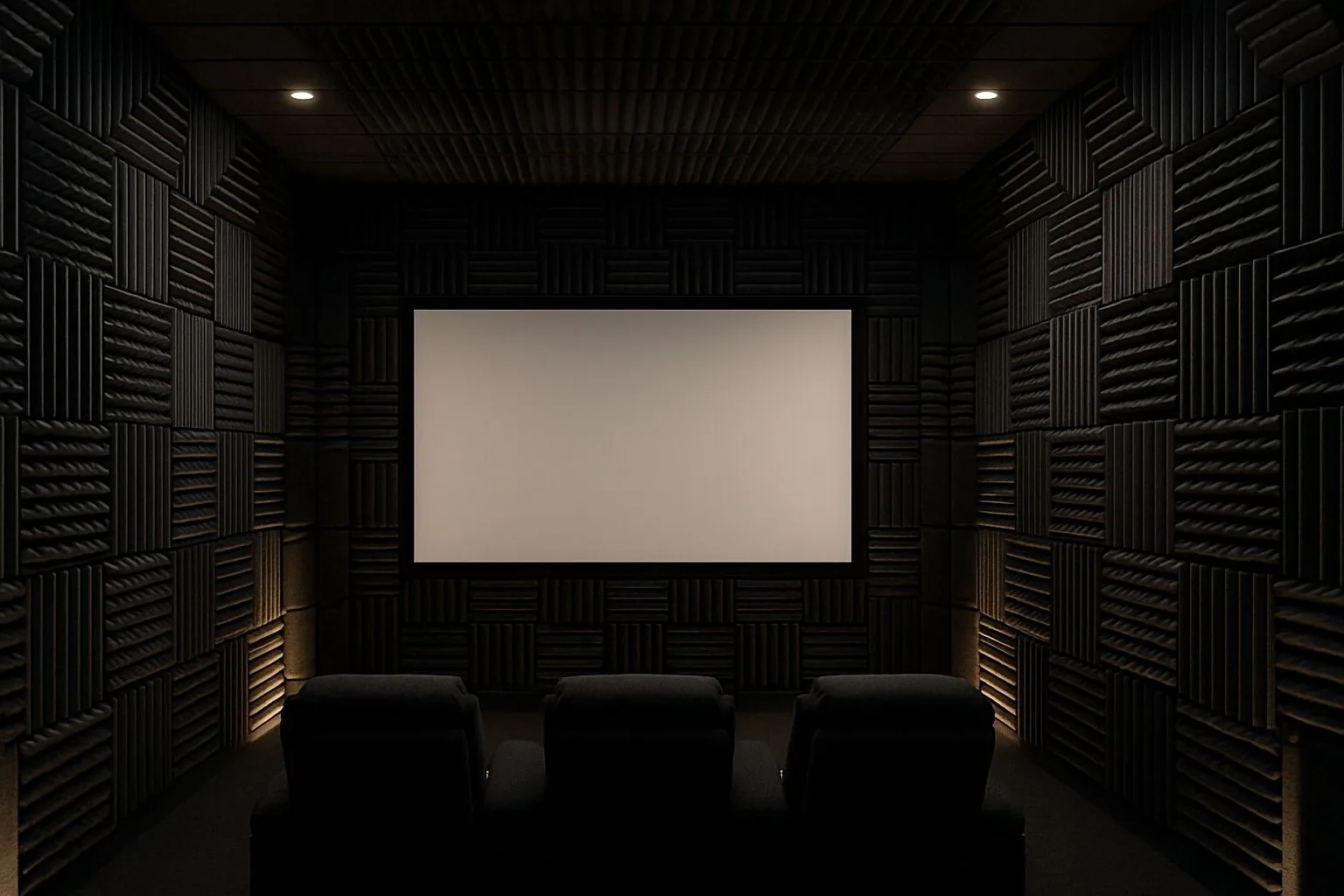
Reflections
Side wall and ceiling first reflection points at the seating position. This is one of the longest routes we run. Ordering to a real schedule matters more here than anywhere else, so we quote the full window.
- Acoustic foam and BassBloc, 100 kg per cubic metre
- Soundproofing materials, ASTM E90 for the barrier, ASTM C423 for the absorber
- Acoustic carpet and rugs, 64 sq ft per pack
For a New Zealand interior where the finish leads, we will say plainly what each option costs you acoustically. See how we work with interior designers.
04 / Climate
Why the climate in New Zealand changes the material, not the target
New Zealand is cool and damp, with long heating seasons and cold external walls, and that narrows the material list before acoustics is discussed.
Cold wall build-ups and long heating seasons mean interstitial condensation is a real risk behind any lining. PET felt is unaffected by damp air and will not feed mould where a fabric-faced mineral product would.
The failure we design against here is condensation behind linings in older, poorly insulated stock.
If a consultant has set the target, we will quote against their figures rather than ours, and stay out of the scope they own. More on working with acoustic consultants.
06 / Read this first
Where this kind of project usually fails
-
Foam on the walls as a soundproofing measure
This is the one that comes back as a second fit-out rather than a snag.
-
A standard door on a room built to hold bass
Soundproofing fails at the gaps, not the materials. One unsealed service penetration can undo a correctly built wall.
-
Treating before the room is sealed
Soundproofing fails at the gaps, not the materials. One unsealed service penetration can undo a correctly built wall.
-
Treating it as a generic New Zealand job
Light construction passes low frequency easily. Added mass and a decoupled layer do the work, and absorption alone will not.
05 / Route to site
Getting it to New Zealand, with real dates
| Ships from | Palwal, Haryana, India |
|---|---|
| Arrives at | Auckland or Tauranga, then road to site |
| Dispatch | 4 to 7 working days |
| Freight | Sea via Auckland |
| Support | Drawings, build-ups, BOQ and material that arrives complete |
Standard items dispatch in 4 to 7 working days. The sea leg from India is long, so plan the full door to door window into the programme. We give real dates, not optimistic ones.
Sea freight into Auckland or Tauranga, then road to site. Air freight for samples and genuinely urgent quantities.
Questions from New Zealand projects
What makes home theatre soundproofing and acoustics different in New Zealand?
Timber frame with plasterboard linings, so walls have very little mass. Apartment and townhouse party walls need a second leaf rather than surface treatment. Light construction passes low frequency easily. Added mass and a decoupled layer do the work, and absorption alone will not.
Where should the budget go first on a New Zealand project?
Containment. Bass through the wall, floor and door. Mass and decoupling, with the door usually the weakest point. Low frequency inside. Corner absorption with depth, before any surface treatment.
Do you have an office or installation team in New Zealand?
No. We manufacture in India and supply into New Zealand. We give you drawings, build-ups, a BOQ and material that arrives complete, and we will tell you plainly when a job needs a local contractor we cannot be.
How does material get to a New Zealand site?
ships from: Palwal, Haryana, India, arrives at: Auckland or Tauranga, then road to site, dispatch: 4 to 7 working days. Standard items dispatch in 4 to 7 working days. The sea leg from India is long, so plan the full door to door window into the programme. We give real dates, not optimistic ones.
What goes wrong most often on this kind of project?
Foam on the walls as a soundproofing measure. A standard door on a room built to hold bass.
What do you need from us to quote?
A plan, a section through the critical partition or ceiling, and what the room is for. From that we can give a build-up and a BOQ rather than a price per square foot.
Next step
Send a plan and a section, get a real build-up
A plan and a section is enough. We will come back with a build-up, a BOQ and a delivered date, and we will say so if what you are asking for will not work.