

For projects in Nepal
Hospital and healthcare acoustics in Nepal
Two duties at once: privacy where confidential conversations happen, and a lower noise floor where people are trying to rest. Hygiene and cleanability rule out a lot of products before acoustics is even discussed. Split units and generator sets, with generators close to occupied rooms during outages.
- Consulting room privacy
- Speech privacy between rooms, which is partition, door and ceiling void work.
- Ward noise floor
- Alarms, trolleys and staff conversation in hard corridors. Absorption at the ceiling.
- Cleanability
- Non shedding, non absorbent surfaces that survive a cleaning regime.
- Quote
- From a plan and a section, within 48 hours
01 / The product
What this is, and what it changes in a Nepal room
Two duties at once: privacy where confidential conversations happen, and a lower noise floor where people are trying to rest. Hygiene and cleanability rule out a lot of products before acoustics is even discussed.
Split units and generator sets, with generators close to occupied rooms during outages.
Work reaching us from Nepal is mostly hotels and guest houses, offices, hospitals, schools, assembly halls, houses.
- Reached entirely by road No port, no container, no sea leg. That keeps lead times short and makes small or repeat orders practical in a way they are not for most export markets.
- Rebuilt and reinforced structures A great deal of stock has been rebuilt or retrofitted for seismic performance. Movement joints must stay free and an acoustic layer must not stiffen across them.
- Hospitality in dense valleys Hotels and guest houses packed into tight streets where street noise reaches rooms through openings rather than walls.
- Consulting room privacy Speech privacy between rooms, which is partition, door and ceiling void work.
Full specification
Thickness, density, NRC by frequency, fire class, standard sizes and build-up detail for healthcare acoustics are on the main product page. This page covers what that means for a project in Nepal.
02 / The build-up
What goes where, from the structure in
-

Layer 1
Ceiling baffles and clouds
PET felt suspended from the soffit, vertically as baffles or horizontally as clouds. In Nepal, split units and generator sets, with generators close to occupied rooms during outages.
Horizontal clouds. Flat rafts over the occupied zone, which also reflect early speech energy back down where it helps.
-

Layer 2
Acoustic carpet and rugs
A tile carpet with a dense polyester face on a felt backing. In Nepal, temples, function halls and conference rooms are hard volumes carrying amplified speech and music.
Zoned. Carpet in the circulation and meeting zones, hard floor elsewhere, so the treatment sits where the noise is made.
-

Layer 3
SoundBlanket mass loaded vinyl
A limp, high density sheet that adds mass to a partition, floor or duct without adding depth. In Nepal, classrooms are concrete and tile with large class sizes and street noise through open windows.
Floor, floating. Membrane under a resilient layer and a floating deck, so impact energy is broken before it reaches the slab.
We would rather argue about the build-up at design stage than on site. See how we support architects.
03 / In this market
The Nepal conditions that change the answer
- Reached entirely by road
No port, no container, no sea leg. That keeps lead times short and makes small or repeat orders practical in a way they are not for most export markets.
- Rebuilt and reinforced structures
A great deal of stock has been rebuilt or retrofitted for seismic performance. Movement joints must stay free and an acoustic layer must not stiffen across them.
- Hospitality in dense valleys
Hotels and guest houses packed into tight streets where street noise reaches rooms through openings rather than walls.
- Packing for mountain roads
The final leg is often on rough road. We brace and wrap for that rather than for a smooth port transfer.
- Plant and HVAC
Split units and generator sets, with generators close to occupied rooms during outages.
04 / Room by room
Room by room, on a typical Nepal job
-
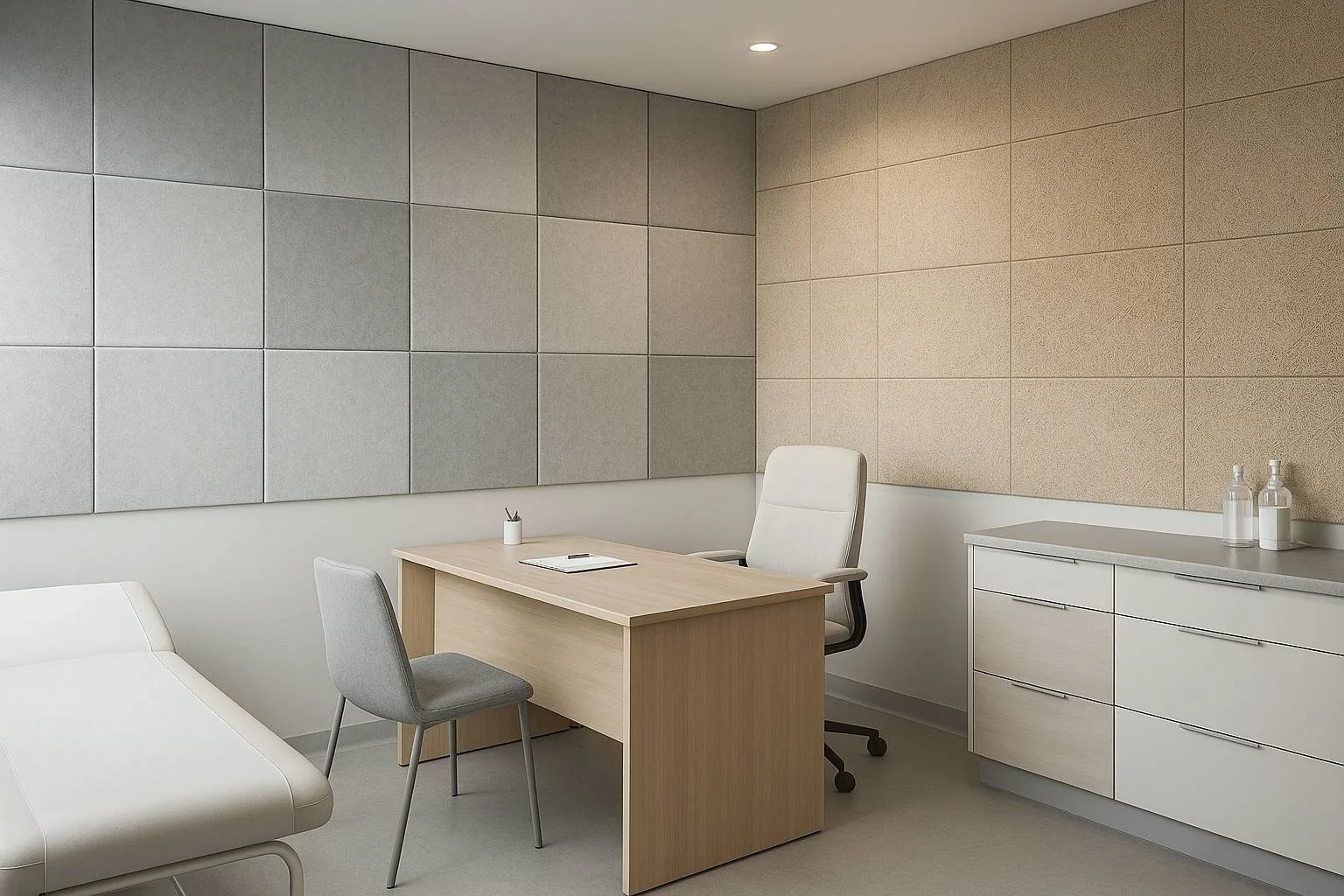
Consulting room privacy
Speech privacy between rooms, which is partition, door and ceiling void work. No port, no container, no sea leg. That keeps lead times short and makes small or repeat orders practical in a way they are not for most export markets.
- PET felt acoustic panels, 100% PET non-woven, no added binder
- Acoustic carpet and rugs, 4 mm
- Acoustic panels, Cut pattern in PET felt, adds visual rhythm without changing the absorber
-
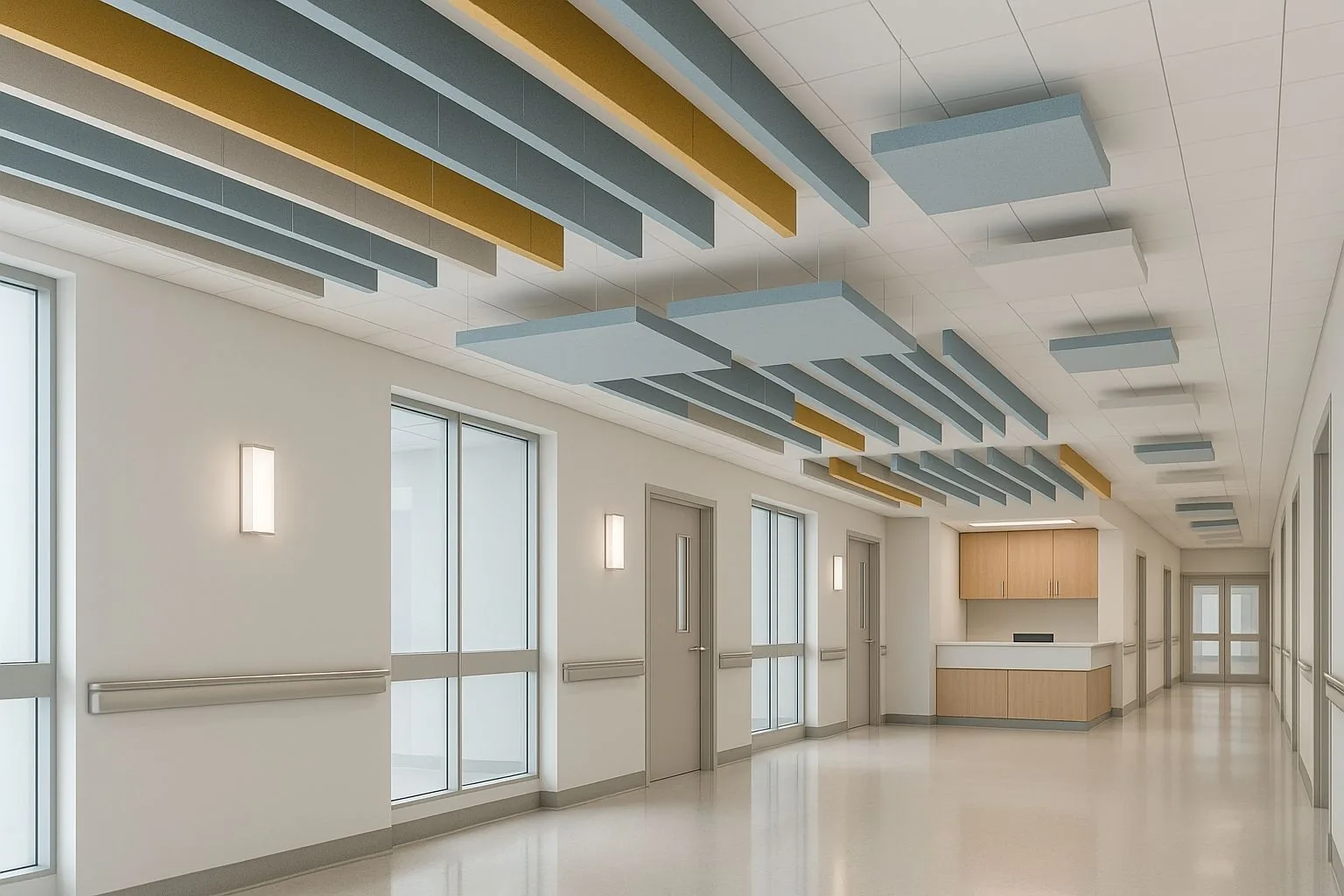
Ward noise floor
Alarms, trolleys and staff conversation in hard corridors. Absorption at the ceiling. A great deal of stock has been rebuilt or retrofitted for seismic performance. Movement joints must stay free and an acoustic layer must not stiffen across them.
- PET felt acoustic panels, 9, 12, 18 and 24 mm standard, tolerance plus or minus 5 percent
- Acoustic carpet and rugs, High density polyester
- Acoustic panels, ASTM C423
-
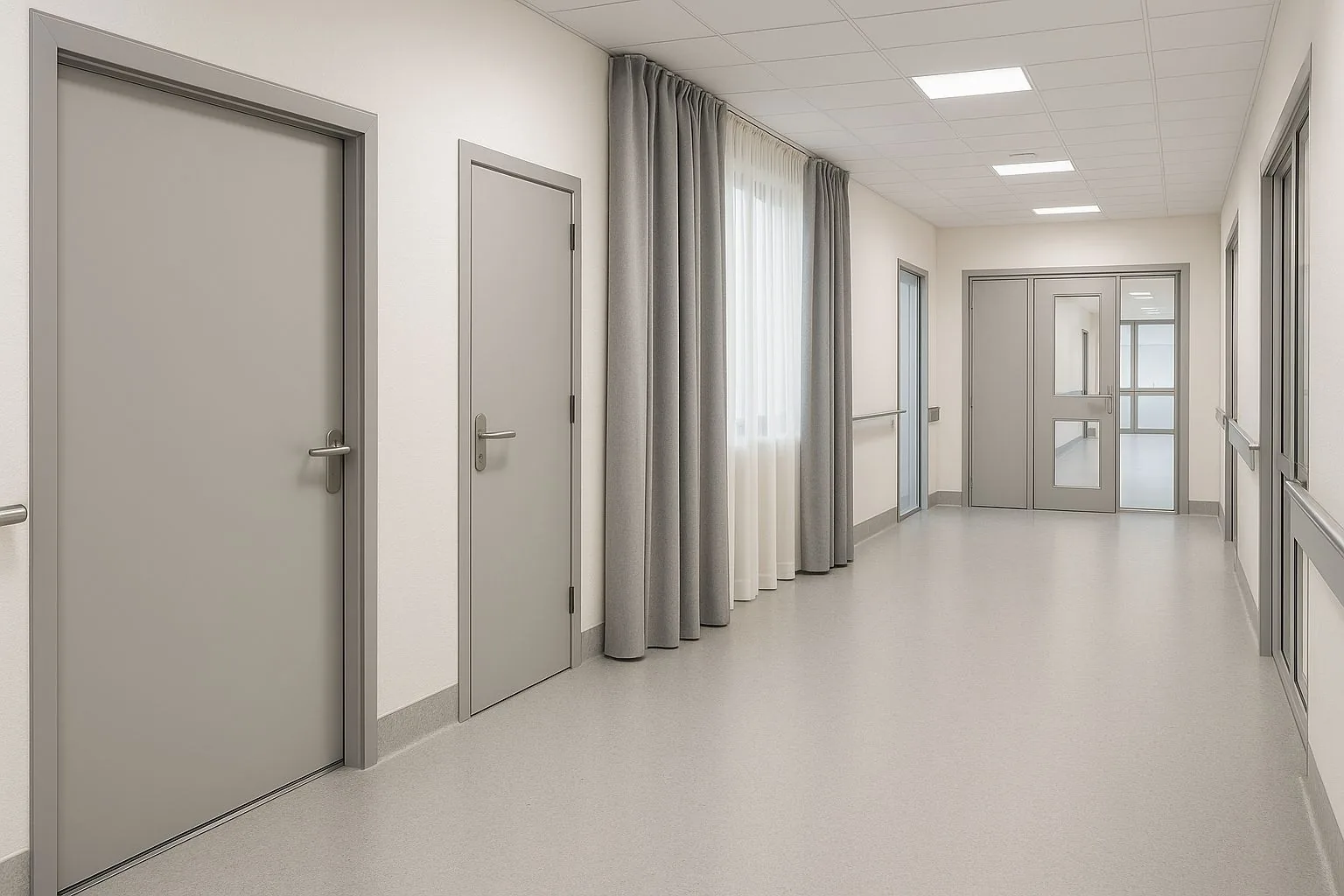
Cleanability
Non shedding, non absorbent surfaces that survive a cleaning regime. Hotels and guest houses packed into tight streets where street noise reaches rooms through openings rather than walls.
- PET felt acoustic panels, 4 to 24 mm
- Acoustic carpet and rugs, Felt
- Acoustic panels, 9 to 24 mm, 1220 x 2440 mm standard, up to 2440 x 4270 mm, 1200 to 3600 GSM
If the visual is fixed and the room still has to perform, that is a solvable problem and a conversation worth having early. See how we work with interior designers.
04 / Conditions
Why the climate in Nepal changes the material, not the target
Nepal is hot summers, mild winters and a distinct wet season, and that narrows the material list before acoustics is discussed.
PET felt handles the wet months without absorbing moisture or feeding mould. Timber and wood wool want a ventilated cavity and a stable indoor RH.
The failure we design against here is wet-season humidity behind linings.
If a consultant has set the target, we will quote against their figures rather than ours, and stay out of the scope they own. More on working with acoustic consultants.
06 / Before you buy
Where this kind of project usually fails
-
Fabric wrapped products in a clinical area
Plant noise treated as a room problem is the most reliable way to spend a budget and change nothing anyone can hear.
-
Absorption used where privacy was the requirement
Nobody has ever achieved speech privacy with a panel. Privacy needs mass, a sealed head detail and a door that actually closes.
-
Ceiling void left open above a partition
The ceiling is almost always the largest untreated surface, so leaving it out means paying for panels that cannot reach the target.
-
Treating it as a generic Nepal job
No port, no container, no sea leg. That keeps lead times short and makes small or repeat orders practical in a way they are not for most export markets.
05 / Supply
How material reaches a Nepal site
| Ships from | Palwal, Haryana, India |
|---|---|
| Arrives at | Overland through the India border, then road to site |
| Dispatch | 4 to 7 working days |
| Freight | Road via the India border |
| Support | Drawings, build-ups, BOQ and material that arrives complete |
Standard items dispatch in 4 to 7 working days. Grooved panels and custom colours take longer, and we say so before you order, not after.
Overland by road through the India border, then on to site. No sea leg and no port handling.
Questions from Nepal projects
What makes hospital and healthcare acoustics different in Nepal?
Split units and generator sets, with generators close to occupied rooms during outages. No port, no container, no sea leg. That keeps lead times short and makes small or repeat orders practical in a way they are not for most export markets.
Where should the budget go first on a Nepal project?
Consulting room privacy. Speech privacy between rooms, which is partition, door and ceiling void work. Ward noise floor. Alarms, trolleys and staff conversation in hard corridors. Absorption at the ceiling.
Do you have an office or installation team in Nepal?
No. We manufacture in India and supply into Nepal. We give you drawings, build-ups, a BOQ and material that arrives complete, and we will tell you plainly when a job needs a local contractor we cannot be.
How does material get to a Nepal site?
ships from: Palwal, Haryana, India, arrives at: Overland through the India border, then road to site, dispatch: 4 to 7 working days. Standard items dispatch in 4 to 7 working days. Grooved panels and custom colours take longer, and we say so before you order, not after.
What goes wrong most often on this kind of project?
Fabric wrapped products in a clinical area. Absorption used where privacy was the requirement.
What do you need from us to quote?
A plan, a section through the critical partition or ceiling, and what the room is for. From that we can give a build-up and a BOQ rather than a price per square foot.
Next step
Tell us the room, we will tell you the build-up
We quote from drawings, not from a square foot rate. Send a plan and the section through the critical wall or ceiling and you will get something you can actually build from.