

For projects in Kenya
Cinema and multiplex soundproofing in Kenya
Screens stacked beside and above each other, each running full range at high level. Bleed between auditoria is the failure everyone hears, and it is decided by the shell, not the finishes. Church buildings, conference rooms and event halls are hard volumes carrying amplified speech and music.
- Screen to screen
- Independent construction between auditoria, with services broken at the line.
- In room response
- Heavy absorption on side and rear walls so the mix is heard as intended.
- Plant and projection
- Equipment noise into the auditorium, treated at source.
- Quote
- From a plan and a section, within 48 hours
01 / The material
What this material is and where it earns its place in Kenya
Screens stacked beside and above each other, each running full range at high level. Bleed between auditoria is the failure everyone hears, and it is decided by the shell, not the finishes.
Church buildings, conference rooms and event halls are hard volumes carrying amplified speech and music.
Work reaching us from Kenya is mostly offices and corporate buildings, hotels and lodges, places of assembly, schools, hospitals.
- A short sea leg from India Western India to Mombasa is one of the quicker runs we operate, which makes modest and repeat consignments practical.
- A gateway, not just a destination Material often continues inland to neighbouring countries. Tell us and we brace and pack for the second journey.
- Generators are routine Standby generation runs often enough to be a permanent condition and sits close to occupied space. Enclosure at the source is the fix.
- Screen to screen Independent construction between auditoria, with services broken at the line.
Full specification
Thickness, density, NRC by frequency, fire class, standard sizes and build-up detail for cinema soundproofing are on the main product page. This page covers what that means for a project in Kenya.
02 / The build-up
The build-up, layer by layer
-

Layer 1
Soundproofing materials
The blocking side of the range taken together: mass loaded vinyl, resilient layers, cavity absorption and the build-ups they belong in. In Kenya, split units and generator sets, with generators close to occupied areas during outages.
Floating floor. Resilient layer and deck, to break impact energy before it reaches the structure.
-

Layer 2
Acoustic panels
The full absorber range rather than one product: plain PET felt, printed felt, grooved panels and fabric finishes, chosen by how the room is used and how it has to look. In Kenya, church buildings, conference rooms and event halls are hard volumes carrying amplified speech and music.
Ceiling first. In most rooms the ceiling is the largest untreated surface and the cheapest square metre of result.
-

Layer 3
PET felt acoustic panels
A rigid non-woven panel pressed from 100% polyester fibre, a large part of it recycled. In Kenya, classrooms are hard with high ceilings and large class sizes, and school halls double as assembly spaces.
On a 25 to 50 mm air gap. The same panel on battens. The air gap moves absorption down in frequency at no extra material cost, and is the cheapest improvement available.
Architects working in Kenya usually need the build-up before the product. We will draw the section and mark what does the work. See how we support architects.
03 / In this market
What decides the build-up in Kenya
- A short sea leg from India
Western India to Mombasa is one of the quicker runs we operate, which makes modest and repeat consignments practical.
- A gateway, not just a destination
Material often continues inland to neighbouring countries. Tell us and we brace and pack for the second journey.
- Generators are routine
Standby generation runs often enough to be a permanent condition and sits close to occupied space. Enclosure at the source is the fix.
- Large assembly spaces
Halls and places of assembly used by big congregations, where intelligibility fails well before the room is called echoey.
- Assembly and performance rooms
Church buildings, conference rooms and event halls are hard volumes carrying amplified speech and music.
04 / Room by room
Room by room, on a typical Kenya job
-
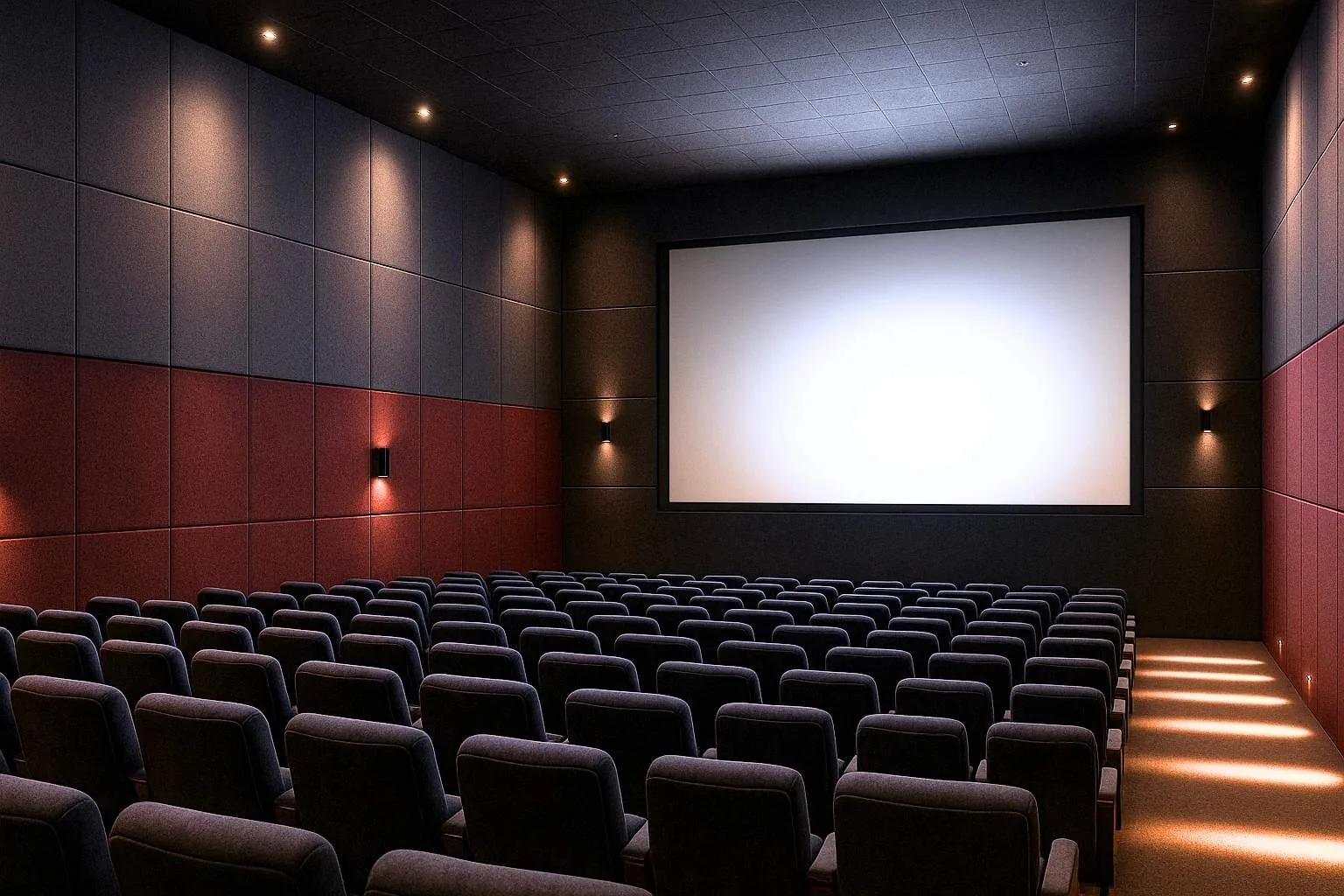
Screen to screen
Independent construction between auditoria, with services broken at the line. Western India to Mombasa is one of the quicker runs we operate, which makes modest and repeat consignments practical.
- Soundproofing materials, 2100 kg per cubic metre. 2.5 mm STC 30 at 5.25 kg per sq m, 4 mm STC 34 at 8.4, 6 mm at 12.6
- Acoustic carpet and rugs, 4 mm
- PET felt acoustic panels, 4 to 24 mm
-
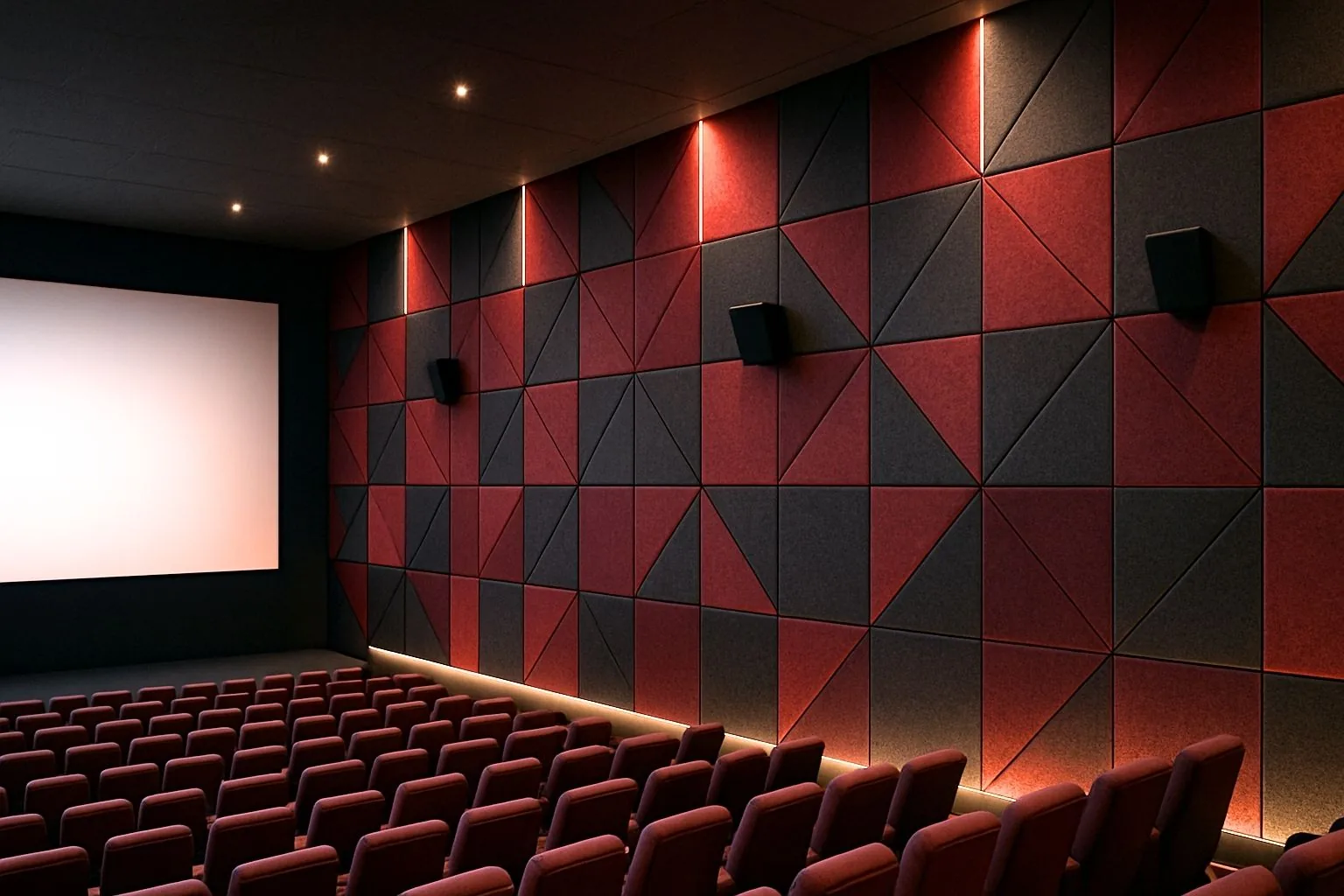
In room response
Heavy absorption on side and rear walls so the mix is heard as intended. Material often continues inland to neighbouring countries. Tell us and we brace and pack for the second journey.
- Soundproofing materials, 1800 x 900 x 20 mm, 100 kg per cubic metre, NRC 0.85
- Acoustic carpet and rugs, High density polyester
- PET felt acoustic panels, 1220 x 2440 mm standard, 4 x 8 ft
-
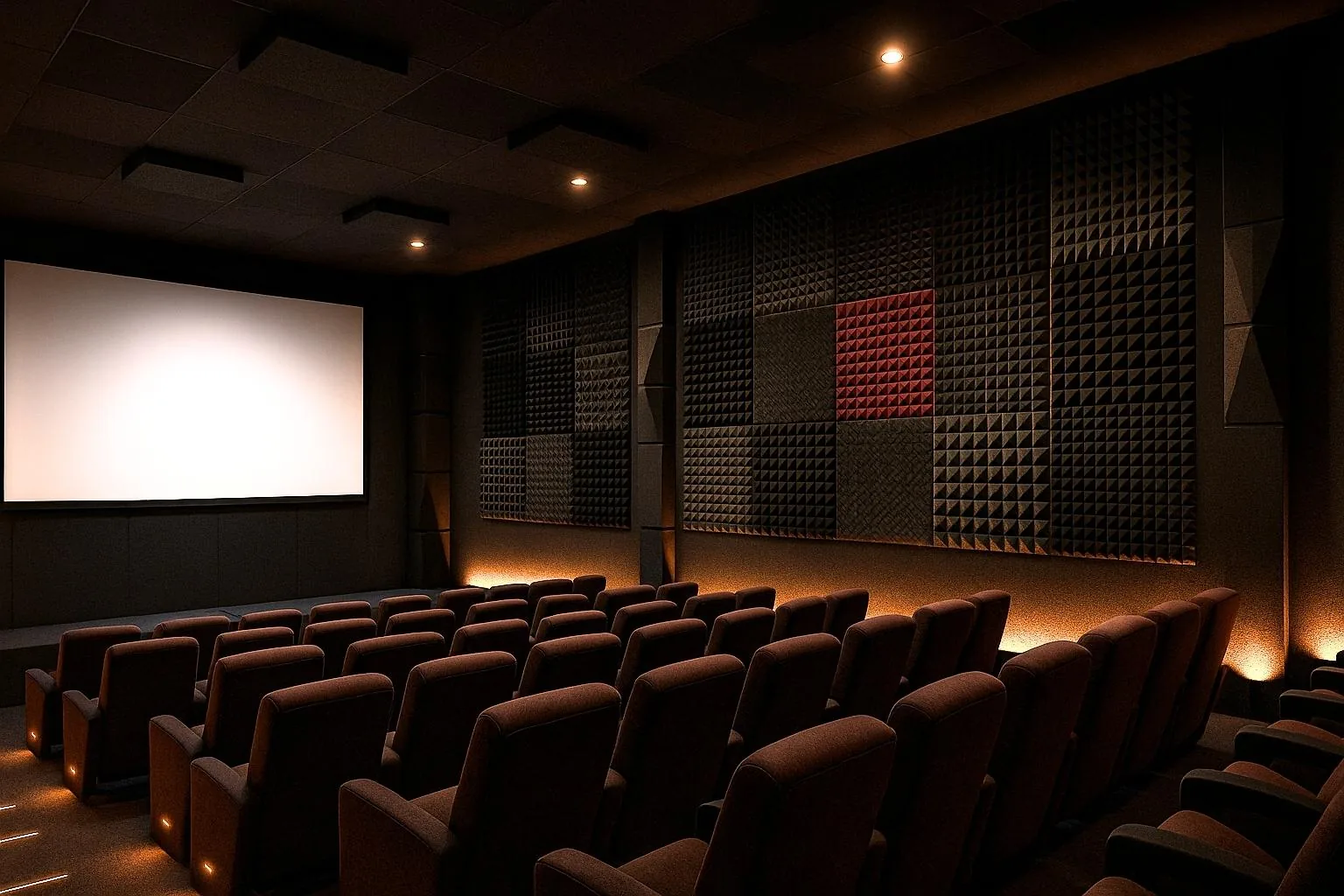
Plant and projection
Equipment noise into the auditorium, treated at source. Standby generation runs often enough to be a permanent condition and sits close to occupied space. Enclosure at the source is the fix.
- Soundproofing materials, Mass, then decoupling, then cavity absorption, then sealing
- Acoustic carpet and rugs, Felt
- PET felt acoustic panels, 2440 x 4270 mm, 2.44 x 4.27 m, 8 x 14 ft
Designers get colour, pattern and CNC options with the absorption figure attached to each. See how we work with interior designers.
04 / Conditions
The Kenya climate decides the material list
Kenya is warm and humid through most of the year, with a long wet season, and that narrows the material list before acoustics is discussed.
Humidity is the deciding factor. PET felt does not absorb moisture, shed fibre or feed mould, which is why it outlasts fabric-wrapped mineral wool in this climate. Wood wool and timber need a ventilated cavity behind them.
The failure we design against here is mould, sagging fabric finishes and swelling in timber.
Where a consultant is already engaged on a Kenya project, we supply to their specification and send the test reports rather than describing them. More on working with acoustic consultants.
06 / Before you buy
Where this kind of project usually fails
-
A shared service void running across the wall line
Square metre for square metre the ceiling is the cheapest result in the room. Skipping it and buying wall panels instead is the most common way to overspend.
-
Treating the auditorium to fix bleed from the next screen
Small on the drawing, expensive on site, and almost always found after handover.
-
Doors and lobbies specified late and undersized
Soundproofing fails at the gaps, not the materials. One unsealed service penetration can undo a correctly built wall.
-
Treating it as a generic Kenya job
Western India to Mombasa is one of the quicker runs we operate, which makes modest and repeat consignments practical.
05 / Supply
What the route into Kenya actually looks like
| Ships from | Palwal, Haryana, India |
|---|---|
| Arrives at | Mombasa, then road inland or onward across borders |
| Dispatch | 4 to 7 working days |
| Freight | Sea via Mombasa |
| Support | Drawings, build-ups, BOQ and material that arrives complete |
Standard items dispatch in 4 to 7 working days. Grooved panels and custom colours take longer, and we say so before you order, not after.
Sea freight into Mombasa, then road inland to Nairobi or onward across borders. Air freight for samples.
Questions from Kenya projects
What makes cinema and multiplex soundproofing different in Kenya?
Church buildings, conference rooms and event halls are hard volumes carrying amplified speech and music. Western India to Mombasa is one of the quicker runs we operate, which makes modest and repeat consignments practical.
Where should the budget go first on a Kenya project?
Screen to screen. Independent construction between auditoria, with services broken at the line. In room response. Heavy absorption on side and rear walls so the mix is heard as intended.
Do you have an office or installation team in Kenya?
No. We manufacture in India and supply into Kenya. We give you drawings, build-ups, a BOQ and material that arrives complete, and we will tell you plainly when a job needs a local contractor we cannot be.
How does material get to a Kenya site?
ships from: Palwal, Haryana, India, arrives at: Mombasa, then road inland or onward across borders, dispatch: 4 to 7 working days. Standard items dispatch in 4 to 7 working days. Grooved panels and custom colours take longer, and we say so before you order, not after.
What goes wrong most often on this kind of project?
A shared service void running across the wall line. Treating the auditorium to fix bleed from the next screen.
What do you need from us to quote?
A plan, a section through the critical partition or ceiling, and what the room is for. From that we can give a build-up and a BOQ rather than a price per square foot.
Next step
Send the drawings, get a straight answer
Send what you have. We will give you a layer by layer build-up, a bill of quantities and a date material lands, and we will flag anything in the brief that will not achieve what you want.