

For projects in Germany
Cinema and multiplex soundproofing in Germany
Screens stacked beside and above each other, each running full range at high level. Bleed between auditoria is the failure everyone hears, and it is decided by the shell, not the finishes. Concert halls, church buildings and civic Saal spaces are long-reverberation rooms where any intervention has to be reversible and visually disciplined.
- Screen to screen
- Independent construction between auditoria, with services broken at the line.
- In room response
- Heavy absorption on side and rear walls so the mix is heard as intended.
- Plant and projection
- Equipment noise into the auditorium, treated at source.
- Quote
- From a plan and a section, within 48 hours
01 / The material
What this material is and where it earns its place in Germany
Screens stacked beside and above each other, each running full range at high level. Bleed between auditoria is the failure everyone hears, and it is decided by the shell, not the finishes.
Concert halls, church buildings and civic Saal spaces are long-reverberation rooms where any intervention has to be reversible and visually disciplined.
Work reaching us from Germany is mostly offices, studios, clubs, hotels, schools, clinics, industrial plant rooms.
- Two building stocks Altbau apartments with timber floors pass noise between homes. Post-war concrete holds it in and rings. The same room needs a different answer depending on which one you are in.
- Specified acoustics Most German jobs arrive with an acoustician already involved. Send us the target values and we will tell you which build-up gets there, and which one will not.
- Container quantities Fit-outs across several floors or sites are cheaper by container. We quote full loads and stage deliveries against your programme.
- Screen to screen Independent construction between auditoria, with services broken at the line.
Full specification
Thickness, density, NRC by frequency, fire class, standard sizes and build-up detail for cinema soundproofing are on the main product page. This page covers what that means for a project in Germany.
02 / The build-up
What goes where, from the structure in
-

Layer 1
Soundproofing materials
The blocking side of the range taken together: mass loaded vinyl, resilient layers, cavity absorption and the build-ups they belong in. In Germany, mechanical ventilation with heat recovery is standard in newer stock, so duct-borne noise and terminal unit noise are the sources rather than open windows.
Floating floor. Resilient layer and deck, to break impact energy before it reaches the structure.
-

Layer 2
Acoustic panels
The full absorber range rather than one product: plain PET felt, printed felt, grooved panels and fabric finishes, chosen by how the room is used and how it has to look. In Germany, concert halls, church buildings and civic Saal spaces are long-reverberation rooms where any intervention has to be reversible and visually disciplined.
Ceiling first. In most rooms the ceiling is the largest untreated surface and the cheapest square metre of result.
-

Layer 3
PET felt acoustic panels
A rigid non-woven panel pressed from 100% polyester fibre, a large part of it recycled. In Germany, school and university buildings are built to a high thermal standard with hard, cleanable surfaces. Speech clarity in classrooms and long corridors is where the acoustic budget goes.
Direct to wall. Panel bonded or mechanically fixed flat to the substrate. Simplest, and the weakest at low frequency.
For a Germany practice, the useful thing is a detail you can put in a drawing set, not a brochure. See how we support architects.
03 / Local conditions
What we see driving Germany briefs
- Two building stocks
Altbau apartments with timber floors pass noise between homes. Post-war concrete holds it in and rings. The same room needs a different answer depending on which one you are in.
- Specified acoustics
Most German jobs arrive with an acoustician already involved. Send us the target values and we will tell you which build-up gets there, and which one will not.
- Container quantities
Fit-outs across several floors or sites are cheaper by container. We quote full loads and stage deliveries against your programme.
- Winter build programmes
Sealed, insulated rooms sound dead in the wrong way. Absorption has to be balanced, not maximised, once the envelope is tight.
- Assembly and performance rooms
Concert halls, church buildings and civic Saal spaces are long-reverberation rooms where any intervention has to be reversible and visually disciplined.
04 / Room by room
Room by room, on a typical Germany job
-
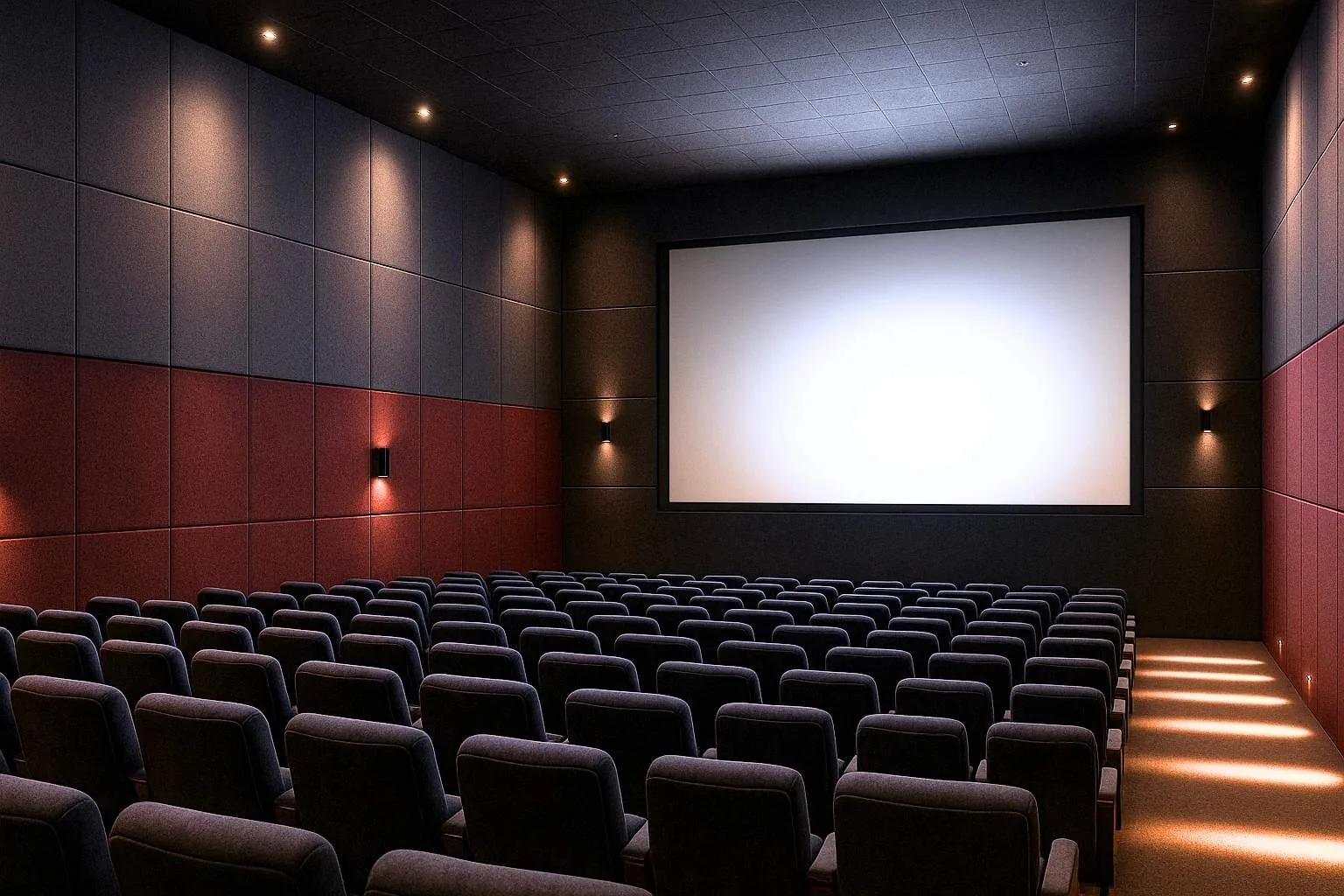
Screen to screen
Independent construction between auditoria, with services broken at the line. Altbau apartments with timber floors pass noise between homes. Post-war concrete holds it in and rings. The same room needs a different answer depending on which one you are in.
- SoundBlanket mass loaded vinyl, 2100 kg per cubic metre
- Soundproofing materials, 1800 x 900 x 20 mm, 100 kg per cubic metre, NRC 0.85
- Acoustic panels, Cut pattern in PET felt, adds visual rhythm without changing the absorber
-
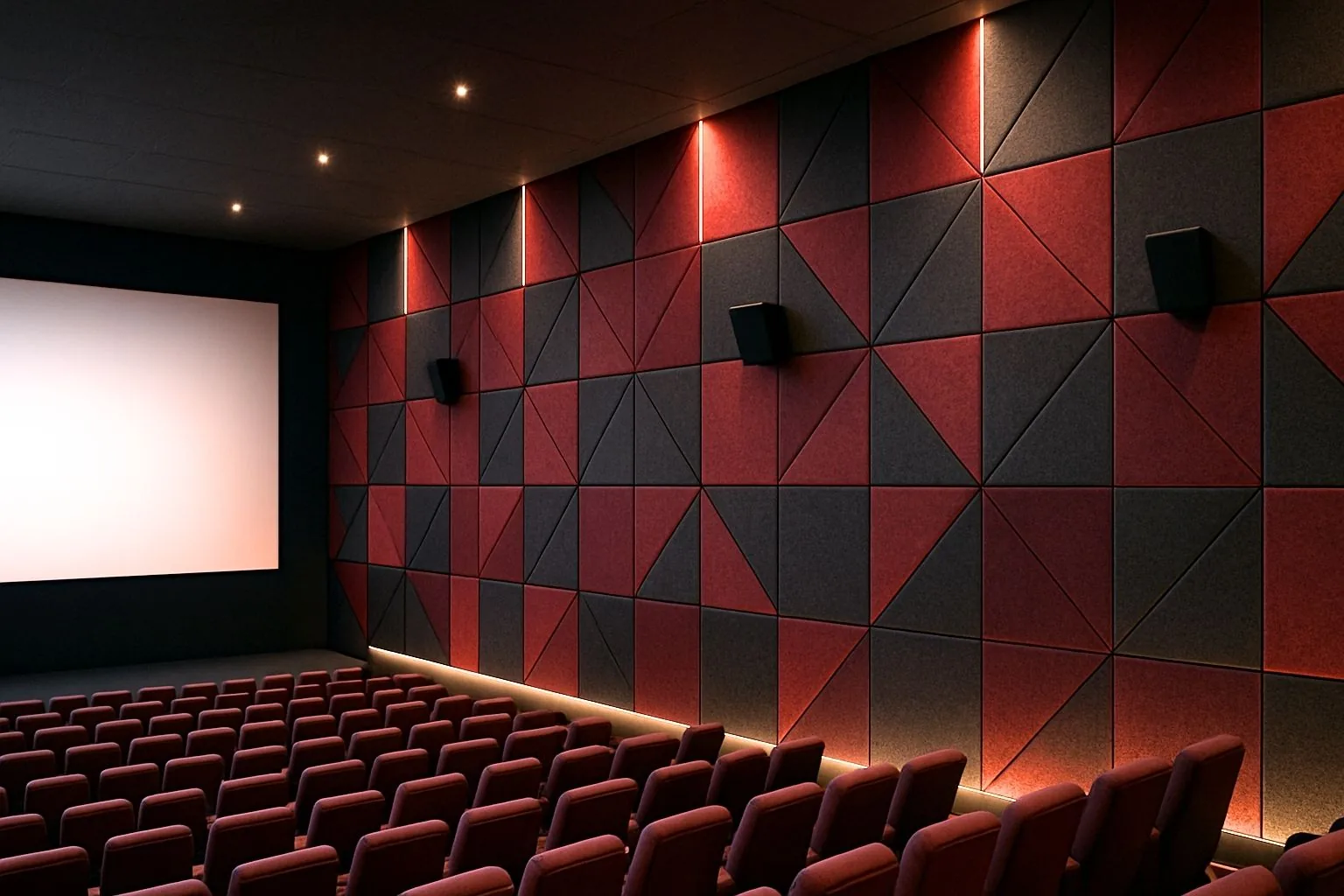
In room response
Heavy absorption on side and rear walls so the mix is heard as intended. Most German jobs arrive with an acoustician already involved. Send us the target values and we will tell you which build-up gets there, and which one will not.
- SoundBlanket mass loaded vinyl, STC 30, 5.25 kg per sq m
- Soundproofing materials, Mass, then decoupling, then cavity absorption, then sealing
- Acoustic panels, ASTM C423
-
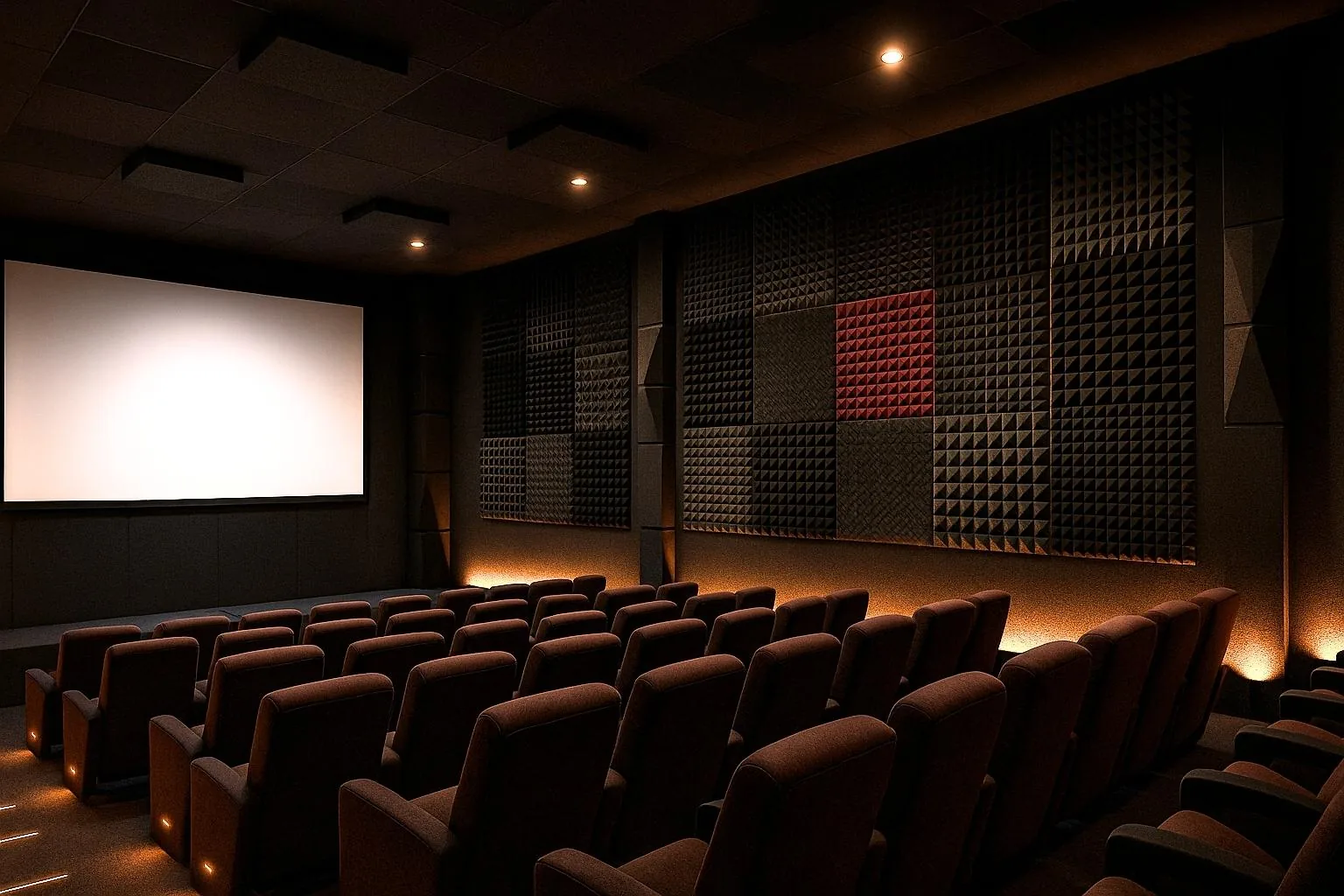
Plant and projection
Equipment noise into the auditorium, treated at source. Fit-outs across several floors or sites are cheaper by container. We quote full loads and stage deliveries against your programme.
- SoundBlanket mass loaded vinyl, STC 34, 8.4 kg per sq m
- Soundproofing materials, ASTM E90 for the barrier, ASTM C423 for the absorber
- Acoustic panels, 9 to 24 mm, 1220 x 2440 mm standard, up to 2440 x 4270 mm, 1200 to 3600 GSM
For a Germany interior where the finish leads, we will say plainly what each option costs you acoustically. See how we work with interior designers.
04 / Climate and durability
Durability in Germany, before acoustics is discussed
Germany is cool and damp, with long heating seasons and cold external walls, and that narrows the material list before acoustics is discussed.
Cold wall build-ups and long heating seasons mean interstitial condensation is a real risk behind any lining. PET felt is unaffected by damp air and will not feed mould where a fabric-faced mineral product would.
The failure we design against here is condensation behind linings in older, poorly insulated stock.
Consultants get the raw data, not a sales sheet. That is the whole of our side of the job, and it is set out under working with acoustic consultants.
06 / Read this first
Where this kind of project usually fails
-
A shared service void running across the wall line
A treated wall under a bare hard ceiling gives you a fraction of the reduction you paid for, and the room still sounds wrong.
-
Treating the auditorium to fix bleed from the next screen
Small on the drawing, expensive on site, and almost always found after handover.
-
Doors and lobbies specified late and undersized
A 6 mm undercut under a door leaves a hole the size of a brick. The wall around it is then decorative.
-
Treating it as a generic Germany job
Altbau apartments with timber floors pass noise between homes. Post-war concrete holds it in and rings. The same room needs a different answer depending on which one you are in.
05 / Getting it there
What the route into Germany actually looks like
| Ships from | Palwal, Haryana, India |
|---|---|
| Arrives at | Hamburg or Bremerhaven, then road to site |
| Dispatch | 4 to 7 working days |
| Freight | Sea via Hamburg |
| Support | Drawings, build-ups, BOQ and material that arrives complete |
Standard items dispatch in 4 to 7 working days. Grooved and custom colours take longer, and we say so before you order.
Sea freight into Hamburg or Bremerhaven, then road to site anywhere in Germany. Air freight for samples and urgent quantities.
Questions from Germany projects
What makes cinema and multiplex soundproofing different in Germany?
Concert halls, church buildings and civic Saal spaces are long-reverberation rooms where any intervention has to be reversible and visually disciplined. Altbau apartments with timber floors pass noise between homes. Post-war concrete holds it in and rings. The same room needs a different answer depending on which one you are in.
Where should the budget go first on a Germany project?
Screen to screen. Independent construction between auditoria, with services broken at the line. In room response. Heavy absorption on side and rear walls so the mix is heard as intended.
Do you have an office or installation team in Germany?
No. We manufacture in India and supply into Germany. We give you drawings, build-ups, a BOQ and material that arrives complete, and we will tell you plainly when a job needs a local contractor we cannot be.
How does material get to a Germany site?
ships from: Palwal, Haryana, India, arrives at: Hamburg or Bremerhaven, then road to site, dispatch: 4 to 7 working days. Standard items dispatch in 4 to 7 working days. Grooved and custom colours take longer, and we say so before you order.
What goes wrong most often on this kind of project?
A shared service void running across the wall line. Treating the auditorium to fix bleed from the next screen.
What do you need from us to quote?
A plan, a section through the critical partition or ceiling, and what the room is for. From that we can give a build-up and a BOQ rather than a price per square foot.
Next step
Send the drawings, get a straight answer
Send what you have. We will give you a layer by layer build-up, a bill of quantities and a date material lands, and we will flag anything in the brief that will not achieve what you want.