

For projects in Bali
Recording studio acoustics and soundproofing in Bali
Two jobs that must not be confused: keeping the building out, and making the room honest inside. The first is mass and decoupling and has to be built first. The second is absorption and diffusion and can be tuned later. A large content and music scene works out of rooms in commercial buildings with thin partitions and constant neighbouring activity.
- Isolation
- A measured background level, agreed before anything is bought.
- Low frequency
- Corner and boundary absorption with real depth, not surface foam.
- Early reflections
- Controlled at the mix position, and only there.
- Quote
- From a plan and a section, within 48 hours
01 / The material
What you are buying, and what it fixes in Bali
Two jobs that must not be confused: keeping the building out, and making the room honest inside. The first is mass and decoupling and has to be built first. The second is absorption and diffusion and can be tuned later.
A large content and music scene works out of rooms in commercial buildings with thin partitions and constant neighbouring activity.
Work reaching us from Bali is mostly resorts and villas, beach clubs and restaurants, spas, offices, guest rooms.
- Buildings that are only partly enclosed Open pavilions and sliding walls mean there is often no envelope to isolate. The honest answer is treating what is there and telling you what cannot be fixed.
- Beach clubs and neighbours Late trading venues beside villas and other resorts, where containment of low frequency is what keeps the operation on good terms.
- Humidity and salt destroy the wrong material PET felt does not absorb moisture, rot or feed mould. Mineral products sag here within a single season.
- Isolation A measured background level, agreed before anything is bought.
Full specification
Thickness, density, NRC by frequency, fire class, standard sizes and build-up detail for studio soundproofing are on the main product page. This page covers what that means for a project in Bali.
02 / The build-up
The build-up, layer by layer
-

Layer 1
Acoustic foam and BassBloc
Open cell foam shapes for high frequency control, and BassBloc, a high density absorber built for the low mid range where ordinary foam does nothing. In Bali, split units everywhere, with condensers on balconies and light wells that channel noise straight back into bedrooms.
Behind a fabric frame. Where the room has to look finished, absorber inside a frame rather than foam on show.
-

Layer 2
Soundproofing materials
The blocking side of the range taken together: mass loaded vinyl, resilient layers, cavity absorption and the build-ups they belong in. In Bali, places of worship, function halls and community buildings are large hard rooms carrying amplified speech and music.
Resilient bar. Where a full independent leaf will not fit. Effective, and very easy to short circuit with one wrong screw.
-

Layer 3
Acoustic panels
The full absorber range rather than one product: plain PET felt, printed felt, grooved panels and fabric finishes, chosen by how the room is used and how it has to look. In Bali, classrooms are hard, naturally ventilated and open to corridor and street noise, so absorption alone will not fix intelligibility.
Ceiling first. In most rooms the ceiling is the largest untreated surface and the cheapest square metre of result.
Architects working in Bali usually need the build-up before the product. We will draw the section and mark what does the work. See how we support architects.
03 / In this market
What we see driving Bali briefs
- Buildings that are only partly enclosed
Open pavilions and sliding walls mean there is often no envelope to isolate. The honest answer is treating what is there and telling you what cannot be fixed.
- Beach clubs and neighbours
Late trading venues beside villas and other resorts, where containment of low frequency is what keeps the operation on good terms.
- Humidity and salt destroy the wrong material
PET felt does not absorb moisture, rot or feed mould. Mineral products sag here within a single season.
- An onward leg to the island
Material arrives and then continues by road or ferry. Tell us and we pack for the second journey.
- The housing stock
Concrete frame with block infill in cities, timber and light construction outside them. Apartment stock shares walls and slabs that were never detailed for two households.
- The studio and content scene
A large content and music scene works out of rooms in commercial buildings with thin partitions and constant neighbouring activity.
04 / Room by room
Room by room, on a typical Bali job
-
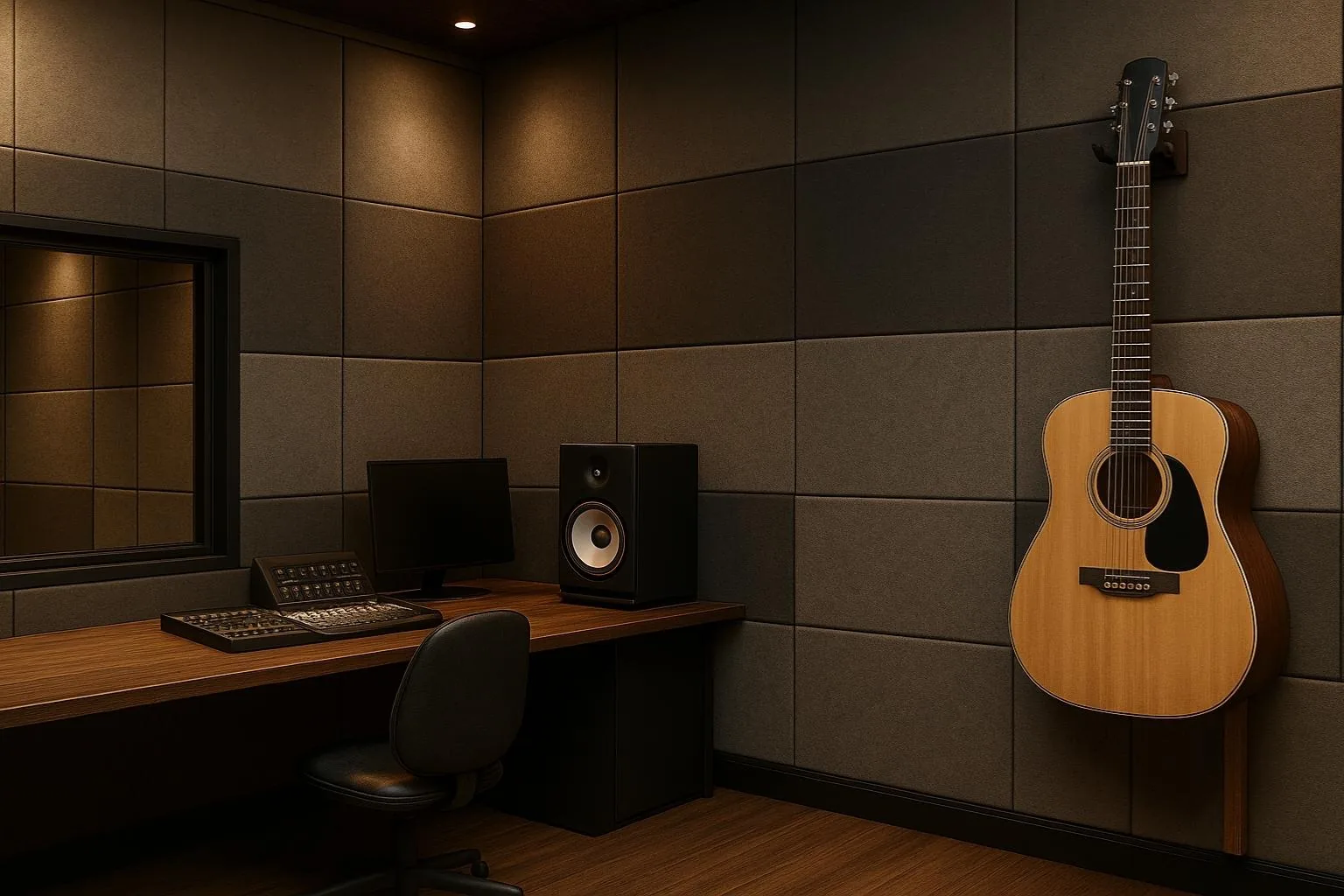
Isolation
A measured background level, agreed before anything is bought. Open pavilions and sliding walls mean there is often no envelope to isolate. The honest answer is treating what is there and telling you what cannot be fixed.
- Acoustic foam and BassBloc, 1800 x 900 mm
- SoundBlanket mass loaded vinyl, STC 30, 5.25 kg per sq m
- Soundproofing materials, Mass, then decoupling, then cavity absorption, then sealing
-
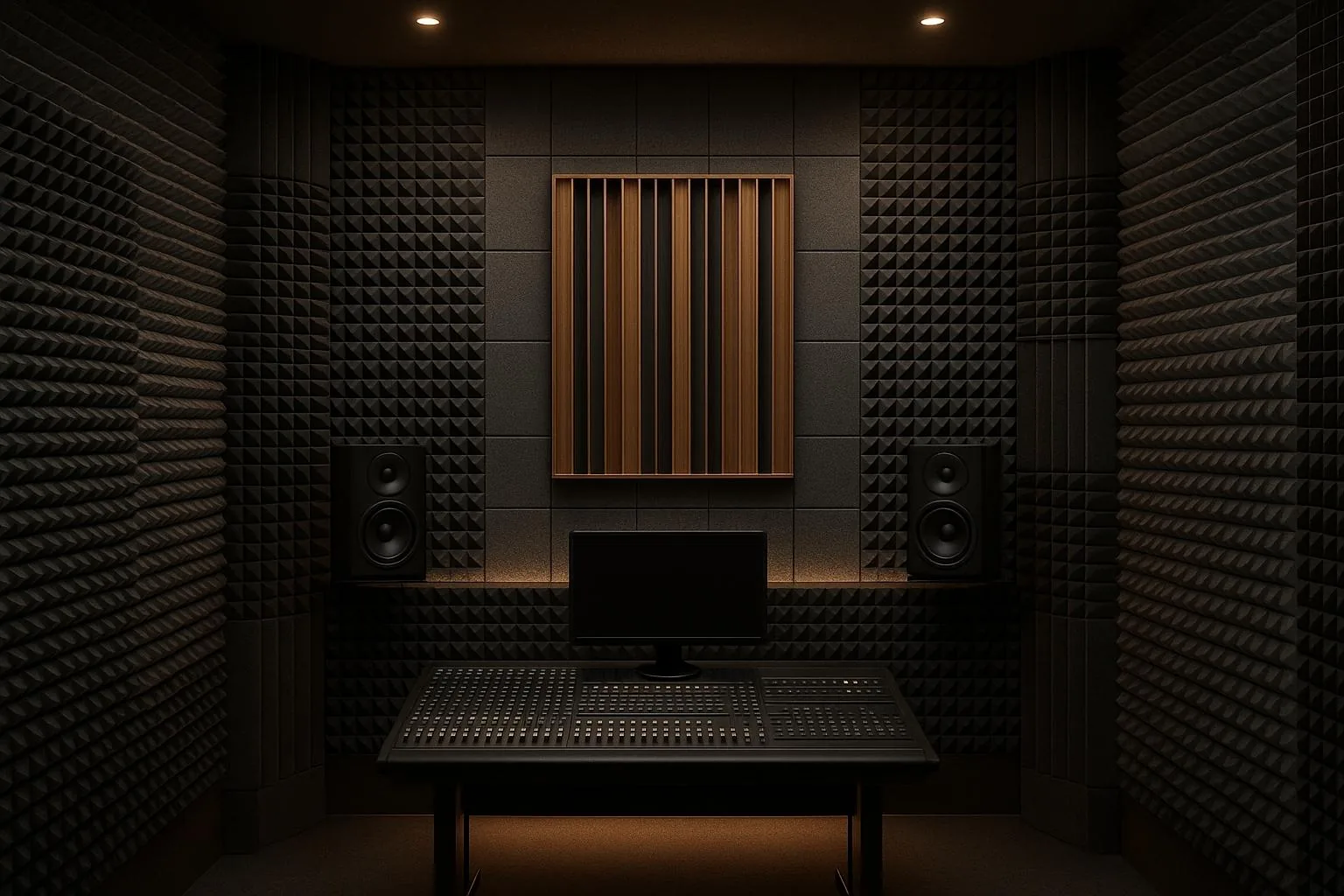
Low frequency
Corner and boundary absorption with real depth, not surface foam. Late trading venues beside villas and other resorts, where containment of low frequency is what keeps the operation on good terms.
- Acoustic foam and BassBloc, 20 mm
- SoundBlanket mass loaded vinyl, STC 34, 8.4 kg per sq m
- Soundproofing materials, ASTM E90 for the barrier, ASTM C423 for the absorber
-
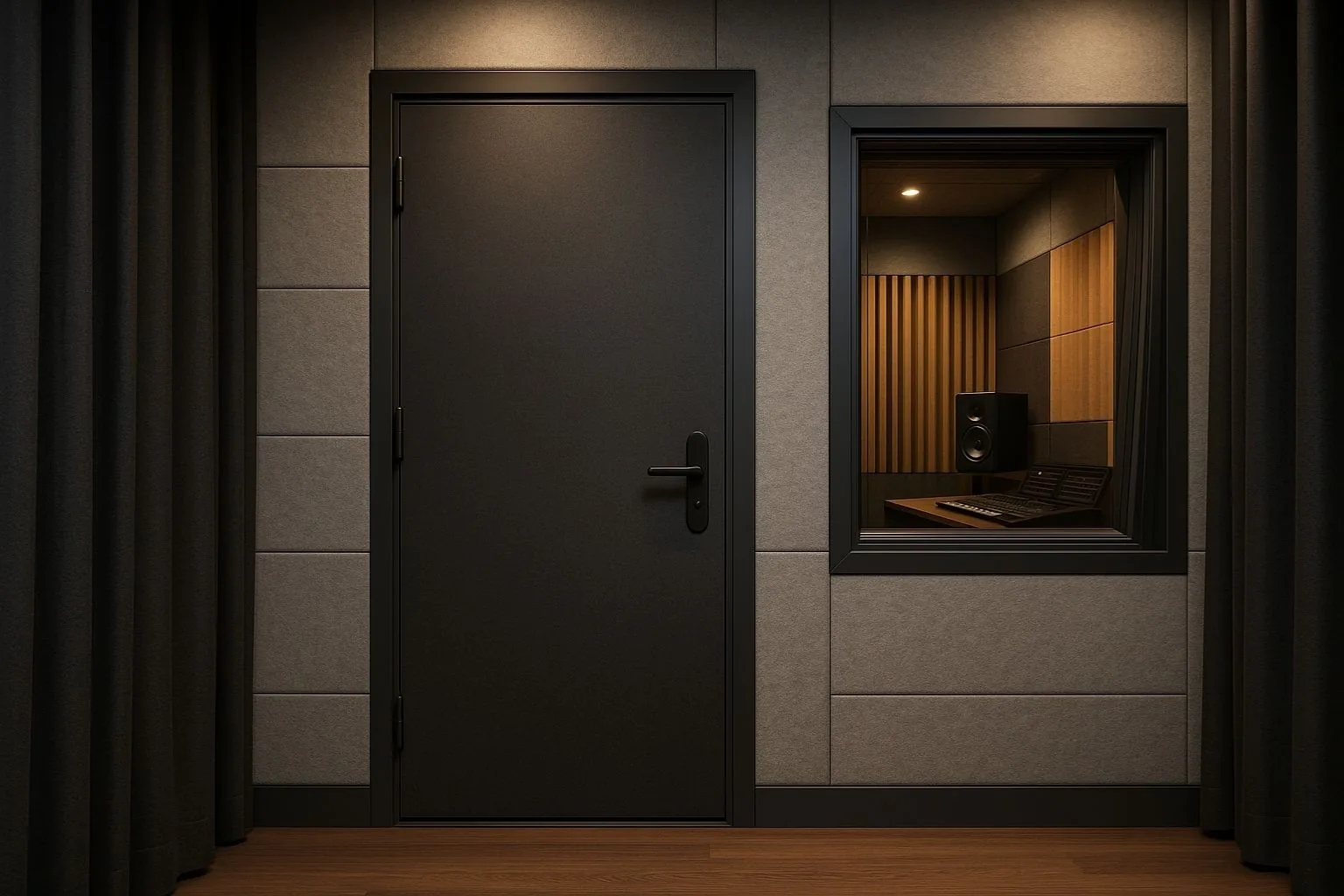
Early reflections
Controlled at the mix position, and only there. PET felt does not absorb moisture, rot or feed mould. Mineral products sag here within a single season.
- Acoustic foam and BassBloc, 100 kg per cubic metre
- SoundBlanket mass loaded vinyl, 12.6 kg per sq m, STC on request
- Soundproofing materials, 2100 kg per cubic metre. 2.5 mm STC 30 at 5.25 kg per sq m, 4 mm STC 34 at 8.4, 6 mm at 12.6
For a Bali interior where the finish leads, we will say plainly what each option costs you acoustically. See how we work with interior designers.
04 / Climate and durability
The Bali climate decides the material list
Bali is warm and humid through most of the year, with a long wet season, and that narrows the material list before acoustics is discussed.
Humidity is the deciding factor. PET felt does not absorb moisture, shed fibre or feed mould, which is why it outlasts fabric-wrapped mineral wool in this climate. Wood wool and timber need a ventilated cavity behind them.
The failure we design against here is mould, sagging fabric finishes and swelling in timber.
Where a consultant is already engaged on a Bali project, we supply to their specification and send the test reports rather than describing them. More on working with acoustic consultants.
06 / Straight talk
The six errors that cost the most
-
Buying foam to solve an isolation problem
It sounds like a small detail until the room is finished and the complaint arrives.
-
Treating the room before the shell is isolated
This is the one that comes back as a second fit-out rather than a snag.
-
Killing the room completely and calling it controlled
More absorption is not better absorption. Past the target the room goes flat and people raise their voices to compensate.
-
Treating it as a generic Bali job
Open pavilions and sliding walls mean there is often no envelope to isolate. The honest answer is treating what is there and telling you what cannot be fixed.
05 / Supply
How material reaches a Bali site
| Ships from | Palwal, Haryana, India |
|---|---|
| Arrives at | Surabaya or Benoa, then road to site |
| Dispatch | 4 to 7 working days |
| Freight | Sea via Surabaya or Benoa |
| Support | Drawings, build-ups, BOQ and material that arrives complete |
Standard items dispatch in 4 to 7 working days. Grooved panels and custom colours take longer, and we say so before you order, not after.
Sea freight into Surabaya or Benoa, then road or ferry onward to site. Air freight for samples.
Questions from Bali projects
What makes recording studio acoustics and soundproofing different in Bali?
A large content and music scene works out of rooms in commercial buildings with thin partitions and constant neighbouring activity. Open pavilions and sliding walls mean there is often no envelope to isolate. The honest answer is treating what is there and telling you what cannot be fixed.
Where should the budget go first on a Bali project?
Isolation. A measured background level, agreed before anything is bought. Low frequency. Corner and boundary absorption with real depth, not surface foam.
Do you have an office or installation team in Bali?
No. We manufacture in India and supply into Bali. We give you drawings, build-ups, a BOQ and material that arrives complete, and we will tell you plainly when a job needs a local contractor we cannot be.
How does material get to a Bali site?
ships from: Palwal, Haryana, India, arrives at: Surabaya or Benoa, then road to site, dispatch: 4 to 7 working days. Standard items dispatch in 4 to 7 working days. Grooved panels and custom colours take longer, and we say so before you order, not after.
What goes wrong most often on this kind of project?
Buying foam to solve an isolation problem. Treating the room before the shell is isolated.
What do you need from us to quote?
A plan, a section through the critical partition or ceiling, and what the room is for. From that we can give a build-up and a BOQ rather than a price per square foot.
Next step
Drawings in, BOQ and a delivered date out
We quote from drawings, not from a square foot rate. Send a plan and the section through the critical wall or ceiling and you will get something you can actually build from.