

For projects in New York
Home theatre soundproofing and acoustics in New York
Serious equipment in a room with no isolation plan. The complaint is almost never the speakers. It is bass leaving the room and an untreated box making the system sound worse than it is. American homes are timber frame with gypsum board on both faces, so a party wall or a basement ceiling has almost no mass. Adding a second leaf with a limp membrane between does more than any amount of surface treatment.
- Containment
- Bass through the wall, floor and door. Mass and decoupling, with the door usually the weakest point.
- Low frequency inside
- Corner absorption with depth, before any surface treatment.
- Reflections
- Side wall and ceiling first reflection points at the seating position.
- Quote
- From a plan and a section, within 48 hours
01 / What it is
The material, and what it actually does on a New York job
Serious equipment in a room with no isolation plan. The complaint is almost never the speakers. It is bass leaving the room and an untreated box making the system sound worse than it is.
American homes are timber frame with gypsum board on both faces, so a party wall or a basement ceiling has almost no mass. Adding a second leaf with a limp membrane between does more than any amount of surface treatment.
Work reaching us from New York is mostly pre-war apartments, brownstones, offices, studios, restaurants, clinics, schools.
- Pre-war buildings, timber floors Older stock passes footfall straight down through the joists. A resilient layer under the finish does more than anything applied to the ceiling below.
- Subway and street Ground level and underground rail put low frequency into the structure. Panels on a wall will not touch it and we will say so.
- Boards decide the build-up Co-op and condo rules on floor coverings and separating construction usually set the requirement before any acoustic target does. Get the rule first, then design to it.
- Containment Bass through the wall, floor and door. Mass and decoupling, with the door usually the weakest point.
Full specification
Thickness, density, NRC by frequency, fire class, standard sizes and build-up detail for home theatre soundproofing are on the main product page. This page covers what that means for a project in New York.
02 / The build-up
The stack, in the order it is installed
-

Layer 1
Acoustic foam and BassBloc
Open cell foam shapes for high frequency control, and BassBloc, a high density absorber built for the low mid range where ordinary foam does nothing. In New York, packaged rooftop units and ducted forced air are standard, so noise arrives through the duct rather than through the wall. Lining the first three metres of duct and treating the return path is usually the whole job.
Corner loading. Low frequency energy collects in corners, so absorber in the corners does more than the same area spread across a wall.
-

Layer 2
Soundproofing materials
The blocking side of the range taken together: mass loaded vinyl, resilient layers, cavity absorption and the build-ups they belong in. In New York, churches, school gyms and multipurpose halls double as performance spaces, which means a room designed for neither speech nor music has to carry both.
Resilient bar. Where a full independent leaf will not fit. Effective, and very easy to short circuit with one wrong screw.
-

Layer 3
Acoustic carpet and rugs
A tile carpet with a dense polyester face on a felt backing. In New York, public school buildings run long corridors with hard floors and lay-in tile ceilings that were chosen for cost, not for speech. Classroom reverberation and corridor spill are the two complaints, and both respond to ceiling area rather than wall panels.
Over a resilient underlay. Where impact noise to the floor below is the actual complaint, the underlay does that work, not the carpet.
We would rather argue about the build-up at design stage than on site. See how we support architects.
03 / In this market
What we see driving New York briefs
- Pre-war buildings, timber floors
Older stock passes footfall straight down through the joists. A resilient layer under the finish does more than anything applied to the ceiling below.
- Subway and street
Ground level and underground rail put low frequency into the structure. Panels on a wall will not touch it and we will say so.
- Boards decide the build-up
Co-op and condo rules on floor coverings and separating construction usually set the requirement before any acoustic target does. Get the rule first, then design to it.
- Depth is expensive here
Floor area costs enough that a wall growing a hundred millimetres into the room is a real number. Thin and effective beats thick and theoretical.
- The housing stock
American homes are timber frame with gypsum board on both faces, so a party wall or a basement ceiling has almost no mass. Adding a second leaf with a limp membrane between does more than any amount of surface treatment.
04 / Room by room
Space by space, for New York briefs
-
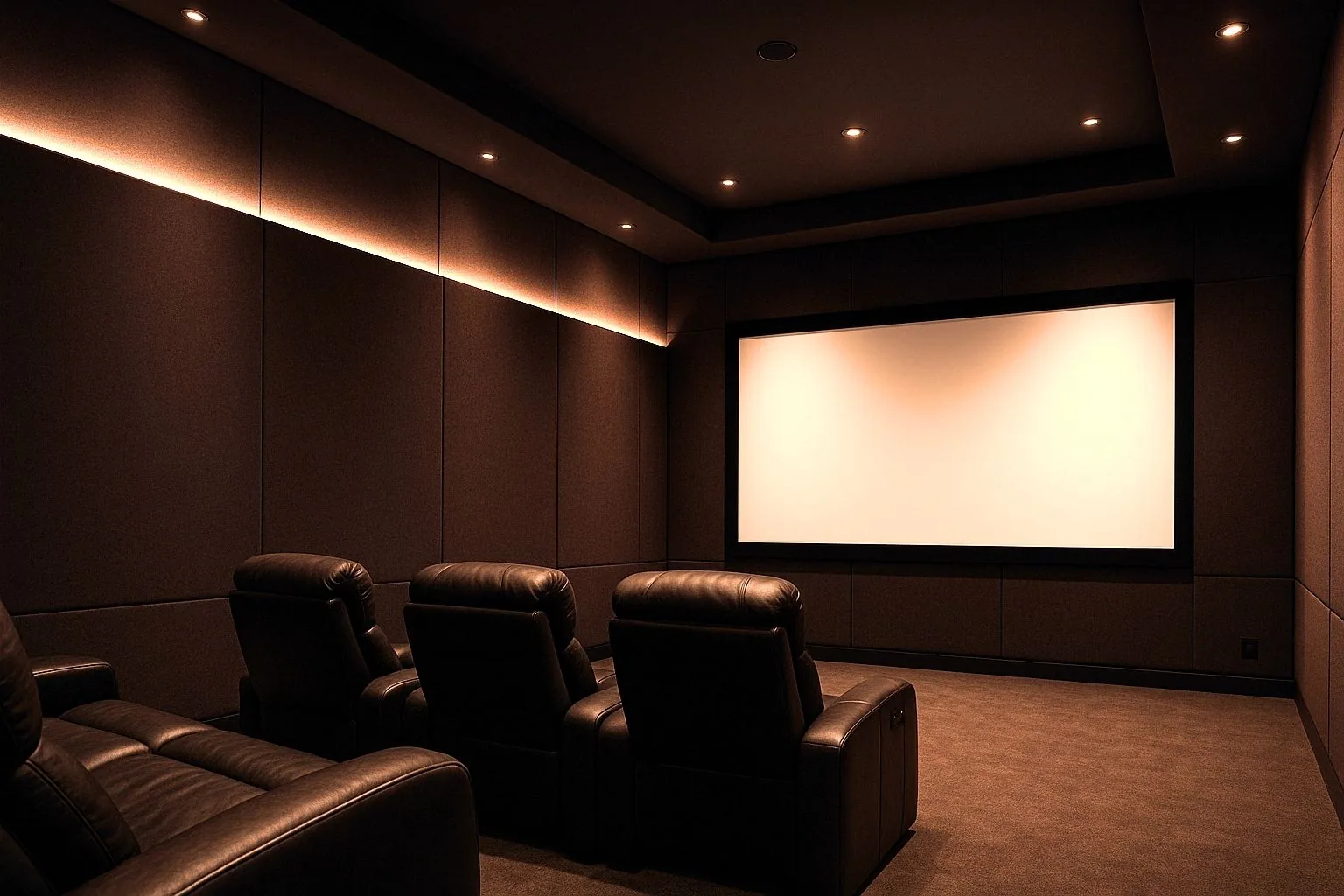
Containment
Bass through the wall, floor and door. Mass and decoupling, with the door usually the weakest point. Older stock passes footfall straight down through the joists. A resilient layer under the finish does more than anything applied to the ceiling below.
- SoundBlanket mass loaded vinyl, 2100 kg per cubic metre
- Acoustic foam and BassBloc, 20 mm
- Soundproofing materials, Mass, then decoupling, then cavity absorption, then sealing
-
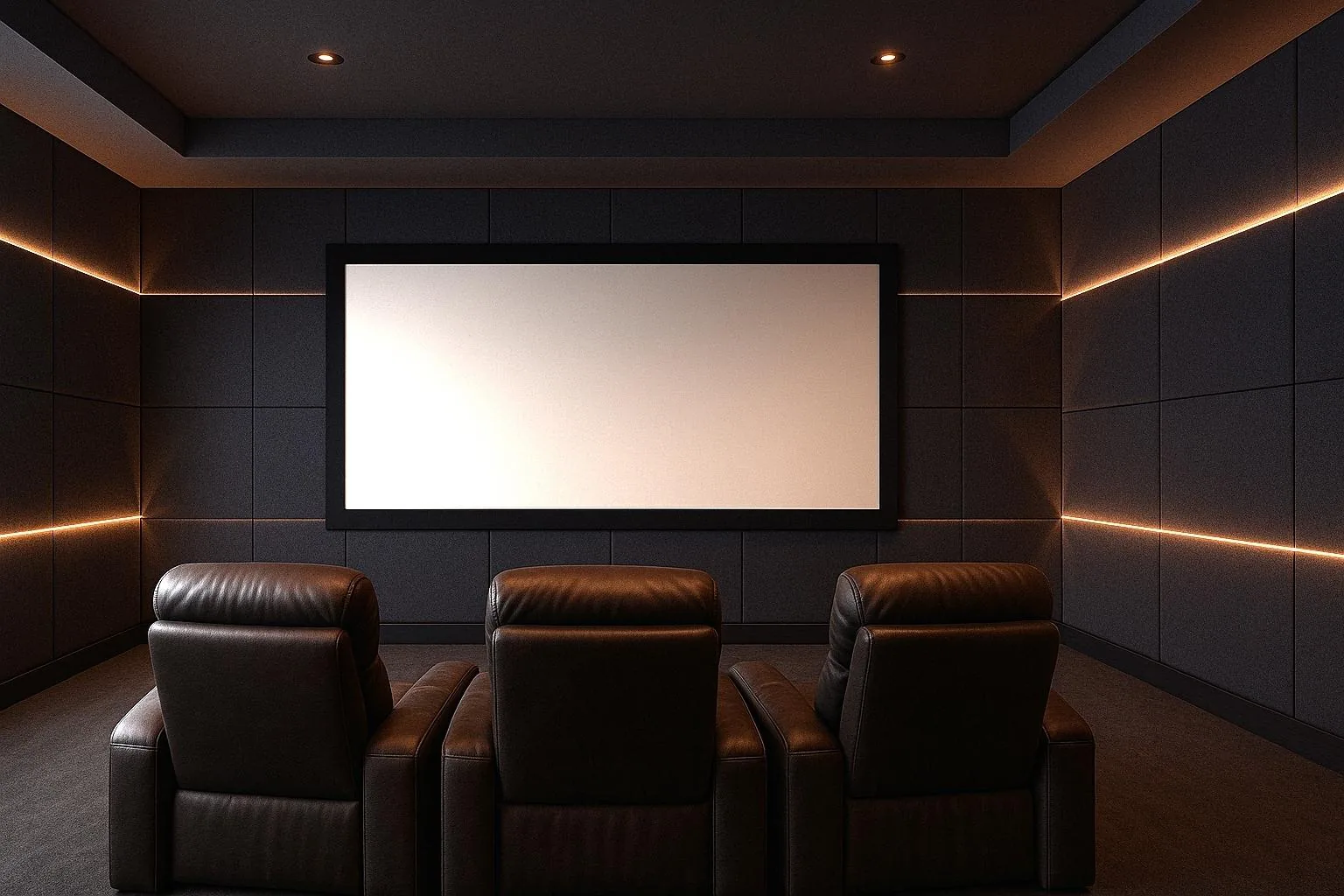
Low frequency inside
Corner absorption with depth, before any surface treatment. Ground level and underground rail put low frequency into the structure. Panels on a wall will not touch it and we will say so.
- SoundBlanket mass loaded vinyl, STC 30, 5.25 kg per sq m
- Acoustic foam and BassBloc, 100 kg per cubic metre
- Soundproofing materials, ASTM E90 for the barrier, ASTM C423 for the absorber
-
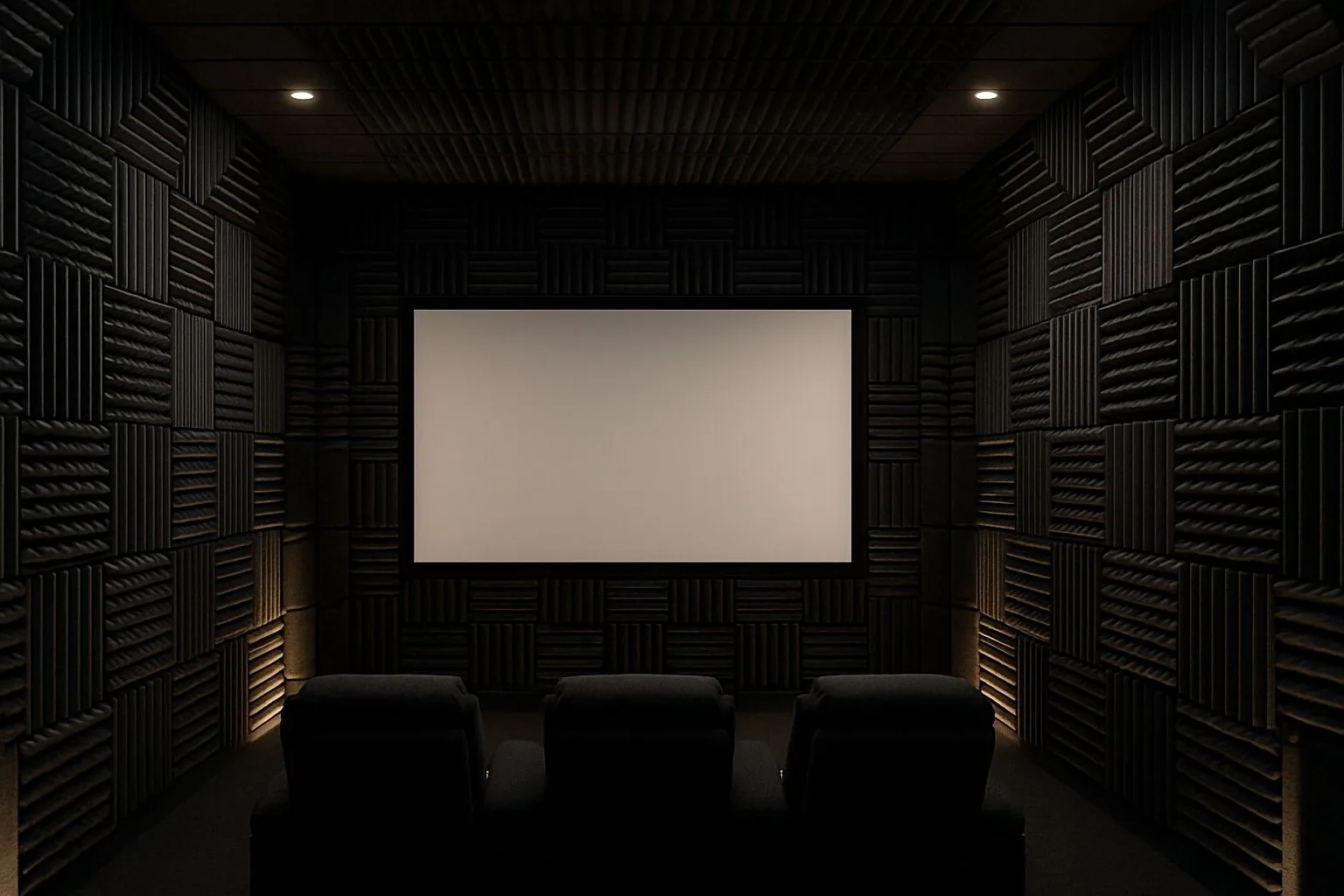
Reflections
Side wall and ceiling first reflection points at the seating position. Co-op and condo rules on floor coverings and separating construction usually set the requirement before any acoustic target does. Get the rule first, then design to it.
- SoundBlanket mass loaded vinyl, STC 34, 8.4 kg per sq m
- Acoustic foam and BassBloc, 100 to 500 Hz
- Soundproofing materials, 2100 kg per cubic metre. 2.5 mm STC 30 at 5.25 kg per sq m, 4 mm STC 34 at 8.4, 6 mm at 12.6
Interior designers tend to arrive with the look already decided. We will tell you which finish gets there without losing the acoustics. See how we work with interior designers.
04 / Climate
Durability in New York, before acoustics is discussed
New York is mild summers and cold, wet winters, and that narrows the material list before acoustics is discussed.
Cold external walls and long heating seasons make condensation behind a lining the thing to design out. PET felt is unaffected by damp air.
The failure we design against here is condensation and cold bridging behind new linings.
On a New York job with a consultant involved, our part is material that matches the submitted data. See working with acoustic consultants.
06 / Straight talk
The six errors that cost the most
-
Foam on the walls as a soundproofing measure
Small on the drawing, expensive on site, and almost always found after handover.
-
A standard door on a room built to hold bass
A gap undoes the partition it sits in. Sealing is the cheapest line on the quote and the first one to get cut.
-
Treating before the room is sealed
A gap undoes the partition it sits in. Sealing is the cheapest line on the quote and the first one to get cut.
-
Treating it as a generic New York job
Older stock passes footfall straight down through the joists. A resilient layer under the finish does more than anything applied to the ceiling below.
05 / Supply
Getting it to New York, with real dates
| Ships from | Palwal, Haryana, India |
|---|---|
| Arrives at | Port of New York and New Jersey, then a short road run |
| Dispatch | 4 to 7 working days |
| Freight | Sea into New York |
| Support | Drawings, build-ups, BOQ and material that arrives complete |
Standard items dispatch in 4 to 7 working days. The sea leg from India is long, so plan the full door to door window into the programme. We give real dates, not optimistic ones.
Sea freight into the Port of New York and New Jersey, then a short road run to site. Air freight for samples and urgent quantities.
Questions from New York projects
What makes home theatre soundproofing and acoustics different in New York?
American homes are timber frame with gypsum board on both faces, so a party wall or a basement ceiling has almost no mass. Adding a second leaf with a limp membrane between does more than any amount of surface treatment. Co-op and condo rules on floor coverings and separating construction usually set the requirement before any acoustic target does. Get the rule first, then design to it.
Where should the budget go first on a New York project?
Containment. Bass through the wall, floor and door. Mass and decoupling, with the door usually the weakest point. Low frequency inside. Corner absorption with depth, before any surface treatment.
Do you have an office or installation team in New York?
No. We manufacture in India and supply into New York. We give you drawings, build-ups, a BOQ and material that arrives complete, and we will tell you plainly when a job needs a local contractor we cannot be.
How does material get to a New York site?
ships from: Palwal, Haryana, India, arrives at: Port of New York and New Jersey, then a short road run, dispatch: 4 to 7 working days. Standard items dispatch in 4 to 7 working days. The sea leg from India is long, so plan the full door to door window into the programme. We give real dates, not optimistic ones.
What goes wrong most often on this kind of project?
Foam on the walls as a soundproofing measure. A standard door on a room built to hold bass.
What do you need from us to quote?
A plan, a section through the critical partition or ceiling, and what the room is for. From that we can give a build-up and a BOQ rather than a price per square foot.
Next step
Tell us the room, we will tell you the build-up
Send what you have. We will give you a layer by layer build-up, a bill of quantities and a date material lands, and we will flag anything in the brief that will not achieve what you want.