

For projects in Lisbon
Home theatre soundproofing and acoustics in Lisbon
Serious equipment in a room with no isolation plan. The complaint is almost never the speakers. It is bass leaving the room and an untreated box making the system sound worse than it is. Masonry and concrete blocks with tile and stone floors, in buildings that share walls and courtyards.
- Containment
- Bass through the wall, floor and door. Mass and decoupling, with the door usually the weakest point.
- Low frequency inside
- Corner absorption with depth, before any surface treatment.
- Reflections
- Side wall and ceiling first reflection points at the seating position.
- Quote
- From a plan and a section, within 48 hours
01 / What it is
The material, and what it actually does on a Lisbon job
Serious equipment in a room with no isolation plan. The complaint is almost never the speakers. It is bass leaving the room and an untreated box making the system sound worse than it is.
Masonry and concrete blocks with tile and stone floors, in buildings that share walls and courtyards.
Work reaching us from Lisbon is mostly hotel and short let conversions, apartments, restaurants, offices, clinics, studios.
- Timber floors, every floor Footfall from above is the single most common complaint we hear from this city. It is a floor problem, and treating the ceiling below rarely fixes it.
- Conversions put beds either side of old walls A house divided into guest rooms turns internal partitions into separating walls overnight. Doors and corridors generate more complaints than the walls themselves.
- Hills and narrow streets Access decides the delivery. Tell us the street and the stairwell and we break pallets down to what will actually get to the room.
- Containment Bass through the wall, floor and door. Mass and decoupling, with the door usually the weakest point.
Full specification
Thickness, density, NRC by frequency, fire class, standard sizes and build-up detail for home theatre soundproofing are on the main product page. This page covers what that means for a project in Lisbon.
02 / The build-up
What goes where, from the structure in
-

Layer 1
SoundBlanket mass loaded vinyl
A limp, high density sheet that adds mass to a partition, floor or duct without adding depth. In Lisbon, split units with condensers in courtyards and light wells, plus seasonal heating in cold damp winters.
Floor, floating. Membrane under a resilient layer and a floating deck, so impact energy is broken before it reaches the slab.
-

Layer 2
Acoustic foam and BassBloc
Open cell foam shapes for high frequency control, and BassBloc, a high density absorber built for the low mid range where ordinary foam does nothing. In Lisbon, church buildings, civic auditoria and function rooms are stone volumes with very long decay.
Corner loading. Low frequency energy collects in corners, so absorber in the corners does more than the same area spread across a wall.
-

Layer 3
Acoustic carpet and rugs
A tile carpet with a dense polyester face on a felt backing. In Lisbon, school buildings are hard surfaced with high ceilings, and canteens are the loudest rooms.
Zoned. Carpet in the circulation and meeting zones, hard floor elsewhere, so the treatment sits where the noise is made.
If you are specifying for a Lisbon project, we can give you a section, a BOQ and the honest limits of each layer. See how we support architects.
03 / On the ground
What the buildings in Lisbon do to the specification
- Timber floors, every floor
Footfall from above is the single most common complaint we hear from this city. It is a floor problem, and treating the ceiling below rarely fixes it.
- Conversions put beds either side of old walls
A house divided into guest rooms turns internal partitions into separating walls overnight. Doors and corridors generate more complaints than the walls themselves.
- Hills and narrow streets
Access decides the delivery. Tell us the street and the stairwell and we break pallets down to what will actually get to the room.
- Late districts under homes
Venues in the old districts operate directly beneath apartments. Low frequency containment is what keeps the operation trading.
- The housing stock
Masonry and concrete blocks with tile and stone floors, in buildings that share walls and courtyards.
04 / Room by room
What each space in a Lisbon project needs
-
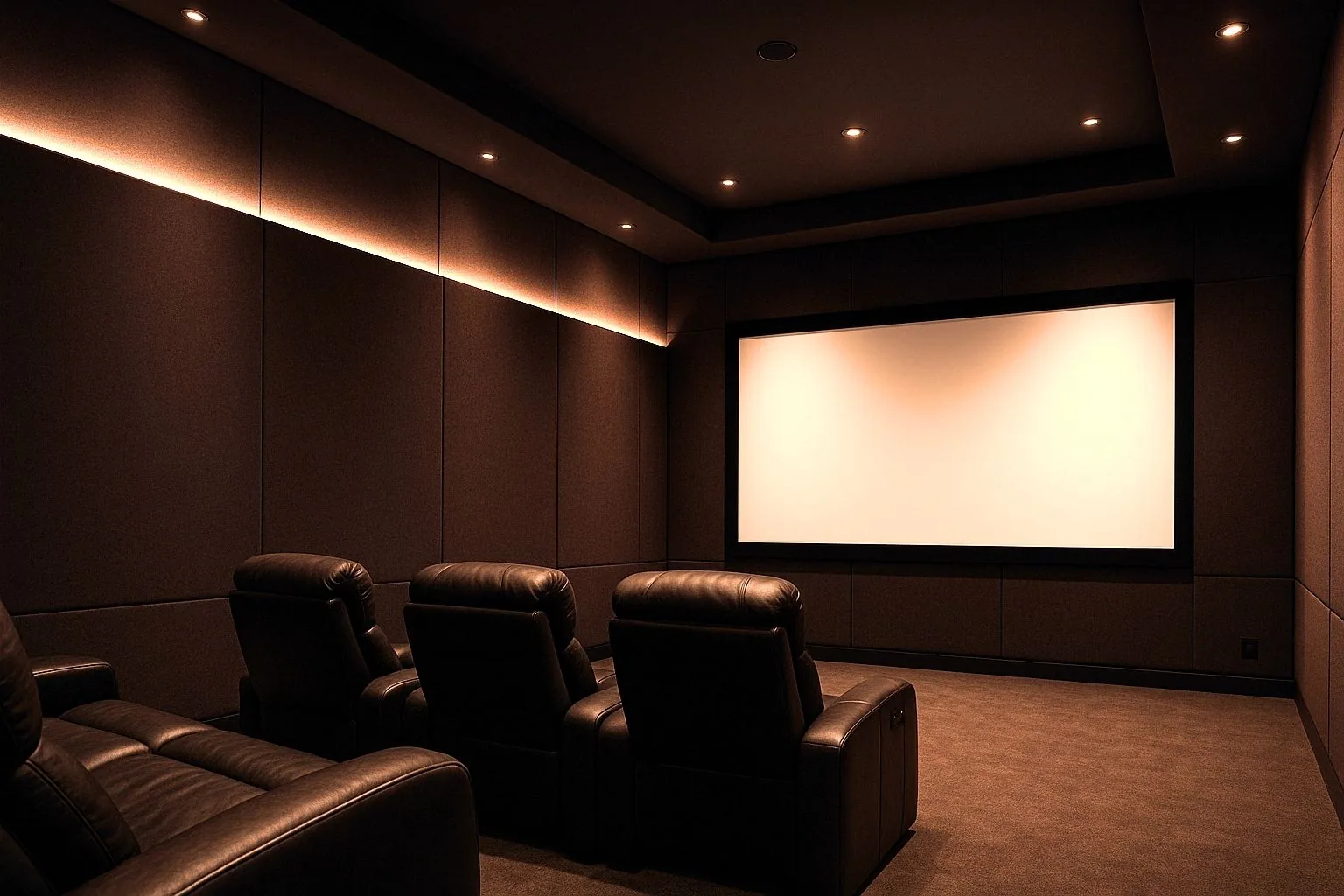
Containment
Bass through the wall, floor and door. Mass and decoupling, with the door usually the weakest point. Footfall from above is the single most common complaint we hear from this city. It is a floor problem, and treating the ceiling below rarely fixes it.
- Acoustic foam and BassBloc, 1800 x 900 mm
- Soundproof curtains, 10 to 12 mm
- Acoustic carpet and rugs, High density polyester
-
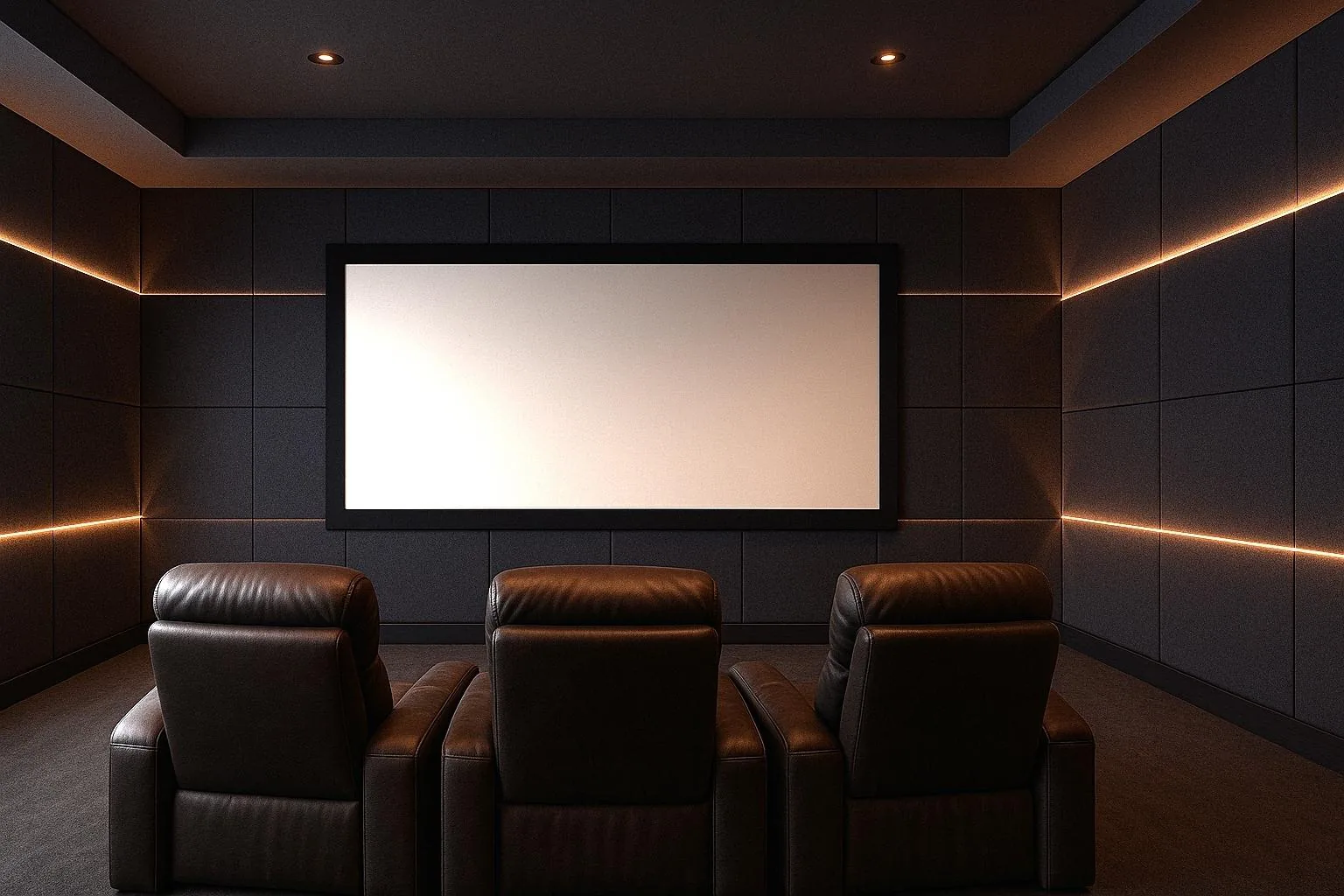
Low frequency inside
Corner absorption with depth, before any surface treatment. A house divided into guest rooms turns internal partitions into separating walls overnight. Doors and corridors generate more complaints than the walls themselves.
- Acoustic foam and BassBloc, 20 mm
- Soundproof curtains, 5.5 kg per sq m
- Acoustic carpet and rugs, Felt
-
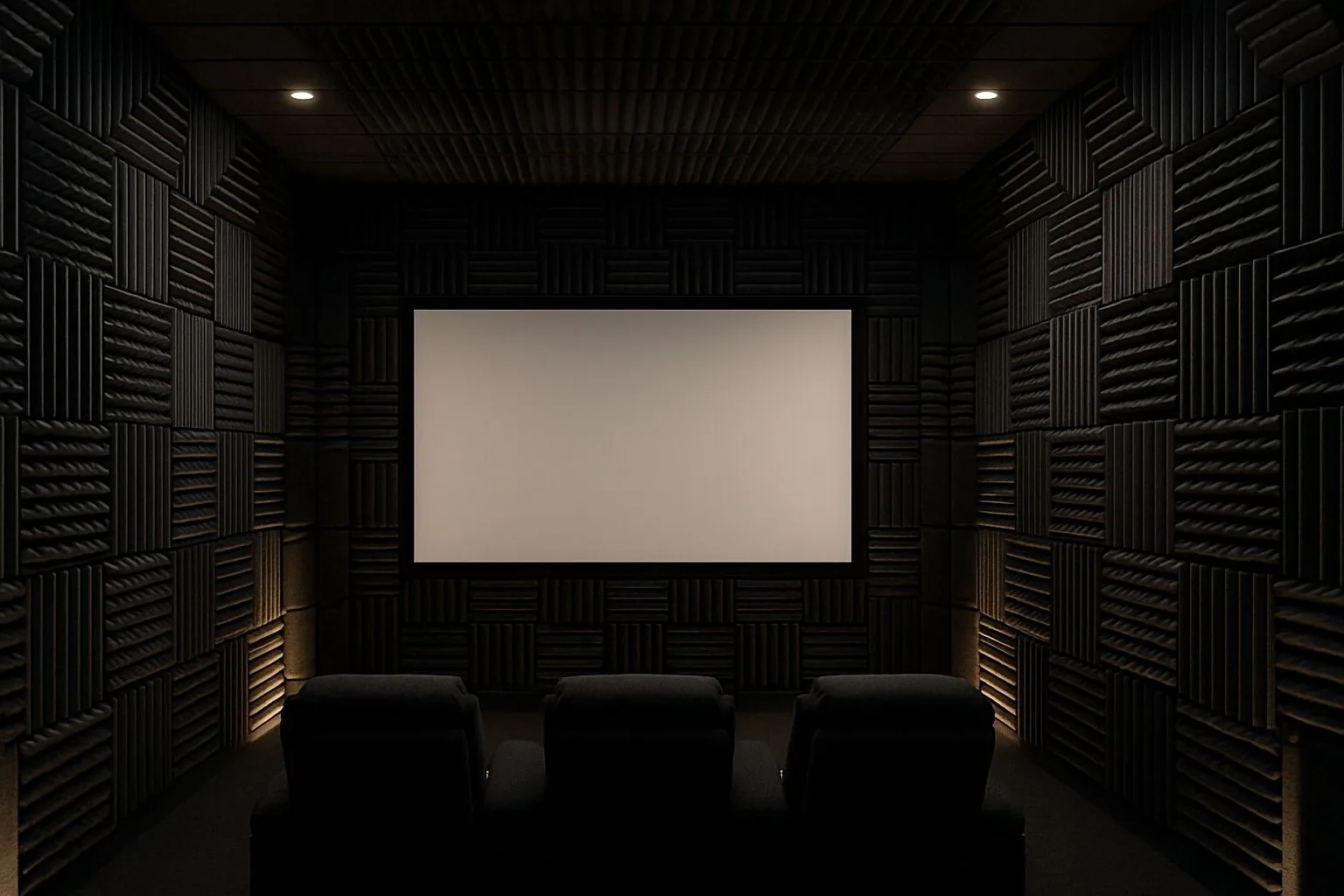
Reflections
Side wall and ceiling first reflection points at the seating position. Access decides the delivery. Tell us the street and the stairwell and we break pallets down to what will actually get to the room.
- Acoustic foam and BassBloc, 100 kg per cubic metre
- Soundproof curtains, Up to 30 dB
- Acoustic carpet and rugs, 64 sq ft per pack
For a Lisbon interior where the finish leads, we will say plainly what each option costs you acoustically. See how we work with interior designers.
04 / Durability
Why the climate in Lisbon changes the material, not the target
Lisbon is hot dry summers and mild wet winters, and that narrows the material list before acoustics is discussed.
The swing between a dry summer and a wet winter moves timber. PET felt is dimensionally stable across that swing; slat panels want a stable substrate and a ventilated fixing.
The failure we design against here is seasonal movement in timber and winter damp in unheated stock.
Consultants get the raw data, not a sales sheet. That is the whole of our side of the job, and it is set out under working with acoustic consultants.
06 / Before you buy
Six mistakes that turn into a second fit-out
-
Foam on the walls as a soundproofing measure
This is the one that comes back as a second fit-out rather than a snag.
-
A standard door on a room built to hold bass
A 6 mm undercut under a door leaves a hole the size of a brick. The wall around it is then decorative.
-
Treating before the room is sealed
Soundproofing fails at the gaps, not the materials. One unsealed service penetration can undo a correctly built wall.
-
Treating it as a generic Lisbon job
Footfall from above is the single most common complaint we hear from this city. It is a floor problem, and treating the ceiling below rarely fixes it.
05 / Logistics
What the route into Lisbon actually looks like
| Ships from | Palwal, Haryana, India |
|---|---|
| Arrives at | Lisbon or Sines, then a short road run to site |
| Dispatch | 4 to 7 working days |
| Freight | Sea via Lisbon or Sines |
| Support | Drawings, build-ups, BOQ and material that arrives complete |
Standard items dispatch in 4 to 7 working days. Grooved panels and custom colours take longer, and we say so before you order, not after.
Sea freight into Lisbon or Sines, then a short road run to site. Air freight for samples and urgent quantities.
Questions from Lisbon projects
What makes home theatre soundproofing and acoustics different in Lisbon?
Masonry and concrete blocks with tile and stone floors, in buildings that share walls and courtyards. A house divided into guest rooms turns internal partitions into separating walls overnight. Doors and corridors generate more complaints than the walls themselves.
Where should the budget go first on a Lisbon project?
Containment. Bass through the wall, floor and door. Mass and decoupling, with the door usually the weakest point. Low frequency inside. Corner absorption with depth, before any surface treatment.
Do you have an office or installation team in Lisbon?
No. We manufacture in India and supply into Lisbon. We give you drawings, build-ups, a BOQ and material that arrives complete, and we will tell you plainly when a job needs a local contractor we cannot be.
How does material get to a Lisbon site?
ships from: Palwal, Haryana, India, arrives at: Lisbon or Sines, then a short road run to site, dispatch: 4 to 7 working days. Standard items dispatch in 4 to 7 working days. Grooved panels and custom colours take longer, and we say so before you order, not after.
What goes wrong most often on this kind of project?
Foam on the walls as a soundproofing measure. A standard door on a room built to hold bass.
What do you need from us to quote?
A plan, a section through the critical partition or ceiling, and what the room is for. From that we can give a build-up and a BOQ rather than a price per square foot.
Next step
Send a plan and a section, get a real build-up
A plan and a section is enough. We will come back with a build-up, a BOQ and a delivered date, and we will say so if what you are asking for will not work.