

For projects in China
Venue and restaurant acoustics in China
Two different jobs that get quoted as one: keeping bass inside the building for the neighbours, and making the room comfortable enough that guests can talk. Solving one does nothing for the other. Auditoria, conference centres and function halls are large hard volumes with long decay.
- Containment
- Low frequency through structure to flats above and beside. Mass, decoupling and a sealed envelope.
- Table level comfort
- Absorption at the ceiling so guests stop raising their voices at each other.
- Entrance and service
- Doors, lobbies and extract paths, which is where most of the leakage actually is.
- Quote
- From a plan and a section, within 48 hours
01 / What it is
The product, described honestly, for a China brief
Two different jobs that get quoted as one: keeping bass inside the building for the neighbours, and making the room comfortable enough that guests can talk. Solving one does nothing for the other.
Auditoria, conference centres and function halls are large hard volumes with long decay.
Work reaching us from China is mostly specification-led projects, international hotel and office fit-out, studios, showrooms.
- We are not the default here Domestic supply is abundant and competitive. We are worth importing when the specification, the colour consistency or the supply chain is the reason, not the price.
- Concrete towers, hard interiors The structure blocks well, so the recurring problems are live rooms and impact passing down through slabs.
- Colour across a large order Where a single project runs across many floors, batch to batch consistency is usually the reason people come to a single manufacturer.
- Containment Low frequency through structure to flats above and beside. Mass, decoupling and a sealed envelope.
Full specification
Thickness, density, NRC by frequency, fire class, standard sizes and build-up detail for venue soundproofing are on the main product page. This page covers what that means for a project in China.
Nightclub and venue soundproofing SoundBlanket mass loaded vinyl
02 / The build-up
How the layers stack, from the structure inwards
-

Layer 1
Acoustic panels
The full absorber range rather than one product: plain PET felt, printed felt, grooved panels and fabric finishes, chosen by how the room is used and how it has to look. In China, central plant, VRF and split units, with risers and duct runs carrying noise between floors.
Wall array. Panels placed at first reflection points rather than spread evenly. Fewer panels, better result.
-

Layer 2
Wooden slat acoustic panels
Timber slats on an acoustic backing. In China, auditoria, conference centres and function halls are large hard volumes with long decay.
Slats on a cavity. Backing plus an air gap behind moves absorption lower, which matters in music rooms.
-

Layer 3
Acoustic carpet and rugs
A tile carpet with a dense polyester face on a felt backing. In China, school buildings are concrete and tile with very large class sizes and long hard corridors.
Loose lay on tackifier. Tiles lifted individually for access under a raised floor, which is why tile beats broadloom in an office.
For a China practice, the useful thing is a detail you can put in a drawing set, not a brochure. See how we support architects.
03 / On the ground
What the buildings in China do to the specification
- We are not the default here
Domestic supply is abundant and competitive. We are worth importing when the specification, the colour consistency or the supply chain is the reason, not the price.
- Concrete towers, hard interiors
The structure blocks well, so the recurring problems are live rooms and impact passing down through slabs.
- Colour across a large order
Where a single project runs across many floors, batch to batch consistency is usually the reason people come to a single manufacturer.
- Well served ports
Shanghai, Ningbo and Shenzhen all run frequently from India, so routing is straightforward.
- Assembly and performance rooms
Auditoria, conference centres and function halls are large hard volumes with long decay.
04 / Room by room
Room by room, on a typical China job
-
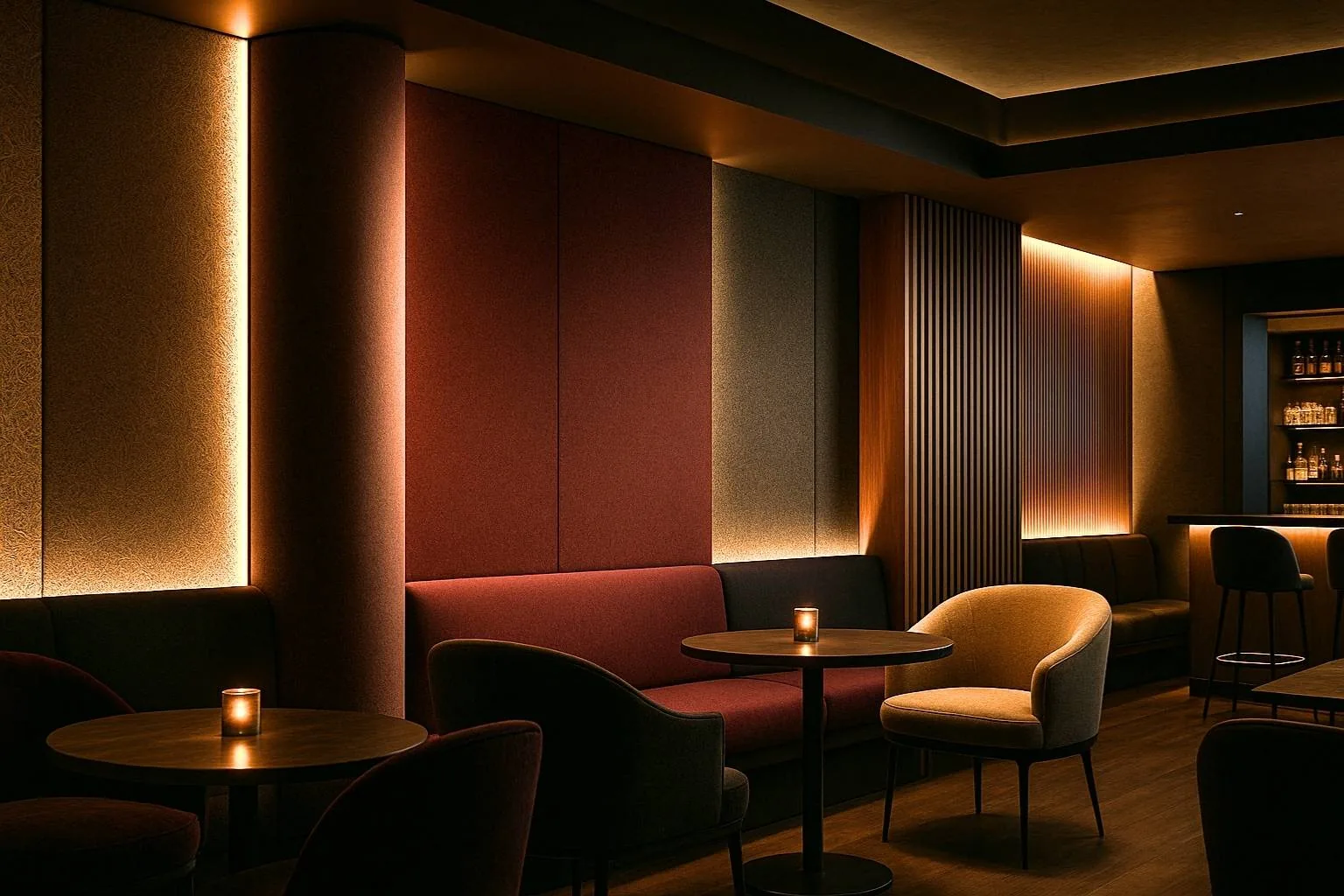
Containment
Low frequency through structure to flats above and beside. Mass, decoupling and a sealed envelope. Domestic supply is abundant and competitive. We are worth importing when the specification, the colour consistency or the supply chain is the reason, not the price.
- SoundBlanket mass loaded vinyl, 2100 kg per cubic metre
- Acoustic panels, 1800 x 900 mm, image printed into the felt rather than onto a facing
- Acoustic carpet and rugs, High density polyester
-
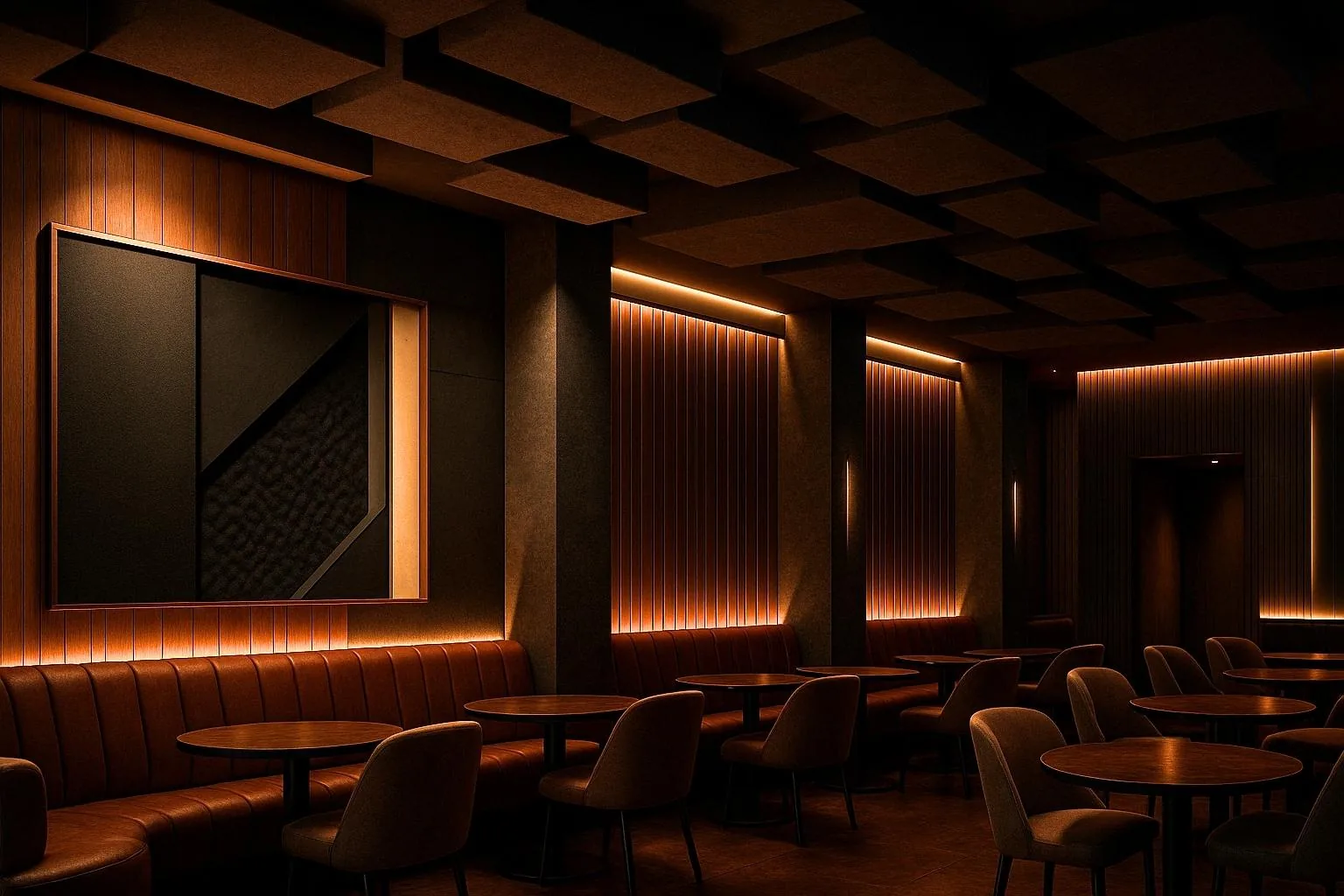
Table level comfort
Absorption at the ceiling so guests stop raising their voices at each other. The structure blocks well, so the recurring problems are live rooms and impact passing down through slabs.
- SoundBlanket mass loaded vinyl, STC 30, 5.25 kg per sq m
- Acoustic panels, Cut pattern in PET felt, adds visual rhythm without changing the absorber
- Acoustic carpet and rugs, Felt
-
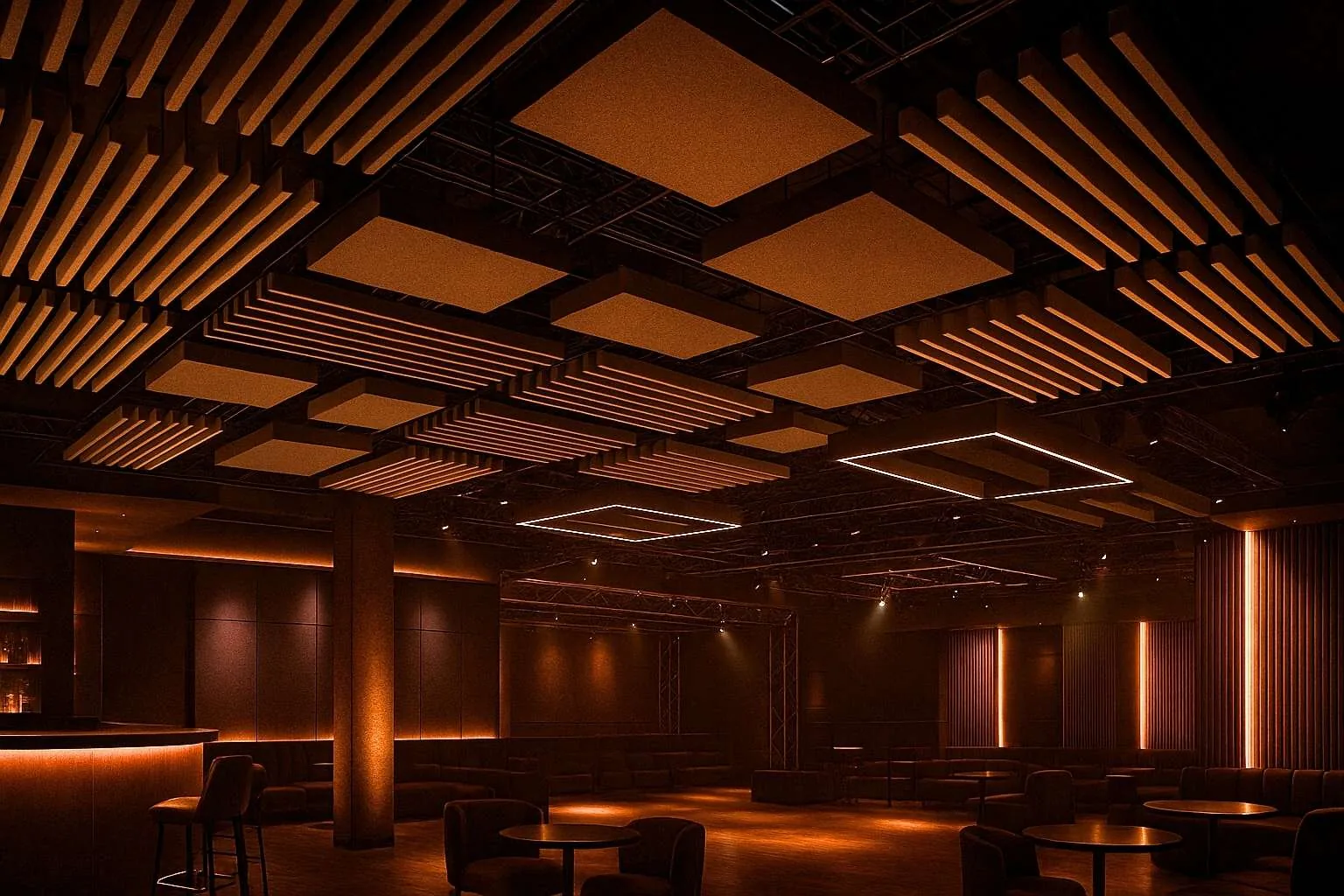
Entrance and service
Doors, lobbies and extract paths, which is where most of the leakage actually is. Where a single project runs across many floors, batch to batch consistency is usually the reason people come to a single manufacturer.
- SoundBlanket mass loaded vinyl, STC 34, 8.4 kg per sq m
- Acoustic panels, ASTM C423
- Acoustic carpet and rugs, 64 sq ft per pack
For a China interior where the finish leads, we will say plainly what each option costs you acoustically. See how we work with interior designers.
04 / Climate
Durability in China, before acoustics is discussed
China is hot summers, mild winters and a distinct wet season, and that narrows the material list before acoustics is discussed.
PET felt handles the wet months without absorbing moisture or feeding mould. Timber and wood wool want a ventilated cavity and a stable indoor RH.
The failure we design against here is wet-season humidity behind linings.
Consultants get the raw data, not a sales sheet. That is the whole of our side of the job, and it is set out under working with acoustic consultants.
06 / Read this first
Where this kind of project usually fails
-
Panels on the wall as a neighbour noise solution
It sounds like a small detail until the room is finished and the complaint arrives.
-
A lobby with both doors able to open at once
A 6 mm undercut under a door leaves a hole the size of a brick. The wall around it is then decorative.
-
Extract ducting that bypasses every wall you built
Noise with a source is fixed at the source. Treating the receiving room is the expensive way to get a small result.
-
Treating it as a generic China job
Domestic supply is abundant and competitive. We are worth importing when the specification, the colour consistency or the supply chain is the reason, not the price.
05 / Getting it there
What the route into China actually looks like
| Ships from | Palwal, Haryana, India |
|---|---|
| Arrives at | Shanghai, Ningbo or Shenzhen, then road to site |
| Dispatch | 4 to 7 working days |
| Freight | Sea via Shanghai or Ningbo |
| Support | Drawings, build-ups, BOQ and material that arrives complete |
Standard items dispatch in 4 to 7 working days. Grooved panels and custom colours take longer, and we say so before you order, not after.
Sea freight into Shanghai, Ningbo or Shenzhen, then road to site. Air freight for samples and urgent quantities.
Questions from China projects
What makes venue and restaurant acoustics different in China?
Auditoria, conference centres and function halls are large hard volumes with long decay. Domestic supply is abundant and competitive. We are worth importing when the specification, the colour consistency or the supply chain is the reason, not the price.
Where should the budget go first on a China project?
Containment. Low frequency through structure to flats above and beside. Mass, decoupling and a sealed envelope. Table level comfort. Absorption at the ceiling so guests stop raising their voices at each other.
Do you have an office or installation team in China?
No. We manufacture in India and supply into China. We give you drawings, build-ups, a BOQ and material that arrives complete, and we will tell you plainly when a job needs a local contractor we cannot be.
How does material get to a China site?
ships from: Palwal, Haryana, India, arrives at: Shanghai, Ningbo or Shenzhen, then road to site, dispatch: 4 to 7 working days. Standard items dispatch in 4 to 7 working days. Grooved panels and custom colours take longer, and we say so before you order, not after.
What goes wrong most often on this kind of project?
Panels on the wall as a neighbour noise solution. A lobby with both doors able to open at once.
What do you need from us to quote?
A plan, a section through the critical partition or ceiling, and what the room is for. From that we can give a build-up and a BOQ rather than a price per square foot.
Next step
Send a plan and a section, get a real build-up
We quote from drawings, not from a square foot rate. Send a plan and the section through the critical wall or ceiling and you will get something you can actually build from.