

For projects in Atlanta
Recording studio acoustics and soundproofing in Atlanta
Two jobs that must not be confused: keeping the building out, and making the room honest inside. The first is mass and decoupling and has to be built first. The second is absorption and diffusion and can be tuned later. Home and project studios go into basements and converted garages with equipment budgets far ahead of the building. The room leaks to the floor above long before it sounds wrong inside.
- Isolation
- A measured background level, agreed before anything is bought.
- Low frequency
- Corner and boundary absorption with real depth, not surface foam.
- Early reflections
- Controlled at the mix position, and only there.
- Quote
- From a plan and a section, within 48 hours
01 / What it is
The material, and what it actually does on a Atlanta job
Two jobs that must not be confused: keeping the building out, and making the room honest inside. The first is mass and decoupling and has to be built first. The second is absorption and diffusion and can be tuned later.
Home and project studios go into basements and converted garages with equipment budgets far ahead of the building. The room leaks to the floor above long before it sounds wrong inside.
Work reaching us from Atlanta is mostly production stages, edit and mix rooms, offices, schools, clinics, restaurants, home theatres.
- Light frame residential Homes and apartments here are gypsum on studs, which passes low frequency far more easily than masonry. Added mass and a decoupled layer do the work, not absorption.
- Production rooms have no tolerance A mix room or a stage either isolates or it does not. There is no partial credit, which is why we design the shell before anyone chooses a fabric colour.
- Warehouse conversions Big metal and concrete shells make superb volume and terrible acoustics. Rain on a metal deck and traffic outside both get in, and the inside is completely live.
- Isolation A measured background level, agreed before anything is bought.
Full specification
Thickness, density, NRC by frequency, fire class, standard sizes and build-up detail for studio soundproofing are on the main product page. This page covers what that means for a project in Atlanta.
02 / The build-up
The build-up, layer by layer
-

Layer 1
SoundBlanket mass loaded vinyl
A limp, high density sheet that adds mass to a partition, floor or duct without adding depth. In Atlanta, packaged rooftop units and ducted forced air are standard, so noise arrives through the duct rather than through the wall. Lining the first three metres of duct and treating the return path is usually the whole job.
Wall, decoupled. Independent stud, membrane between the boards, cavity absorption, two boards. The membrane is one part of a system, never the whole answer.
-

Layer 2
Acoustic panels
The full absorber range rather than one product: plain PET felt, printed felt, grooved panels and fabric finishes, chosen by how the room is used and how it has to look. In Atlanta, churches, school gyms and multipurpose halls double as performance spaces, which means a room designed for neither speech nor music has to carry both.
Wall array. Panels placed at first reflection points rather than spread evenly. Fewer panels, better result.
-

Layer 3
Soundproof curtains
A layered curtain with a mass loaded vinyl core, used where an opening has to stay an opening. In Atlanta, public school buildings run long corridors with hard floors and lay-in tile ceilings that were chosen for cost, not for speech. Classroom reverberation and corridor spill are the two complaints, and both respond to ceiling area rather than wall panels.
Track with a seal. Ceiling track plus a floor seal or drape, so the perimeter is closed when it is drawn.
Architects working in Atlanta usually need the build-up before the product. We will draw the section and mark what does the work. See how we support architects.
03 / In this market
The Atlanta conditions that change the answer
- Light frame residential
Homes and apartments here are gypsum on studs, which passes low frequency far more easily than masonry. Added mass and a decoupled layer do the work, not absorption.
- Production rooms have no tolerance
A mix room or a stage either isolates or it does not. There is no partial credit, which is why we design the shell before anyone chooses a fabric colour.
- Warehouse conversions
Big metal and concrete shells make superb volume and terrible acoustics. Rain on a metal deck and traffic outside both get in, and the inside is completely live.
- Savannah, then the road
The container lands at the coast and drives in. We quote the sea leg and the road leg separately so the programme is built on real dates.
- The housing stock
American homes are timber frame with gypsum board on both faces, so a party wall or a basement ceiling has almost no mass. Adding a second leaf with a limp membrane between does more than any amount of surface treatment.
- The studio and content scene
Home and project studios go into basements and converted garages with equipment budgets far ahead of the building. The room leaks to the floor above long before it sounds wrong inside.
04 / Room by room
Space by space, for Atlanta briefs
-
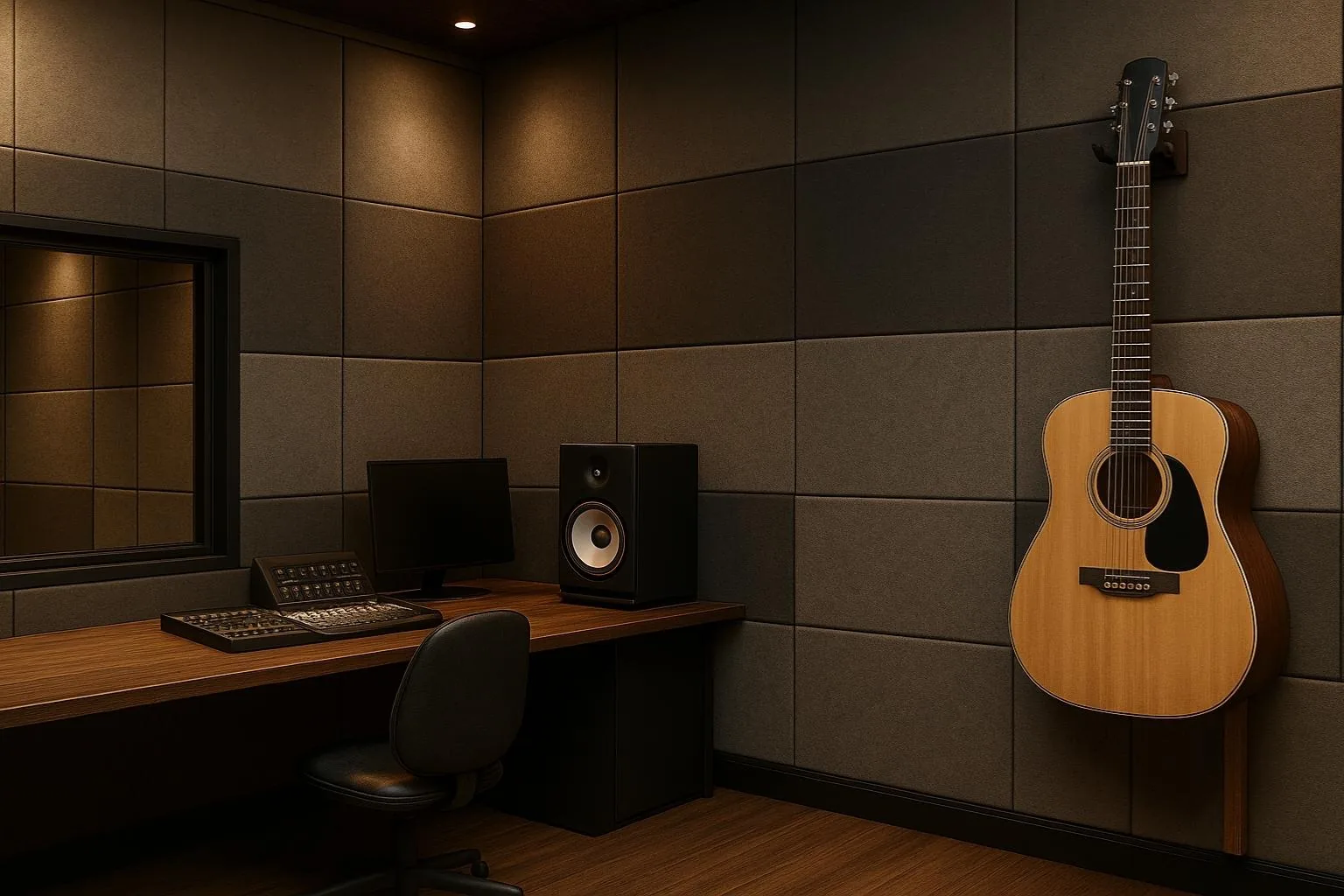
Isolation
A measured background level, agreed before anything is bought. Homes and apartments here are gypsum on studs, which passes low frequency far more easily than masonry. Added mass and a decoupled layer do the work, not absorption.
- SoundBlanket mass loaded vinyl, 2100 kg per cubic metre
- Soundproofing materials, 1800 x 900 x 20 mm, 100 kg per cubic metre, NRC 0.85
- Soundproof curtains, 5.5 kg per sq m
-
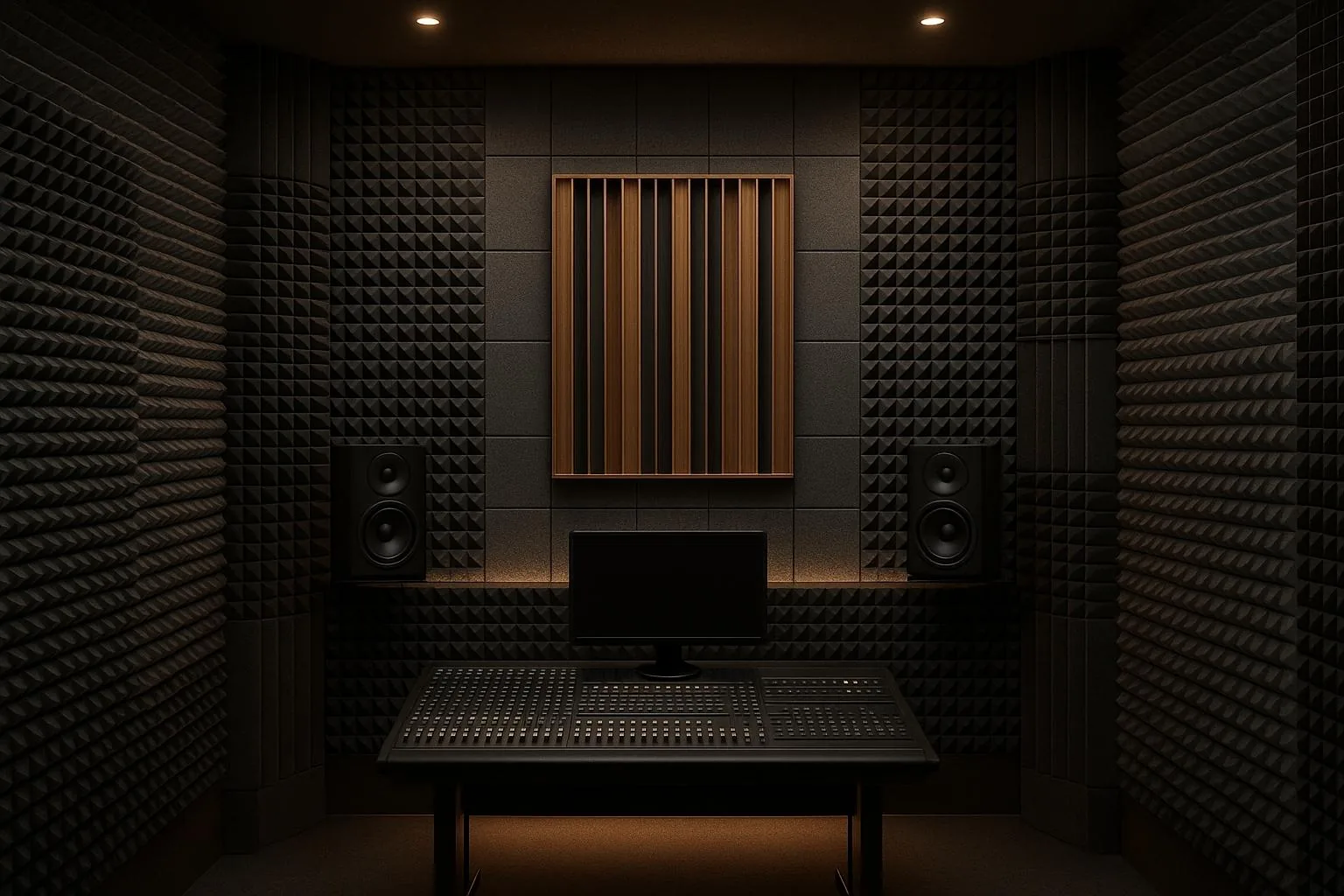
Low frequency
Corner and boundary absorption with real depth, not surface foam. A mix room or a stage either isolates or it does not. There is no partial credit, which is why we design the shell before anyone chooses a fabric colour.
- SoundBlanket mass loaded vinyl, STC 30, 5.25 kg per sq m
- Soundproofing materials, Mass, then decoupling, then cavity absorption, then sealing
- Soundproof curtains, Up to 30 dB
-
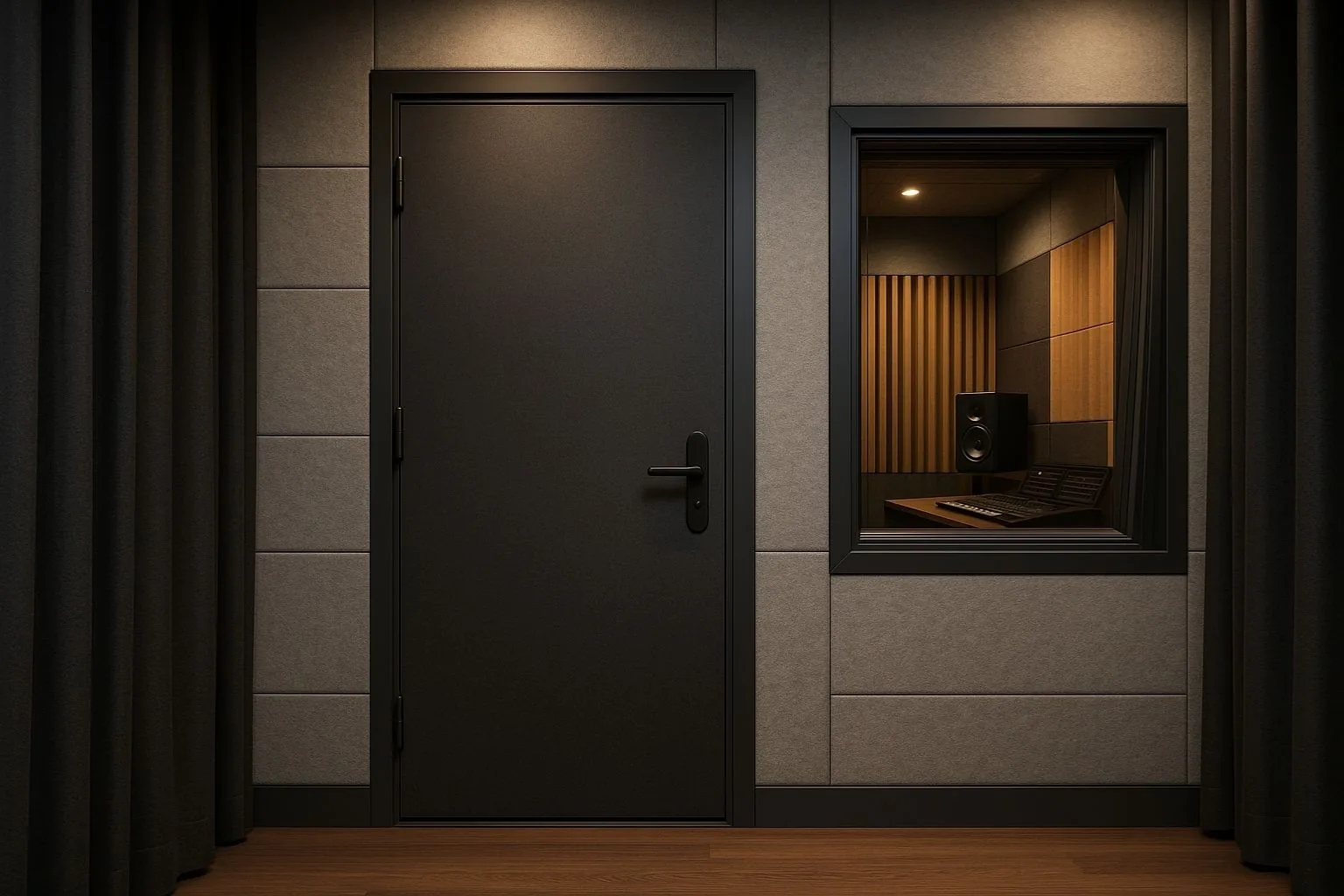
Early reflections
Controlled at the mix position, and only there. Big metal and concrete shells make superb volume and terrible acoustics. Rain on a metal deck and traffic outside both get in, and the inside is completely live.
- SoundBlanket mass loaded vinyl, STC 34, 8.4 kg per sq m
- Soundproofing materials, ASTM E90 for the barrier, ASTM C423 for the absorber
- Soundproof curtains, 30
For a Atlanta interior where the finish leads, we will say plainly what each option costs you acoustically. See how we work with interior designers.
04 / Durability
Why the climate in Atlanta changes the material, not the target
Atlanta is hot dry summers and mild wet winters, and that narrows the material list before acoustics is discussed.
The swing between a dry summer and a wet winter moves timber. PET felt is dimensionally stable across that swing; slat panels want a stable substrate and a ventilated fixing.
The failure we design against here is seasonal movement in timber and winter damp in unheated stock.
If a consultant has set the target, we will quote against their figures rather than ours, and stay out of the scope they own. More on working with acoustic consultants.
06 / Worth knowing
Where this kind of project usually fails
-
Buying foam to solve an isolation problem
It sounds like a small detail until the room is finished and the complaint arrives.
-
Treating the room before the shell is isolated
It sounds like a small detail until the room is finished and the complaint arrives.
-
Killing the room completely and calling it controlled
A room can be over-treated. Past the target it stops sounding controlled and starts sounding dead, and you paid for that.
-
Treating it as a generic Atlanta job
Homes and apartments here are gypsum on studs, which passes low frequency far more easily than masonry. Added mass and a decoupled layer do the work, not absorption.
05 / Route to site
What the route into Atlanta actually looks like
| Ships from | Palwal, Haryana, India |
|---|---|
| Arrives at | Savannah, then road to Atlanta |
| Dispatch | 4 to 7 working days |
| Freight | Sea via Savannah |
| Support | Drawings, build-ups, BOQ and material that arrives complete |
Standard items dispatch in 4 to 7 working days. The sea leg to the US East Coast is long, so plan the full door to door window. We give real dates rather than optimistic ones.
Sea freight into Savannah, then road to Atlanta. Air freight for samples, colour approvals and genuinely urgent quantities.
Questions from Atlanta projects
What makes recording studio acoustics and soundproofing different in Atlanta?
Home and project studios go into basements and converted garages with equipment budgets far ahead of the building. The room leaks to the floor above long before it sounds wrong inside. A mix room or a stage either isolates or it does not. There is no partial credit, which is why we design the shell before anyone chooses a fabric colour.
Where should the budget go first on a Atlanta project?
Isolation. A measured background level, agreed before anything is bought. Low frequency. Corner and boundary absorption with real depth, not surface foam.
Do you have an office or installation team in Atlanta?
No. We manufacture in India and supply into Atlanta. We give you drawings, build-ups, a BOQ and material that arrives complete, and we will tell you plainly when a job needs a local contractor we cannot be.
How does material get to a Atlanta site?
ships from: Palwal, Haryana, India, arrives at: Savannah, then road to Atlanta, dispatch: 4 to 7 working days. Standard items dispatch in 4 to 7 working days. The sea leg to the US East Coast is long, so plan the full door to door window. We give real dates rather than optimistic ones.
What goes wrong most often on this kind of project?
Buying foam to solve an isolation problem. Treating the room before the shell is isolated.
What do you need from us to quote?
A plan, a section through the critical partition or ceiling, and what the room is for. From that we can give a build-up and a BOQ rather than a price per square foot.
Next step
Send a plan and a section, get a real build-up
We quote from drawings, not from a square foot rate. Send a plan and the section through the critical wall or ceiling and you will get something you can actually build from.