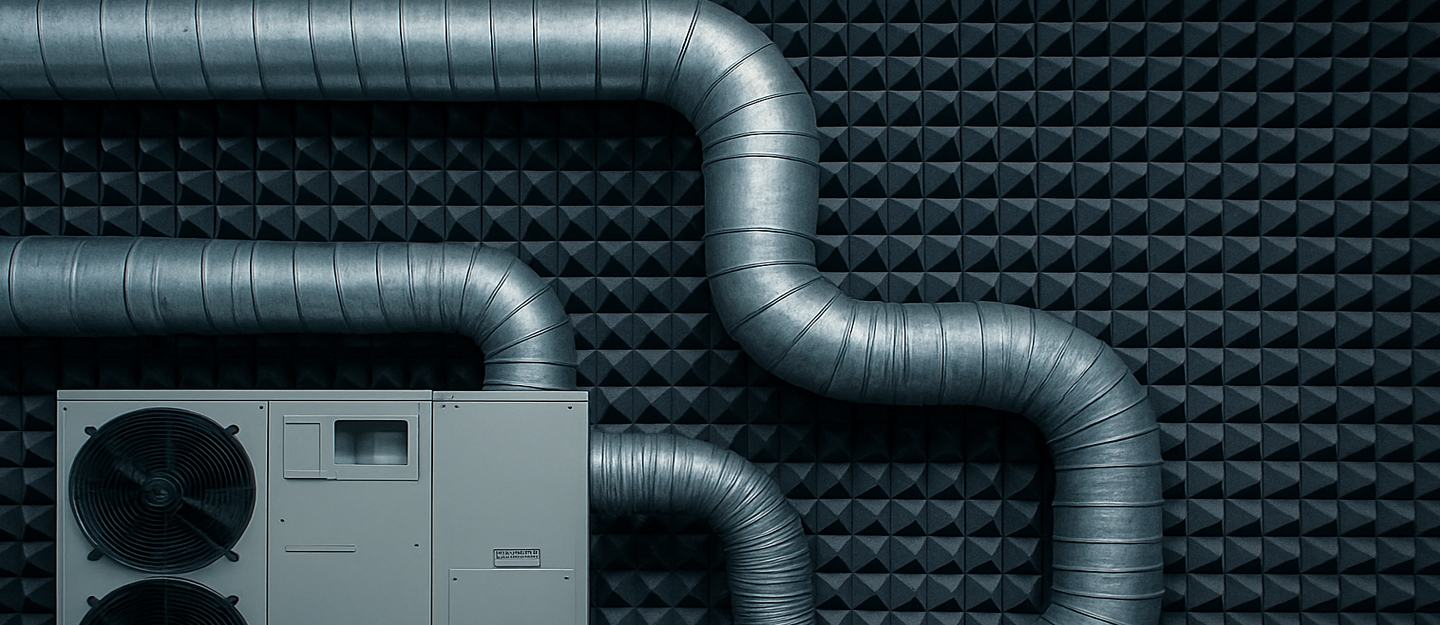
For projects in Hong Kong
HVAC, plant and machine noise control in Hong Kong
Noise with a source. Almost every honest fix is at the machine, the duct or the plant room, and almost nothing useful happens by lining the far wall of the occupied space. Central plant, split units and VRF packed into light wells and podium decks close to every flat.
- At source
- Enclosure, barrier or anti vibration mounts at the machine.
- In the path
- Duct lining, attenuators and lagging on the first run out of the plant.
- At the receiver
- Only after the first two, and only for what is left.
- Quote
- From a plan and a section, within 48 hours
01 / The material
What this is, and what it changes in a Hong Kong room
Noise with a source. Almost every honest fix is at the machine, the duct or the plant room, and almost nothing useful happens by lining the far wall of the occupied space.
Central plant, split units and VRF packed into light wells and podium decks close to every flat.
Work reaching us from Hong Kong is mostly apartments, offices, hotels and dining, clinics, schools, studios.
- Depth is the expensive part Every millimetre a wall grows into the room is paid for at Hong Kong rates. A dense thin membrane usually beats a thicker framed build-up here on total cost.
- Concrete towers, live rooms The structure blocks a great deal already. The problem is hard interiors and impact through slabs rather than airborne transfer.
- Plant on every roof and podium Cooling plant sits within metres of windows in a dense city, so plant noise reaches more people than any single source.
- At source Enclosure, barrier or anti vibration mounts at the machine.
Full specification
Thickness, density, NRC by frequency, fire class, standard sizes and build-up detail for HVAC and plant noise control are on the main product page. This page covers what that means for a project in Hong Kong.
02 / The build-up
What goes where, from the structure in
-

Layer 1
Soundproofing materials
The blocking side of the range taken together: mass loaded vinyl, resilient layers, cavity absorption and the build-ups they belong in. In Hong Kong, central plant, split units and VRF packed into light wells and podium decks close to every flat.
Floating floor. Resilient layer and deck, to break impact energy before it reaches the structure.
-

Layer 2
Wood wool acoustic panels
Wood fibre bound into a rigid board with an open texture. In Hong Kong, church buildings, halls and function rooms are compact hard volumes carrying amplified speech.
Direct fix. Mechanically fixed to the soffit or wall. Durable and simple.
-

Layer 3
Acoustic foam and BassBloc
Open cell foam shapes for high frequency control, and BassBloc, a high density absorber built for the low mid range where ordinary foam does nothing. In Hong Kong, school buildings are compact and hard surfaced with very intensive use and no spare volume.
Behind a fabric frame. Where the room has to look finished, absorber inside a frame rather than foam on show.
We would rather argue about the build-up at design stage than on site. See how we support architects.
03 / In this market
What we see driving Hong Kong briefs
- Depth is the expensive part
Every millimetre a wall grows into the room is paid for at Hong Kong rates. A dense thin membrane usually beats a thicker framed build-up here on total cost.
- Concrete towers, live rooms
The structure blocks a great deal already. The problem is hard interiors and impact through slabs rather than airborne transfer.
- Plant on every roof and podium
Cooling plant sits within metres of windows in a dense city, so plant noise reaches more people than any single source.
- The port is right here
Direct sea into Hong Kong keeps the chain short and the landed cost predictable.
- Plant and HVAC
Central plant, split units and VRF packed into light wells and podium decks close to every flat.
04 / Room by room
Where the money goes on a Hong Kong project
-
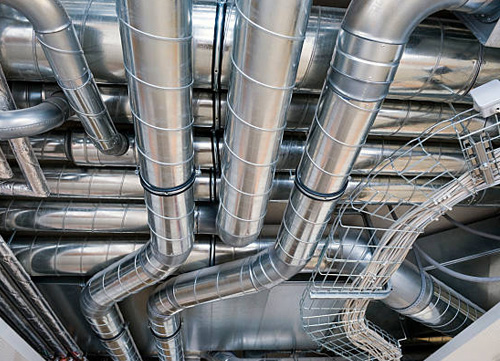
At source
Enclosure, barrier or anti vibration mounts at the machine. Every millimetre a wall grows into the room is paid for at Hong Kong rates. A dense thin membrane usually beats a thicker framed build-up here on total cost.
- SoundBlanket mass loaded vinyl, 2100 kg per cubic metre
- Soundproofing materials, 1800 x 900 x 20 mm, 100 kg per cubic metre, NRC 0.85
- Ceiling baffles and clouds, Made to the drawing, standard and custom
-
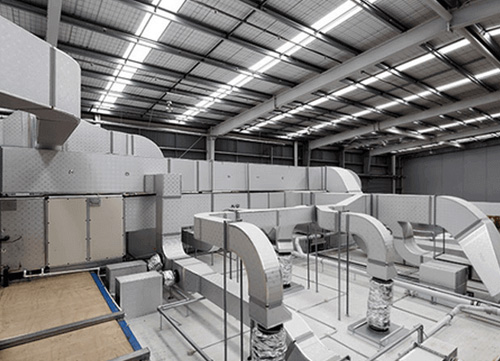
In the path
Duct lining, attenuators and lagging on the first run out of the plant. The structure blocks a great deal already. The problem is hard interiors and impact through slabs rather than airborne transfer.
- SoundBlanket mass loaded vinyl, STC 30, 5.25 kg per sq m
- Soundproofing materials, Mass, then decoupling, then cavity absorption, then sealing
- Ceiling baffles and clouds, Both faces work, which is why suspended area outperforms the same area laid flat
-
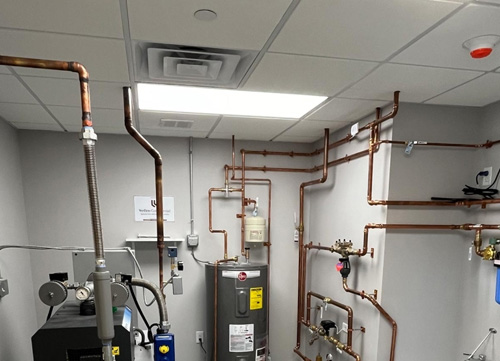
At the receiver
Only after the first two, and only for what is left. Cooling plant sits within metres of windows in a dense city, so plant noise reaches more people than any single source.
- SoundBlanket mass loaded vinyl, STC 34, 8.4 kg per sq m
- Soundproofing materials, ASTM E90 for the barrier, ASTM C423 for the absorber
- Ceiling baffles and clouds, ASTM C423
If the visual is fixed and the room still has to perform, that is a solvable problem and a conversation worth having early. See how we work with interior designers.
04 / Conditions
Why the climate in Hong Kong changes the material, not the target
Hong Kong is hot summers, mild winters and a distinct wet season, and that narrows the material list before acoustics is discussed.
PET felt handles the wet months without absorbing moisture or feeding mould. Timber and wood wool want a ventilated cavity and a stable indoor RH.
The failure we design against here is wet-season humidity behind linings.
Consultants get the raw data, not a sales sheet. That is the whole of our side of the job, and it is set out under working with acoustic consultants.
06 / Before you buy
The six errors that cost the most
-
Absorption on the office wall for a plant room problem
Enclose the machine, break the vibration path, then deal with what is left. Doing it in the other order costs more and achieves less.
-
Lagging a duct that is carrying the noise as breakout from the fan
Plant noise treated as a room problem is the most reliable way to spend a budget and change nothing anyone can hear.
-
Ignoring structure borne vibration through the mounts
It sounds like a small detail until the room is finished and the complaint arrives.
-
Treating it as a generic Hong Kong job
Every millimetre a wall grows into the room is paid for at Hong Kong rates. A dense thin membrane usually beats a thicker framed build-up here on total cost.
05 / Supply
How material reaches a Hong Kong site
| Ships from | Palwal, Haryana, India |
|---|---|
| Arrives at | Hong Kong, then a short road run to site |
| Dispatch | 4 to 7 working days |
| Freight | Sea into Hong Kong |
| Support | Drawings, build-ups, BOQ and material that arrives complete |
Standard items dispatch in 4 to 7 working days. Grooved panels and custom colours take longer, and we say so before you order, not after.
Sea freight direct into Hong Kong, then a short road run to site. Air freight for samples and urgent quantities.
Questions from Hong Kong projects
What makes HVAC, plant and machine noise control different in Hong Kong?
Central plant, split units and VRF packed into light wells and podium decks close to every flat. Every millimetre a wall grows into the room is paid for at Hong Kong rates. A dense thin membrane usually beats a thicker framed build-up here on total cost.
Where should the budget go first on a Hong Kong project?
At source. Enclosure, barrier or anti vibration mounts at the machine. In the path. Duct lining, attenuators and lagging on the first run out of the plant.
Do you have an office or installation team in Hong Kong?
No. We manufacture in India and supply into Hong Kong. We give you drawings, build-ups, a BOQ and material that arrives complete, and we will tell you plainly when a job needs a local contractor we cannot be.
How does material get to a Hong Kong site?
ships from: Palwal, Haryana, India, arrives at: Hong Kong, then a short road run to site, dispatch: 4 to 7 working days. Standard items dispatch in 4 to 7 working days. Grooved panels and custom colours take longer, and we say so before you order, not after.
What goes wrong most often on this kind of project?
Absorption on the office wall for a plant room problem. Lagging a duct that is carrying the noise as breakout from the fan.
What do you need from us to quote?
A plan, a section through the critical partition or ceiling, and what the room is for. From that we can give a build-up and a BOQ rather than a price per square foot.
Next step
Tell us the room, we will tell you the build-up
Send what you have. We will give you a layer by layer build-up, a bill of quantities and a date material lands, and we will flag anything in the brief that will not achieve what you want.