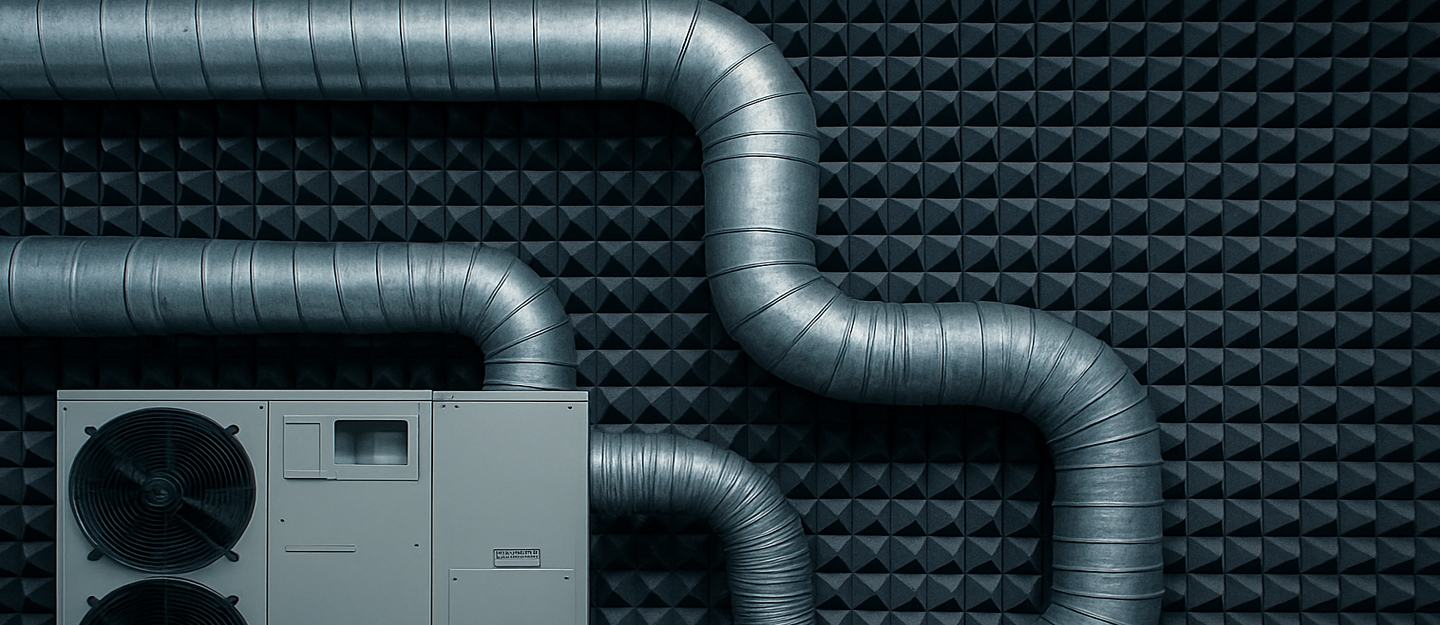
For projects in Seattle
HVAC, plant and machine noise control in Seattle
Noise with a source. Almost every honest fix is at the machine, the duct or the plant room, and almost nothing useful happens by lining the far wall of the occupied space. Packaged rooftop units and ducted forced air are standard, so noise arrives through the duct rather than through the wall. Lining the first three metres of duct and treating the return path is usually the whole job.
- At source
- Enclosure, barrier or anti vibration mounts at the machine.
- In the path
- Duct lining, attenuators and lagging on the first run out of the plant.
- At the receiver
- Only after the first two, and only for what is left.
- Quote
- From a plan and a section, within 48 hours
01 / The material
What you are buying, and what it fixes in Seattle
Noise with a source. Almost every honest fix is at the machine, the duct or the plant room, and almost nothing useful happens by lining the far wall of the occupied space.
Packaged rooftop units and ducted forced air are standard, so noise arrives through the duct rather than through the wall. Lining the first three metres of duct and treating the return path is usually the whole job.
Work reaching us from Seattle is mostly mass timber offices, tech campuses, multifamily, studios, schools, clinics.
- Mass timber is still light Exposed timber looks solid and performs nothing like concrete at low frequency. It also cannot be covered, because the timber is the design, so the acoustic work has to happen where it will not be seen.
- Rain on the roof Metal and membrane roofs over open volumes turn heavy rain into a noise source. It is worth designing for rather than discovering in the first storm.
- Campus open plans Large tech floors with exposed structure and hard finishes carry speech a long way. The ceiling plane and screens have to do what the walls are not there to do.
- At source Enclosure, barrier or anti vibration mounts at the machine.
Full specification
Thickness, density, NRC by frequency, fire class, standard sizes and build-up detail for HVAC and plant noise control are on the main product page. This page covers what that means for a project in Seattle.
02 / The build-up
How the layers stack, from the structure inwards
-

Layer 1
SoundBlanket mass loaded vinyl
A limp, high density sheet that adds mass to a partition, floor or duct without adding depth. In Seattle, packaged rooftop units and ducted forced air are standard, so noise arrives through the duct rather than through the wall. Lining the first three metres of duct and treating the return path is usually the whole job.
Floor, floating. Membrane under a resilient layer and a floating deck, so impact energy is broken before it reaches the slab.
-

Layer 2
Wood wool acoustic panels
Wood fibre bound into a rigid board with an open texture. In Seattle, churches, school gyms and multipurpose halls double as performance spaces, which means a room designed for neither speech nor music has to carry both.
With a porous backing. Board over mineral backing where the room needs more than the board alone gives.
-

Layer 3
Ceiling baffles and clouds
PET felt suspended from the soffit, vertically as baffles or horizontally as clouds. In Seattle, public school buildings run long corridors with hard floors and lay-in tile ceilings that were chosen for cost, not for speech. Classroom reverberation and corridor spill are the two complaints, and both respond to ceiling area rather than wall panels.
Mixed with services. Set out around ducts, trays and lighting rather than fighting them, coordinated from your reflected ceiling plan.
Architects working in Seattle usually need the build-up before the product. We will draw the section and mark what does the work. See how we support architects.
03 / In this market
What the buildings in Seattle do to the specification
- Mass timber is still light
Exposed timber looks solid and performs nothing like concrete at low frequency. It also cannot be covered, because the timber is the design, so the acoustic work has to happen where it will not be seen.
- Rain on the roof
Metal and membrane roofs over open volumes turn heavy rain into a noise source. It is worth designing for rather than discovering in the first storm.
- Campus open plans
Large tech floors with exposed structure and hard finishes carry speech a long way. The ceiling plane and screens have to do what the walls are not there to do.
- The port is right here
Containers land at Seattle or Tacoma, so there is no cross-country leg. That keeps the landed cost and the date both predictable.
- Plant and HVAC
Packaged rooftop units and ducted forced air are standard, so noise arrives through the duct rather than through the wall. Lining the first three metres of duct and treating the return path is usually the whole job.
04 / Room by room
Space by space, for Seattle briefs
-
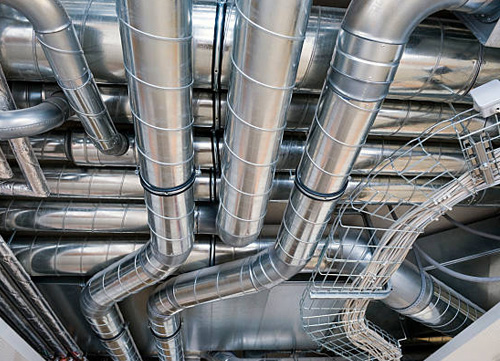
At source
Enclosure, barrier or anti vibration mounts at the machine. Exposed timber looks solid and performs nothing like concrete at low frequency. It also cannot be covered, because the timber is the design, so the acoustic work has to happen where it will not be seen.
- Soundproofing materials, 2100 kg per cubic metre. 2.5 mm STC 30 at 5.25 kg per sq m, 4 mm STC 34 at 8.4, 6 mm at 12.6
- Wood wool acoustic panels, 20 mm
- Acoustic foam and BassBloc, 100 kg per cubic metre
-
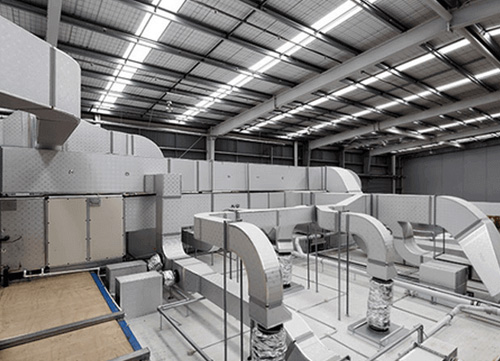
In the path
Duct lining, attenuators and lagging on the first run out of the plant. Metal and membrane roofs over open volumes turn heavy rain into a noise source. It is worth designing for rather than discovering in the first storm.
- Soundproofing materials, 1800 x 900 x 20 mm, 100 kg per cubic metre, NRC 0.85
- Wood wool acoustic panels, 400 kg per cubic metre
- Acoustic foam and BassBloc, 100 to 500 Hz
-
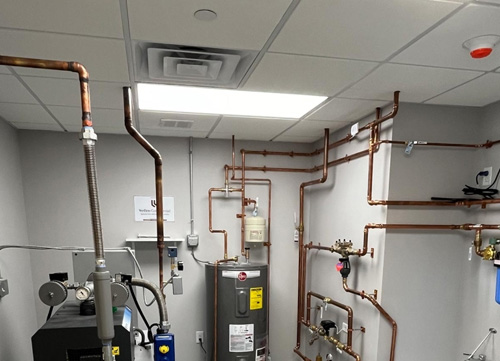
At the receiver
Only after the first two, and only for what is left. Large tech floors with exposed structure and hard finishes carry speech a long way. The ceiling plane and screens have to do what the walls are not there to do.
- Soundproofing materials, Mass, then decoupling, then cavity absorption, then sealing
- Wood wool acoustic panels, 0.30
- Acoustic foam and BassBloc, 0.85
For a Seattle interior where the finish leads, we will say plainly what each option costs you acoustically. See how we work with interior designers.
04 / Conditions
Durability in Seattle, before acoustics is discussed
Seattle is mild summers and cold, wet winters, and that narrows the material list before acoustics is discussed.
Cold external walls and long heating seasons make condensation behind a lining the thing to design out. PET felt is unaffected by damp air.
The failure we design against here is condensation and cold bridging behind new linings.
If a consultant has set the target, we will quote against their figures rather than ours, and stay out of the scope they own. More on working with acoustic consultants.
06 / Straight talk
What we watch go wrong on jobs like this
-
Absorption on the office wall for a plant room problem
Noise with a source is fixed at the source. Treating the receiving room is the expensive way to get a small result.
-
Lagging a duct that is carrying the noise as breakout from the fan
Noise with a source is fixed at the source. Treating the receiving room is the expensive way to get a small result.
-
Ignoring structure borne vibration through the mounts
This is the one that comes back as a second fit-out rather than a snag.
-
Treating it as a generic Seattle job
Exposed timber looks solid and performs nothing like concrete at low frequency. It also cannot be covered, because the timber is the design, so the acoustic work has to happen where it will not be seen.
05 / Logistics
How material reaches a Seattle site
| Ships from | Palwal, Haryana, India |
|---|---|
| Arrives at | Seattle or Tacoma, then a short road run to site |
| Dispatch | 4 to 7 working days |
| Freight | Sea into Seattle or Tacoma |
| Support | Drawings, build-ups, BOQ and material that arrives complete |
Standard items dispatch in 4 to 7 working days. The sea leg from India is long, so plan the full door to door window into the programme. We give real dates, not optimistic ones.
Sea freight into Seattle or Tacoma, then a short road run to site. Air freight for samples and urgent quantities.
Questions from Seattle projects
What makes HVAC, plant and machine noise control different in Seattle?
Packaged rooftop units and ducted forced air are standard, so noise arrives through the duct rather than through the wall. Lining the first three metres of duct and treating the return path is usually the whole job. Exposed timber looks solid and performs nothing like concrete at low frequency. It also cannot be covered, because the timber is the design, so the acoustic work has to happen where it will not be seen.
Where should the budget go first on a Seattle project?
At source. Enclosure, barrier or anti vibration mounts at the machine. In the path. Duct lining, attenuators and lagging on the first run out of the plant.
Do you have an office or installation team in Seattle?
No. We manufacture in India and supply into Seattle. We give you drawings, build-ups, a BOQ and material that arrives complete, and we will tell you plainly when a job needs a local contractor we cannot be.
How does material get to a Seattle site?
ships from: Palwal, Haryana, India, arrives at: Seattle or Tacoma, then a short road run to site, dispatch: 4 to 7 working days. Standard items dispatch in 4 to 7 working days. The sea leg from India is long, so plan the full door to door window into the programme. We give real dates, not optimistic ones.
What goes wrong most often on this kind of project?
Absorption on the office wall for a plant room problem. Lagging a duct that is carrying the noise as breakout from the fan.
What do you need from us to quote?
A plan, a section through the critical partition or ceiling, and what the room is for. From that we can give a build-up and a BOQ rather than a price per square foot.
Next step
Send the drawings, get a straight answer
One drawing gets you a proper answer. Build-up, quantities, a delivered date, and an honest note on anything we think is the wrong approach.