
For projects in Sao Paulo
HVAC, plant and machine noise control in Sao Paulo
Noise with a source. Almost every honest fix is at the machine, the duct or the plant room, and almost nothing useful happens by lining the far wall of the occupied space. Split units and VRF, with condensers in light wells and on facades close to bedrooms.
- At source
- Enclosure, barrier or anti vibration mounts at the machine.
- In the path
- Duct lining, attenuators and lagging on the first run out of the plant.
- At the receiver
- Only after the first two, and only for what is left.
- Quote
- From a plan and a section, within 48 hours
01 / The product
What this material is and where it earns its place in Sao Paulo
Noise with a source. Almost every honest fix is at the machine, the duct or the plant room, and almost nothing useful happens by lining the far wall of the occupied space.
Split units and VRF, with condensers in light wells and on facades close to bedrooms.
Work reaching us from Sao Paulo is mostly corporate towers, apartments, restaurants, hotels, clinics, studios, schools.
- Towers block, interiors ring Concrete frames handle airborne transfer. The complaint is nearly always that the room itself is too live.
- Traffic and helicopters Street noise and rotor noise reach upper floors through glazing rather than structure, so the facade is where the money goes.
- Impact between apartments Hard floors over slabs pass footfall down. The underlay has to go in before the finish, not after the complaint.
- At source Enclosure, barrier or anti vibration mounts at the machine.
Full specification
Thickness, density, NRC by frequency, fire class, standard sizes and build-up detail for HVAC and plant noise control are on the main product page. This page covers what that means for a project in Sao Paulo.
02 / The build-up
The stack, in the order it is installed
-

Layer 1
SoundBlanket mass loaded vinyl
A limp, high density sheet that adds mass to a partition, floor or duct without adding depth. In Sao Paulo, split units and VRF, with condensers in light wells and on facades close to bedrooms.
Wall, decoupled. Independent stud, membrane between the boards, cavity absorption, two boards. The membrane is one part of a system, never the whole answer.
-

Layer 2
Wood wool acoustic panels
Wood fibre bound into a rigid board with an open texture. In Sao Paulo, churches, event halls and auditoriums are large hard rooms carrying amplified music at high level.
On a cavity. Mounted on battens with an air gap, which is where the low mid performance comes from.
-

Layer 3
Acoustic foam and BassBloc
Open cell foam shapes for high frequency control, and BassBloc, a high density absorber built for the low mid range where ordinary foam does nothing. In Sao Paulo, classrooms are concrete and tile with high ceilings and hard floors, and covered play areas amplify everything.
Corner loading. Low frequency energy collects in corners, so absorber in the corners does more than the same area spread across a wall.
For a Sao Paulo practice, the useful thing is a detail you can put in a drawing set, not a brochure. See how we support architects.
03 / Local conditions
The Sao Paulo conditions that change the answer
- Towers block, interiors ring
Concrete frames handle airborne transfer. The complaint is nearly always that the room itself is too live.
- Traffic and helicopters
Street noise and rotor noise reach upper floors through glazing rather than structure, so the facade is where the money goes.
- Impact between apartments
Hard floors over slabs pass footfall down. The underlay has to go in before the finish, not after the complaint.
- Santos, then the climb inland
The port leg and the road leg are separate costs and separate time. We quote both rather than one.
- Plant and HVAC
Split units and VRF, with condensers in light wells and on facades close to bedrooms.
04 / Room by room
Room by room, on a typical Sao Paulo job
-
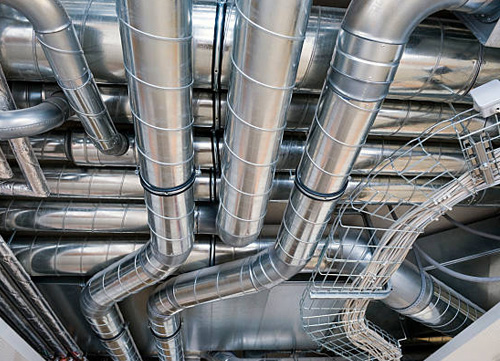
At source
Enclosure, barrier or anti vibration mounts at the machine. Concrete frames handle airborne transfer. The complaint is nearly always that the room itself is too live.
- Soundproofing materials, 2100 kg per cubic metre. 2.5 mm STC 30 at 5.25 kg per sq m, 4 mm STC 34 at 8.4, 6 mm at 12.6
- Wood wool acoustic panels, 20 mm
- Ceiling baffles and clouds, Made to the drawing, standard and custom
-
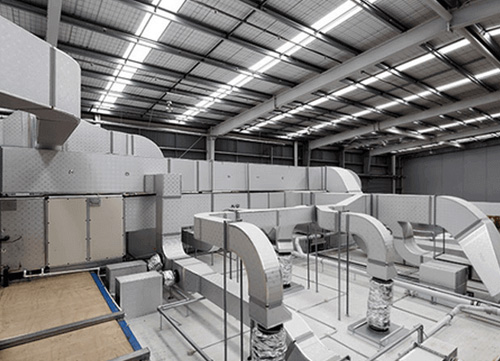
In the path
Duct lining, attenuators and lagging on the first run out of the plant. Street noise and rotor noise reach upper floors through glazing rather than structure, so the facade is where the money goes.
- Soundproofing materials, 1800 x 900 x 20 mm, 100 kg per cubic metre, NRC 0.85
- Wood wool acoustic panels, 400 kg per cubic metre
- Ceiling baffles and clouds, Both faces work, which is why suspended area outperforms the same area laid flat
-
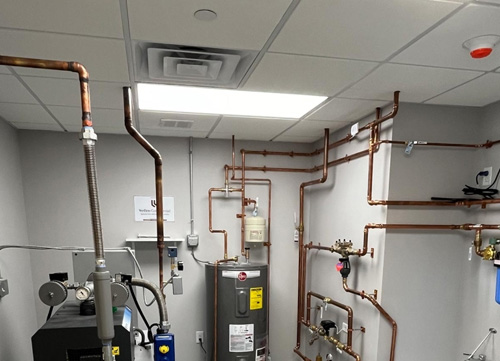
At the receiver
Only after the first two, and only for what is left. Hard floors over slabs pass footfall down. The underlay has to go in before the finish, not after the complaint.
- Soundproofing materials, Mass, then decoupling, then cavity absorption, then sealing
- Wood wool acoustic panels, 0.30
- Ceiling baffles and clouds, ASTM C423
Designers get colour, pattern and CNC options with the absorption figure attached to each. See how we work with interior designers.
04 / Climate and durability
Why the climate in Sao Paulo changes the material, not the target
Sao Paulo is warm and humid through most of the year, with a long wet season, and that narrows the material list before acoustics is discussed.
Humidity is the deciding factor. PET felt does not absorb moisture, shed fibre or feed mould, which is why it outlasts fabric-wrapped mineral wool in this climate. Wood wool and timber need a ventilated cavity behind them.
The failure we design against here is mould, sagging fabric finishes and swelling in timber.
On a Sao Paulo job with a consultant involved, our part is material that matches the submitted data. See working with acoustic consultants.
06 / Worth knowing
The six errors that cost the most
-
Absorption on the office wall for a plant room problem
Plant noise treated as a room problem is the most reliable way to spend a budget and change nothing anyone can hear.
-
Lagging a duct that is carrying the noise as breakout from the fan
Plant noise treated as a room problem is the most reliable way to spend a budget and change nothing anyone can hear.
-
Ignoring structure borne vibration through the mounts
Small on the drawing, expensive on site, and almost always found after handover.
-
Treating it as a generic Sao Paulo job
Concrete frames handle airborne transfer. The complaint is nearly always that the room itself is too live.
05 / Supply
Getting it to Sao Paulo, with real dates
| Ships from | Palwal, Haryana, India |
|---|---|
| Arrives at | Santos, then road up to Sao Paulo |
| Dispatch | 4 to 7 working days |
| Freight | Sea via Santos |
| Support | Drawings, build-ups, BOQ and material that arrives complete |
Standard items dispatch in 4 to 7 working days. The sea leg from India is long, so plan the full door to door window into the programme. We give real dates, not optimistic ones.
Sea freight into Santos, then road up to Sao Paulo. Air freight for samples and urgent quantities.
Questions from Sao Paulo projects
What makes HVAC, plant and machine noise control different in Sao Paulo?
Split units and VRF, with condensers in light wells and on facades close to bedrooms. Concrete frames handle airborne transfer. The complaint is nearly always that the room itself is too live.
Where should the budget go first on a Sao Paulo project?
At source. Enclosure, barrier or anti vibration mounts at the machine. In the path. Duct lining, attenuators and lagging on the first run out of the plant.
Do you have an office or installation team in Sao Paulo?
No. We manufacture in India and supply into Sao Paulo. We give you drawings, build-ups, a BOQ and material that arrives complete, and we will tell you plainly when a job needs a local contractor we cannot be.
How does material get to a Sao Paulo site?
ships from: Palwal, Haryana, India, arrives at: Santos, then road up to Sao Paulo, dispatch: 4 to 7 working days. Standard items dispatch in 4 to 7 working days. The sea leg from India is long, so plan the full door to door window into the programme. We give real dates, not optimistic ones.
What goes wrong most often on this kind of project?
Absorption on the office wall for a plant room problem. Lagging a duct that is carrying the noise as breakout from the fan.
What do you need from us to quote?
A plan, a section through the critical partition or ceiling, and what the room is for. From that we can give a build-up and a BOQ rather than a price per square foot.
Next step
Tell us the room, we will tell you the build-up
Send what you have. We will give you a layer by layer build-up, a bill of quantities and a date material lands, and we will flag anything in the brief that will not achieve what you want.