Manufactured in India, supplied in Melbourne
Soundproof curtains in Melbourne
We manufacture soundproof curtains at our own plant at Palwal in Haryana, India, and supply them into Melbourne. Made at our own plant in India and shipped into the Port of Melbourne, inside the city, so the road leg to site is short.
- Build-up
- 800 GSM face, foam, 3 mm SoundBlanket MLV core, foam, 800 GSM face
- Total thickness
- 10 to 12 mm
- Weight
- 5.5 kg per sq m
- Reduction
- Up to 30 dB
- STC
- 30
- Lead time
- Made to size
- Minimum order
- 5 pieces
- ASTM E90
- Standard sizes, 8 x 4 ft and 5 x 4 ft
- Made at our own plant, Palwal, Haryana, India
Manufacturer, not reseller. We hold no local approvals and will not imply we do. You get the price the factory quotes, material that matches across a large order, and advice that sometimes talks you out of a purchase.
01 / The material
What you are buying, and what it fixes in Melbourne
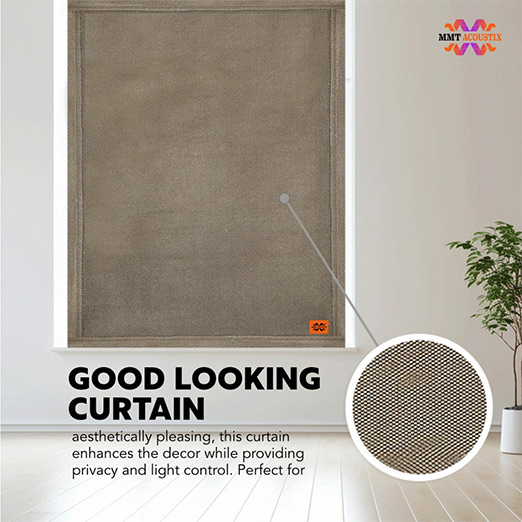
A layered curtain with a mass loaded vinyl core, used where an opening has to stay an opening. It is the answer for a doorway, a stage, a partition that must move, not a substitute for a wall.
Work reaching us from Melbourne is mostly live music venues, Victorian terraces, apartments, offices, schools, studios, clinics.
Timber frame in detached housing, concrete in apartments. Apartment party walls and slabs are the source of most complaints, and impact noise needs a resilient layer.
- Full height with return Curtain taken floor to soffit with a side return and an overlap, because the gap is what leaks, not the fabric.
- Track with a seal Ceiling track plus a floor seal or drape, so the perimeter is closed when it is drawn.
- Double layer at a doorway Two curtains with an air gap where a single layer will not reach the target.
- What it will not do A curtain is only as good as its perimeter. Hung short, hung flat against a frame, or with a gap at the side, it will measure nothing like the figure on the sheet.
Full specification
Thickness, density, NRC by frequency, fire class, standard sizes and build-up detail for soundproof curtains are on the main product page. This page covers what that means for a project in Melbourne.
02 / Specification
The published figures, unchanged by location
These figures are published and they do not move. The thing worth arguing about is not the number on the sheet, it is which grade and which build-up suits the room you are treating.
- Standard5.5 kg per sq m. Openings, stages, temporary partitions
| Build-up | 800 GSM face, foam, 3 mm SoundBlanket MLV core, foam, 800 GSM face |
|---|---|
| Total thickness | 10 to 12 mm |
| Weight | 5.5 kg per sq m |
| Reduction | Up to 30 dB |
| STC | 30 |
| Test standard | ASTM E90 |
| Standard sizes | 8 x 4 ft and 5 x 4 ft |
If a consultant has set the target, we will quote against their figures rather than ours, and stay out of the scope they own. More on working with acoustic consultants.
03 / In this market
What decides the build-up in Melbourne
- Venues that were there first
Live rooms in old warehouses with new apartments built alongside. Containment of low frequency is what keeps them operating.
- Victorian terraces
Single skin brick party walls and timber floors. Speech and footfall move between houses easily and mass is the only reliable answer.
- The port is in the city
Direct sea into Melbourne keeps the road leg short, though the sea leg itself is long and we quote it fully.
- Variable climate, sealed rooms
Heating and cooling run hard across the year, so rooms stay closed and sound accumulates inside.
- The housing stock
Timber frame in detached housing, concrete in apartments. Apartment party walls and slabs are the source of most complaints, and impact noise needs a resilient layer.
- The studio and content scene
Home and project studios go into garages and converted rooms in detached housing, where the neighbour distance helps but the room does not.
For a Melbourne practice, the useful thing is a detail you can put in a drawing set, not a brochure. See how we support architects.
04 / Climate
The Melbourne climate decides the material list
Melbourne is hot summers, mild winters and a distinct wet season, and that narrows the sensible material list before acoustics is even discussed.
PET felt handles the wet months without absorbing moisture or feeding mould. Timber and wood wool want a ventilated cavity and a stable indoor RH.
The risk we design against here is wet-season humidity behind linings.
For a Melbourne interior where the finish leads, we will say plainly what each option costs you acoustically. See how we work with interior designers.
05 / Route to site
What the route into Melbourne actually looks like
| Ships from | Palwal, Haryana, India |
|---|---|
| Arrives at | Port of Melbourne, then a short road run to site |
| Dispatch | 4 to 7 working days |
| Freight | Sea via Port of Melbourne |
| Packing | Rolled and bagged with track and fixings listed separately. |
| Lead time | Made to size. Confirmed at quote. |
Standard items dispatch in 4 to 7 working days. The sea leg from India is long, so plan the full door to door window into the programme. We give real dates, not optimistic ones.
Sea freight into the Port of Melbourne, then a short road run to site. Air freight for samples and urgent quantities.
The same 5 piece minimum applies on export.
| Any size | 5 pieces |
|---|
Curtains are made to size, so the minimum is counted in pieces rather than area.
06 / Worth knowing
The things worth knowing before you place the order
-
The wrong product for the problem
A curtain is only as good as its perimeter. Hung short, hung flat against a frame, or with a gap at the side, it will measure nothing like the figure on the sheet. We quote the detail, not just the fabric.
-
A number chased without a measurement
If nobody has measured the room or set a target, the specification is a guess with a decimal point in it. We will ask for the target before we quote the quantity.
-
A claim of being local to Melbourne
We manufacture in India and supply here. We do not run an office in this city and we will not pretend to, because you would find out on the first site visit.
Melbourne: questions we are actually asked
Are these soundproof curtains made in Melbourne?
No, and we will not say otherwise. We manufacture at our own plant at Palwal in Haryana, India, and supply into Melbourne as the manufacturer rather than through a dealer. Made at our own plant in India and shipped into the Port of Melbourne, inside the city, so the road leg to site is short. You buy at factory prices with one consistent batch across the order.
What changes the specification on a Melbourne job?
Live rooms in old warehouses with new apartments built alongside. Containment of low frequency is what keeps them operating. Single skin brick party walls and timber floors. Speech and footfall move between houses easily and mass is the only reliable answer. Those two things move the build-up far more than the panel figure does.
Does Melbourne weather shorten the life of this material?
Melbourne is hot summers, mild winters and a distinct wet season. PET felt handles the wet months without absorbing moisture or feeding mould. Timber and wood wool want a ventilated cavity and a stable indoor RH. The failure we design against here is wet-season humidity behind linings.
How does an order actually travel to Melbourne?
ships from: Palwal, Haryana, India, arrives at: Port of Melbourne, then a short road run to site, dispatch: 4 to 7 working days. Standard items dispatch in 4 to 7 working days. The sea leg from India is long, so plan the full door to door window into the programme. We give real dates, not optimistic ones.
Where do soundproof curtains fail to help?
A curtain is only as good as its perimeter. Hung short, hung flat against a frame, or with a gap at the side, it will measure nothing like the figure on the sheet. We quote the detail, not just the fabric.
What quantity do we have to order, and in what packaging?
The same 5 piece minimum applies on export. Any size, 5 pieces. Curtains are made to size, so the minimum is counted in pieces rather than area. Rolled and bagged with track and fixings listed separately.
Next step
Tell us the room, we will tell you the build-up
Send what you have. We will give you a layer by layer build-up, a bill of quantities and a date material lands, and we will flag anything in the brief that will not achieve what you want.
Full specification
Thickness, density, NRC by frequency, fire class, standard sizes and build-up detail for soundproof curtains are on the main product page. This page covers what that means for a project in Melbourne.